
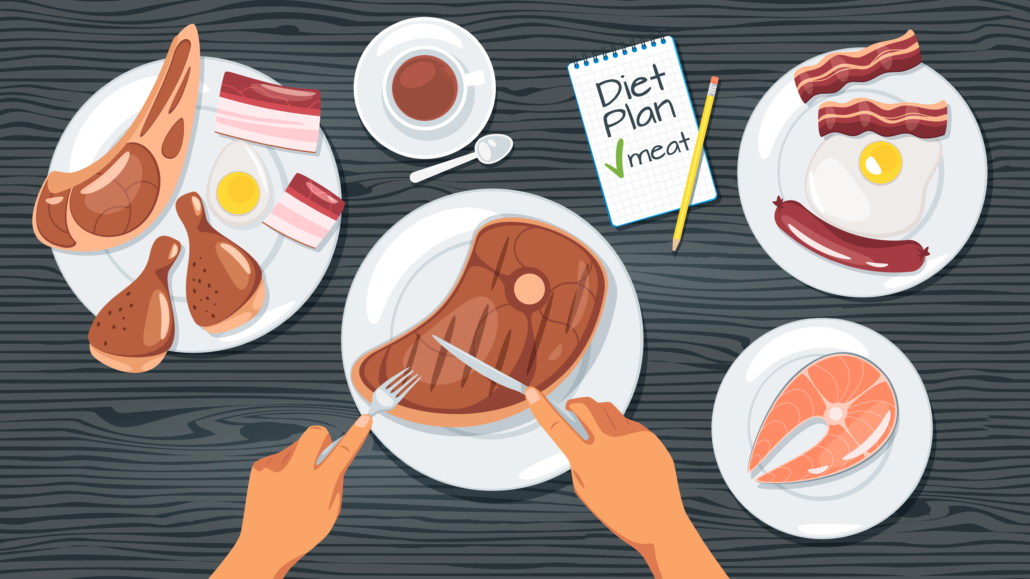
In a world where weight loss is an obsession, the carnivore diet can be a saving grace.
Indeed, thousands of testimonials and success stories highlight the dramatic physical transformations that occur when you get rid of junk food and consume only quality animal-based foods.
But weight loss on the carnivore diet is most accurately understood as a benevolent symptom of a total metabolic transformation.
In this article, we’ll explore the carnivore diet principles that contribute to significant and sustained weight loss, while improving numerous other underlying health factors.
What is the Carnivore Diet?
The carnivore diet entails eliminating all processed and plant-based foods and consuming only whole animal products such as red meat, seafood, and full-fat dairy.
The carnivore diet philosophy is based on historical evidence that humans evolved on a hyper-carnivorous diet for nearly two million years until the dawn of the agricultural revolution 10,000 years ago. [1]
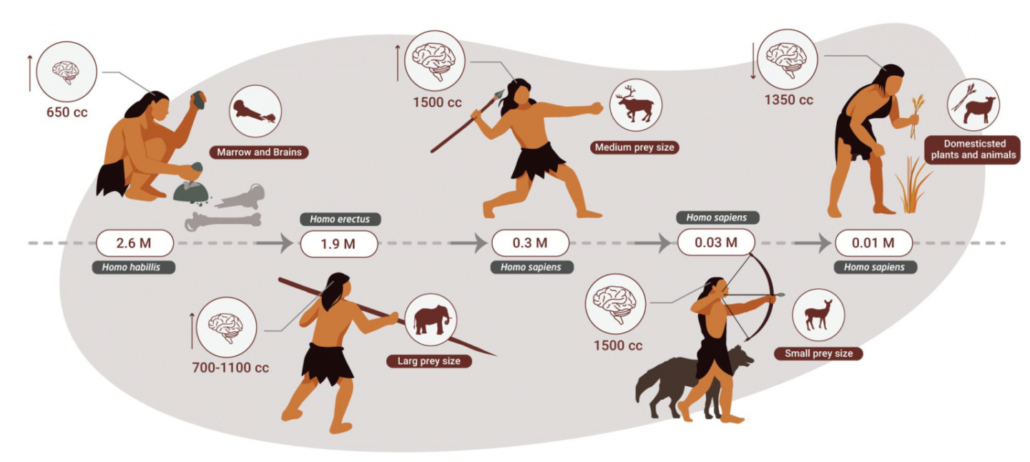
Source: Dr Miki Ben Dor
During this most recent fraction of human dietary history, our reliance on grains, and more recently, on highly processed foods loaded with sugars and toxic vegetable oils, has sent our collective health into a tailspin.
Modern inflammatory “diseases of civilization,” such as heart disease, osteoporosis, type 2 diabetes, metabolic syndrome, gastrointestinal disorders, neurodegenerative disorders, and various cancers, are increasing at alarming rates. Many of these ailments are strongly associated with obesity. [2] [3] [4]
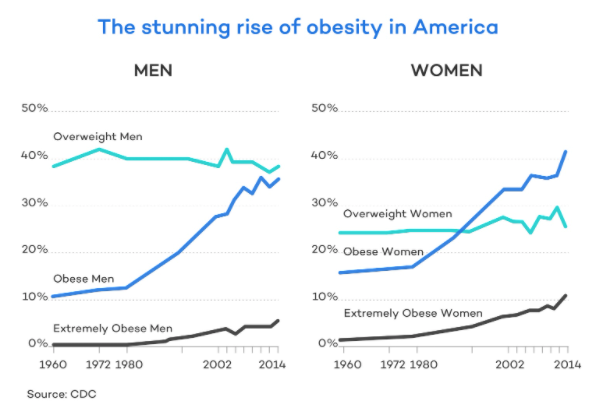
Returning to a meat-based ancestral way of eating can be understood as a way of realigning our diet with our physiology in a way that reverses the effects of a Western diet, including shedding excess weight.

How Much Weight do People Lose on the Carnivore Diet?
If you’ve been exploring the carnivore diet online, you’ve certainly come across hundreds of personal carnivore diet success stories and accompanying before and after photos. The #meatheals🥓🍗🍖🥩✌🏻hashtag on Instagram is a good place to look if you haven’t already.
All of this carnivore diet social media attention caught the eye of Harvard University. In 2020, Harvard researchers surveyed 2,029 carnivore dieters [5]
- 78% of partiticipants cited weight loss as a prime reason
- 93% of participants reported improved or resolved overweight/obesity
- BMI decreased on average from 27.2 to 24.3.
A similar large-scale study by Revero, a carnivore diet coaching company founded by Dr. Shawn Baker, surveyed 12,000 people, 91% of whom reported losing weight and reducing body fat.
There are a few key mechanisms by which the carnivore diet supports weight loss. Let’s take a look.
Cutting Carbs
The carnivore diet is essentially a zero-carb diet.
When consuming exclusively fatty animal products, including ruminant meats, fish, pork, eggs, and full-fat dairy, the body enters a metabolic state called ketosis.
When in ketosis, your body efficiently breaks down body fat into energy molecules called ketones. [6] [7]
Ketogenic diets have been routinely shown to promote significant and sustained weight loss when compared to other dietary interventions. [8] [9] [10]
For example, one study found that ketogenic diets that don’t require calorie restriction help people lose an average of 5 pounds more than low-fat calorie-restricted diets after one year. [11]
Cutting carbs also decreases the hormones insulin and ghrelin, both of which stimulate appetite, even when you’ve eaten enough calories. [12] [13]
Furthermore, when you’re in ketosis, your body burns calories in the process of converting fat and protein to glucose.7
Eliminating Food That Causes Obesity
Processed foods are loaded with nutrient-hollow grains, toxic vegetable oils, and added sugars.
High intake of sugars and vegetable oils have routinely been found to contribute to obesity and numerous other modern diseases. [14] [15] [16]
Not surprisingly, processed foods have been found to be the leading cause of obesity in the Western world. [17]
By eliminating all plant and processed foods, the carnivore diet removes the leading cause of obesity. Furthermore, on carnivore, you replace those hollow calories with Fatty animal-based foods that decrease food cravings, helping curb overeating.
Reversal of Leptin Resistance

Leptin is a hormone that controls appetite and the rate at which your body uses energy. Think of it as your “stop eating” hormone.
But when you consume a high-carb diet, your brain is constantly flooded with leptin. After chronic exposure, receptors lose their sensitivity–this is called leptin resistance.
When your body is resistant to leptin, it thinks it’s starving and triggers energy-saving and fat-storing protocols, including [18] [19] [20] [21] :
- eating more
- craving fattening high-carb foods
- moving less (in order to conserve body fat)
This is why it’s so hard for overweight people to muster the will to cut calories and exercise more. [22]
In light of these effects, leptin resistance is viewed as a central feature of obesity. [23]
As of 2019, there have been no effective medications to reverse leptin resistance, making dietary interventions, like the carnivore diet the only effective remedy. [24]
More Nutrients = More Energy
When your body is starved of energizing nutrients, you feel mentally and physically lethargic. [25]
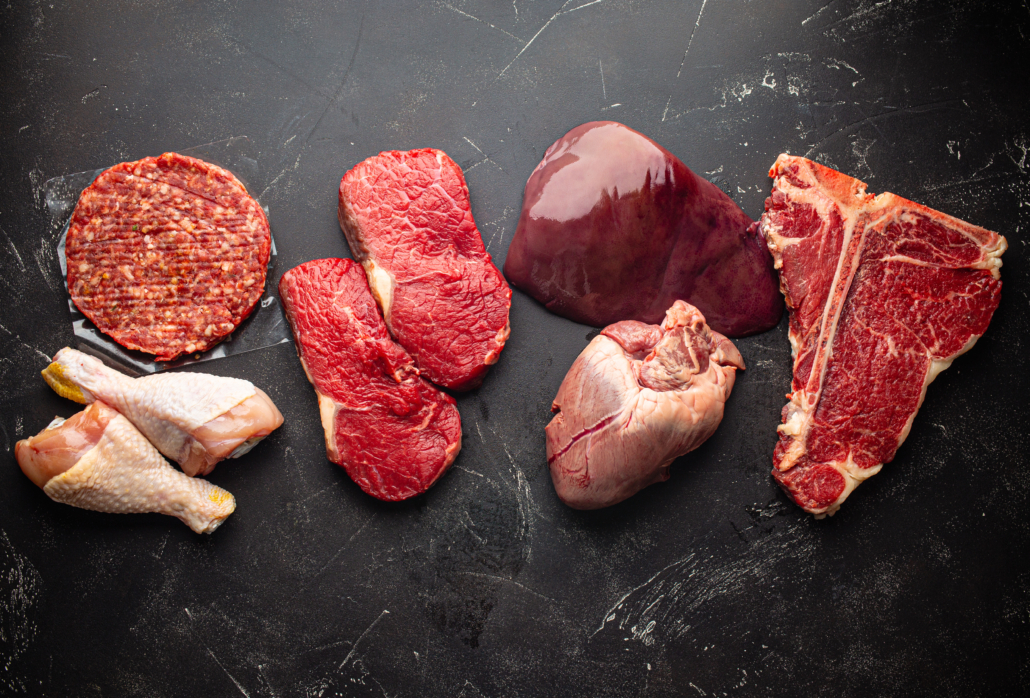
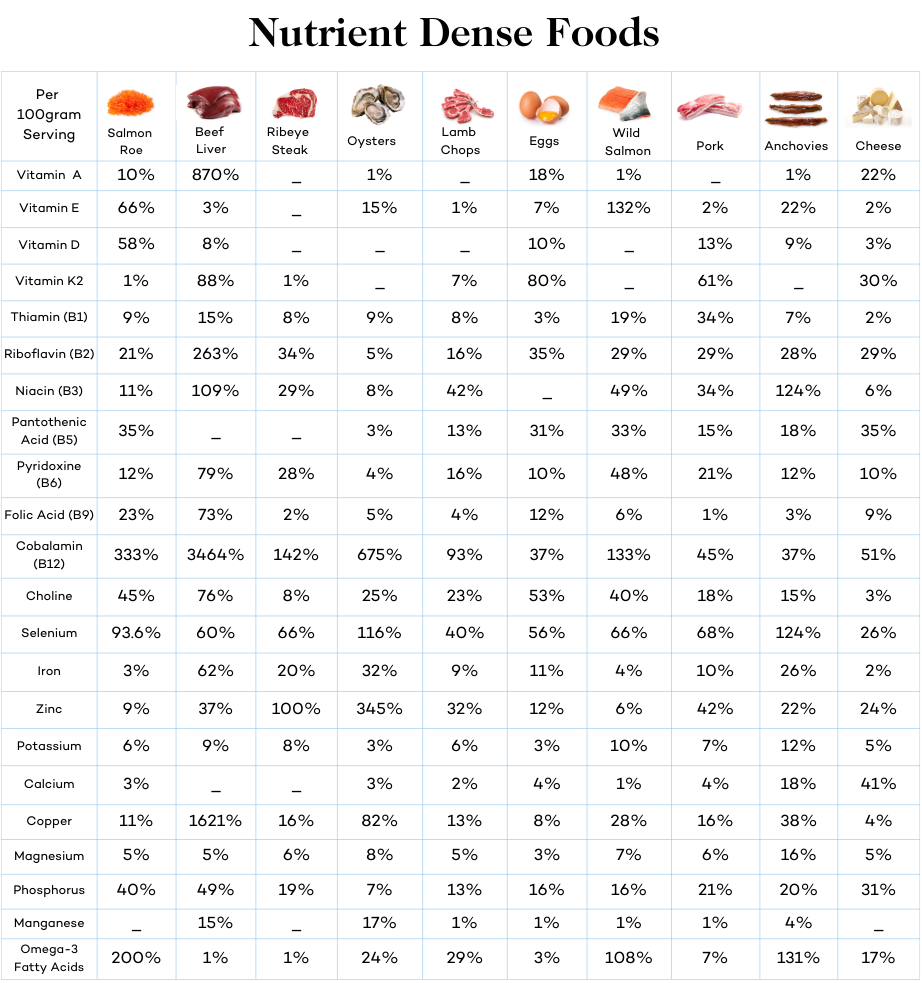
The carnivore diet is centered on the most nutrient-dense foods on earth. Red meat, seafood, organ meats, and full-fat dairy are loaded with nourishing fats, complete proteins, and nearly every essential micronutrient.
In particular, animal foods are a fantastic source of B vitamins, zinc, and iron, all of which play key roles in energy metabolism. [26]
Carnivore Diet Weight Loss: The Takeaway
The carnivore diet is a remarkably effective tool for losing excess body fat while maintaining lean muscle.
The carnivore diet supports weight loss by eliminating carbs, triggering ketosis, increasing metabolic rate, rebalancing hormones, and resensitizing hormone receptors associated with hunger and satiation signals, and by providing your body and brain with highly nourishing and energizing nutrients.
On the carnivore diet, you will naturally move, metabolize body fat, and eat less without having to focus on restricting calories.
Article Sources
- 1. The evolution of the human trophic level during the Pleistocene Miki Ben-Dor, Raphael Sirtoli, Ran Barkai
- 2. Bosma-den Boer, M.M., van Wetten, ML. & Pruimboom, L. Chronic inflammatory diseases are stimulated by current lifestyle: how diet, stress levels and medication prevent our body from recovering. Nutr Metab (Lond) 9, 32 (2012). https://doi.org/10.1186/1743-7
- 3. Carrera-Bastos P , Fontes, O'Keefe J, Lindeberg S, Cordain L Published 9 March 2011 Volume 2011:2 Pages 15—35 DOI https://doi.org/10.2147/RRCC.S16919
- 4. Cordain L, Eaton SB, Sebastian A, Mann N, Lindeberg S, Watkins BA, O'Keefe JH, Brand-Miller J. Origins and evolution of the Western diet: health implications for the 21st century. Am J Clin Nutr. 2005 Feb;81(2):341-54. doi: 10.1093/ajcn.81.2.341. PMID: 156
- 5. Cutting carbs, not calories, may be key to long-term weight loss
- 6. Goss AM, Gower B, Soleymani T, Stewart M, Pendergrass M, Lockhart M, Krantz O, Dowla S, Bush N, Garr Barry V, Fontaine KR. Effects of weight loss during a very low carbohydrate diet on specific adipose tissue depots and insulin sensitivity in older adults
- 7. Brehm BJ, Seeley RJ, Daniels SR, D'Alessio DA. A randomized trial comparing a very low carbohydrate diet and a calorie-restricted low fat diet on body weight and cardiovascular risk factors in healthy women. J Clin Endocrinol Metab. 2003 Apr;88(4):1617-23.
- 8. Shai I, Schwarzfuchs D, Henkin Y, Shahar DR, Witkow S, Greenberg I, Golan R, Fraser D, Bolotin A, Vardi H, Tangi-Rozental O, Zuk-Ramot R, Sarusi B, Brickner D, Schwartz Z, Sheiner E, Marko R, Katorza E, Thiery J, Fiedler GM, Blüher M, Stumvoll M, Stampfer
- 9. Paoli A, Rubini A, Volek JS, Grimaldi KA. Beyond weight loss: a review of the therapeutic uses of very-low-carbohydrate (ketogenic) diets. Eur J Clin Nutr. 2013 Aug;67(8):789-96. doi: 10.1038/ejcn.2013.116. Epub 2013 Jun 26. Erratum in: Eur J Clin Nutr. 20
- 10. Ting R, Dugré N, Allan GM, Lindblad AJ. Ketogenic diet for weight loss. Can Fam Physician. 2018 Dec;64(12):906. PMID: 30541806; PMCID: PMC6371871.
- 11. Paoli A. Ketogenic diet for obesity: friend or foe? Int J Environ Res Public Health. 2014 Feb 19;11(2):2092-107. doi: 10.3390/ijerph110202092. PMID: 24557522; PMCID: PMC3945587.
- 12. Gibson, A.A., Seimon, R.V., Lee, C.M.Y., Ayre, J., Franklin, J., Markovic, T.P., Caterson, I.D. and Sainsbury, A. (2015), Do ketogenic diets really suppress appetite?. Obes Rev, 16: 64-76. https://doi.org/10.1111/obr.12230
- 13. Thomas SS, Cha YS, Kim KA. Effect of vegetable oils with different fatty acid composition on high-fat diet-induced obesity and colon inflammation. Nutr Res Pract. 2020 Oct;14(5):425-437. doi: 10.4162/nrp.2020.14.5.425. Epub 2020 May 26. PMID: 33029284; PMC
- 14. Magriplis E, Michas G, Petridi E, Chrousos GP, Roma E, Benetou V, Cholopoulos N, Micha R, Panagiotakos D, Zampelas A. Dietary Sugar Intake and Its Association with Obesity in Children and Adolescents. Children (Basel). 2021 Aug 3;8(8):676. doi: 10.3390/chi
- 15, 24. Kopp W. How Western Diet And Lifestyle Drive The Pandemic Of Obesity And Civilization Diseases. Diabetes Metab Syndr Obes. 2019 Oct 24;12:2221-2236. doi: 10.2147/DMSO.S216791. PMID: 31695465; PMCID: PMC6817492.
- 16. Processed foods key to rising obesity 'Protein hunger' drives overeating, large-scale population study shows Date: November 8, 2022 Source: University of Sydney
- 17, 23. Izquierdo AG, Crujeiras AB, Casanueva FF, Carreira MC. Leptin, Obesity, and Leptin Resistance: Where Are We 25 Years Later? Nutrients. 2019 Nov 8;11(11):2704. doi: 10.3390/nu11112704. PMID: 31717265; PMCID: PMC6893721.
- 18. Mantzoros CS. The role of leptin in human obesity and disease: a review of current evidence. Ann Intern Med. 1999 Apr 20;130(8):671-80. doi: 10.7326/0003-4819-130-8-199904200-00014. PMID: 10215564.
- 19. Frühbeck, G., Jebb, S.A. and Prentice, A.M. (1998), Leptin: physiology and pathophysiology. Clinical Physiology, 18: 399-419. https://doi.org/10.1046/j.1365-2281.1998.00129.x
- 20. Gautron L, Elmquist JK. Sixteen years and counting: an update on leptin in energy balance. J Clin Invest. 2011 Jun;121(6):2087-93. doi: 10.1172/JCI45888. Epub 2011 Jun 1. PMID: 21633176; PMCID: PMC3104762.
- 21. Lustig RH. Childhood obesity: behavioral aberration or biochemical drive? Reinterpreting the First Law of Thermodynamics. Nat Clin Pract Endocrinol Metab. 2006 Aug;2(8):447-58. doi: 10.1038/ncpendmet0220. PMID: 16932334.
- 22. Jung CH, Kim MS. Molecular mechanisms of central leptin resistance in obesity. Arch Pharm Res. 2013 Feb;36(2):201-7. doi: 10.1007/s12272-013-0020-y. Epub 2013 Jan 29. PMID: 23359004.
- 25. Tardy AL, Pouteau E, Marquez D, Yilmaz C, Scholey A. Vitamins and Minerals for Energy, Fatigue and Cognition: A Narrative Review of the Biochemical and Clinical Evidence. Nutrients. 2020 Jan 16;12(1):228. doi: 10.3390/nu12010228. PMID: 31963141; PMCID: PMC
Follow Dr. Kiltz on Social Media for Daily Information and Inspiration
Subscribe to follow our Blog
Type your email*
Submit
Follow us on Social Media


