
Fasting is as old as humanity, but only recently has it become rediscovered as an approach to improving health and wellness. In light of the global proliferation of inflammatory “diseases of civilization,” many people ask, Does fasting reduce inflammation?
Though inflammation is one of our body’s primary natural defense mechanisms, our modern lifestyles, characterized by overconsumption of high-carb processed foods, emotional stress, and lack of physical movement, can keep inflammation raging at a chronic level.
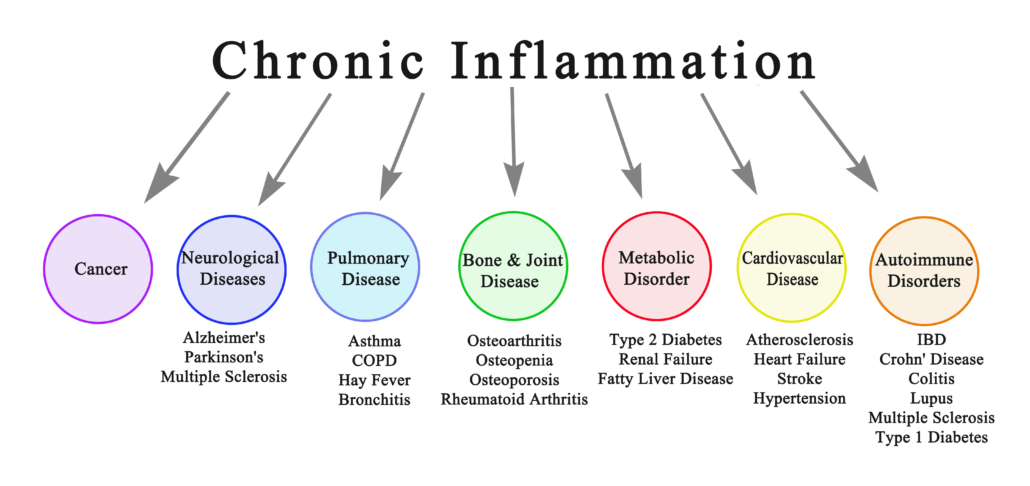
Chronic inflammation results in numerous diseases and disorders, including joint pain, digestive disorders, autoimmune diseases, mental health issues, and cardiovascular disease, among others.
In this article, we’ll explore the practice of fasting to reduce inflammation by diving into the science behind the impact that fasting has on the body’s inflammatory processes. Let’s discover how this ancient practice could be the path to a healthier, more vibrant life.
Fasting to Reduce Inflammation: Activating our Genetic Inheritance
Fasting was a central feature of the dietary evolution of humans. For nearly 2 million years, our ancestors were hyper-carnivorous apex predators who thrived on a cycle of eating the fatty, nutrient-dense meats of giant land animals called “megafauna.” Between hunts, we fasted.
Our modern bodies maintain the genetic and metabolic inheritance of these ancient eating patterns. We store more fat on our bodies than nearly all other land mammals, which our bodies efficiently break down into energy molecules when we restrict calories.
This metabolic shift activates numerous revitalizing processes that reduce inflammation.
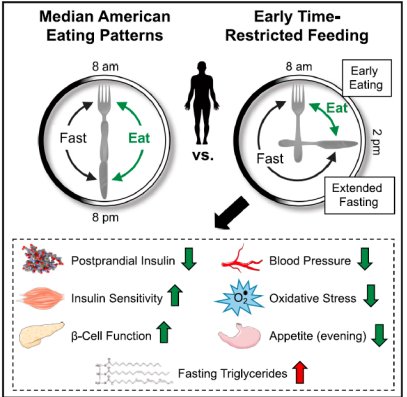
Source: Early Time-Restricted Feeding Improves Insulin Sensitivity, Blood Pressure, and Oxidative Stress Even without Weight Loss in Men with Prediabetes, Cell Metabolism, Volume 27, Issue 6, 2018
Across ancient civilizations, fasting was viewed as a way to rebalance bodily systems and regain health. In Greece, Hippocrates, considered the father of Western medicine, promoted fasting based on the belief that it allowed the body to heal itself. [1]
Now, modern science is uncovering the mechanisms underlying the benefits of this genetically inherited healing mode.
Why is it important to reduce inflammation?
The importance of regulating inflammation cannot be overstated. Inflammation is at the root of the so-called diseases of civilization, including [2] [3]
- heart disease
- various cancers
- Osteoporosis and osteoarthritis
- type-2 diabetes
- neurodegenerative disorders
- non-alcoholic fatty liver disease (NAFLD)
- Stroke
- Respiratory diseases
The World Health Organization (WHO) has found that these diseases related to chronic inflammation kill more people globally than any other factor. [4]
In 2014, researchers estimated that [5]
- 60% of Americans had at least one chronic inflammatory condition
- 42% had more than 1
- 12% of adults had 5 or more chronic inflammatory conditions.
While worldwide, 3 out of 5 people die from chronic inflammatory diseases. [6] [7] [8]
Research links the rapid increase in chronic inflammatory diseases to low-grade chronic inflammation driven in large part by our modern diets and eating habits. [9] [10] [11]

How Does Fasting Reduce Inflammation?
The best information we have on the ways fasting reduces inflammation comes from a 2019 study published in the respected journal, Cell.
In this study, researchers found that intermittent fasting reduces inflammation by dramatically decreasing inflammatory cells called “monocytes.” [12]
Study author Dr. Merad commented that “Monocytes are highly inflammatory immune cells that can cause serious tissue damage, and the population has seen an increasing amount in their blood circulation as a result of eating habits that humans have acquired in recent centuries.”
The authors theorized that this anti-inflammatory effect is not from calorie restriction alone–as was previously hypothesized. Rather, the reduction in inflammation is due to the systemic processes that are activated by cyclically restricting calories.
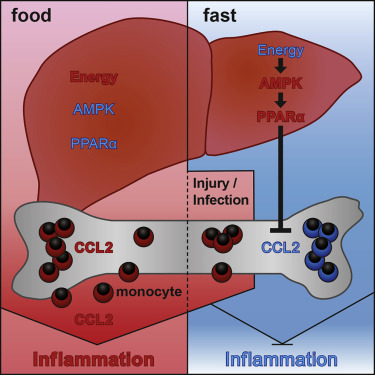
Source: Cell Metabolism. VOLUME 18, ISSUE 6, P844-859, DECEMBER 03, 2013
A 2013 study found that fasting for 24 hours lowered inflammation by activating a process of cellular repair called autophagy, which we’ll explore more next. [13]
Autophagy
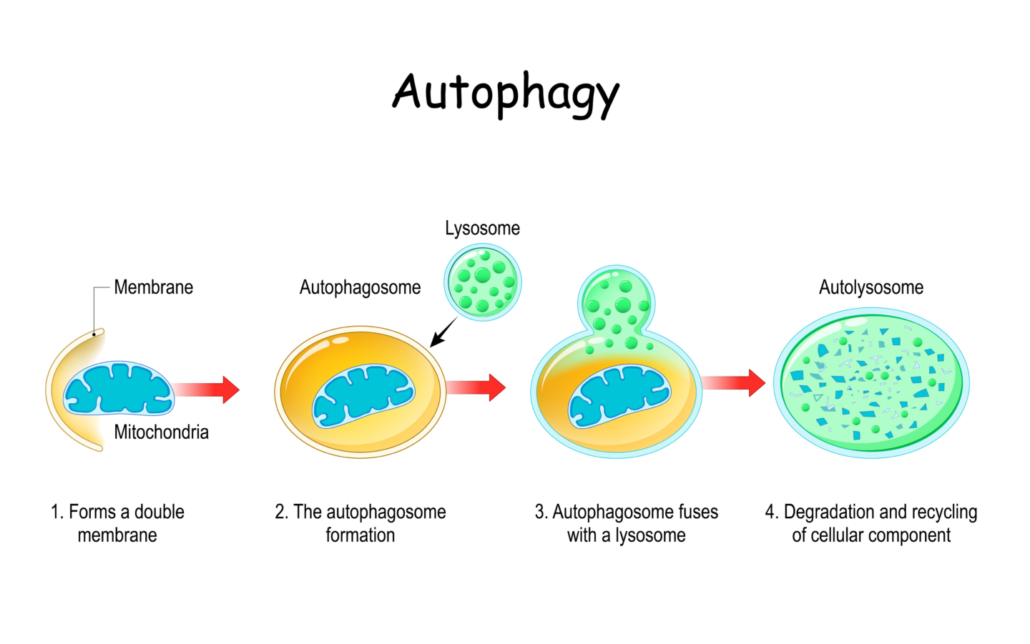
Autophagy is the process in which old cells and damaged cell parts are broken down and recycled into new cells and cell parts. And studies show that autophagy is a key mediator of inflammation. [14] [15]
Proper cycles of autophagy are critical for fending off viruses, bacteria, and diseases like diabetes and Alzheimer’s that are associated with chronic inflammation.
Fasting for at least 16-24 hours has been found to induce autophagy. [16] While longer fasts ratchet up this process. [17] [18]
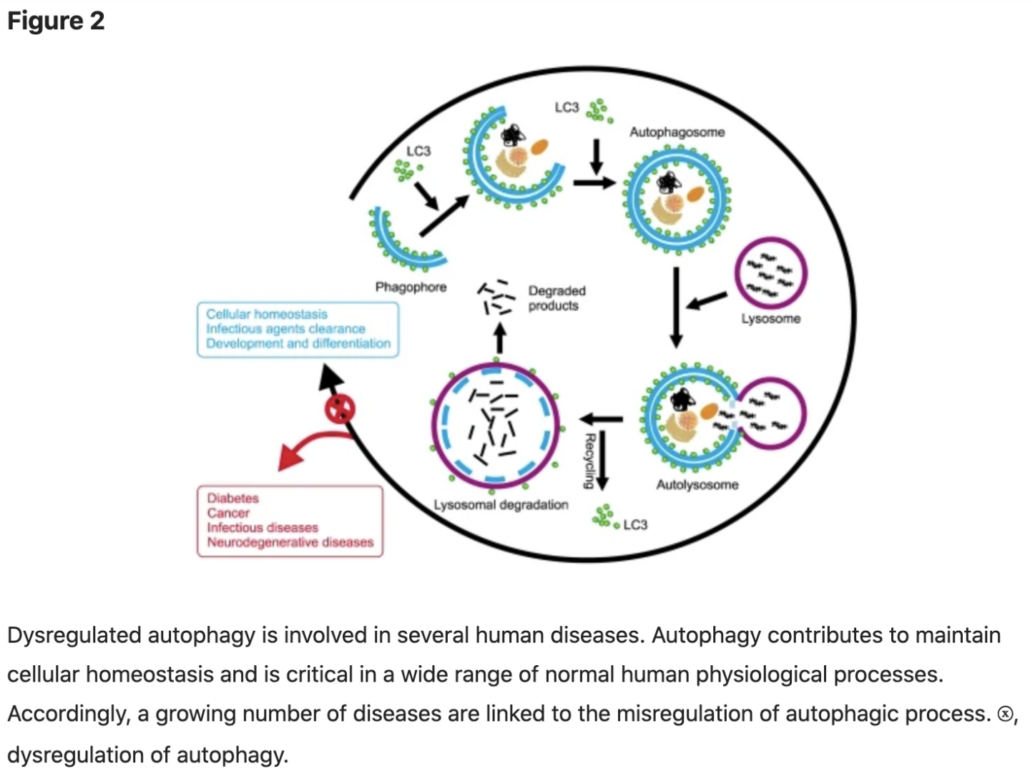
Source: Jing, K., Lim, K. Why is autophagy important in human diseases? Exp Mol Med 44, 69–72 (2012)
How to Fast to Reduce Inflammation
There are a few approaches that you can take to use fasting to reduce inflammation that we’ll explore next.
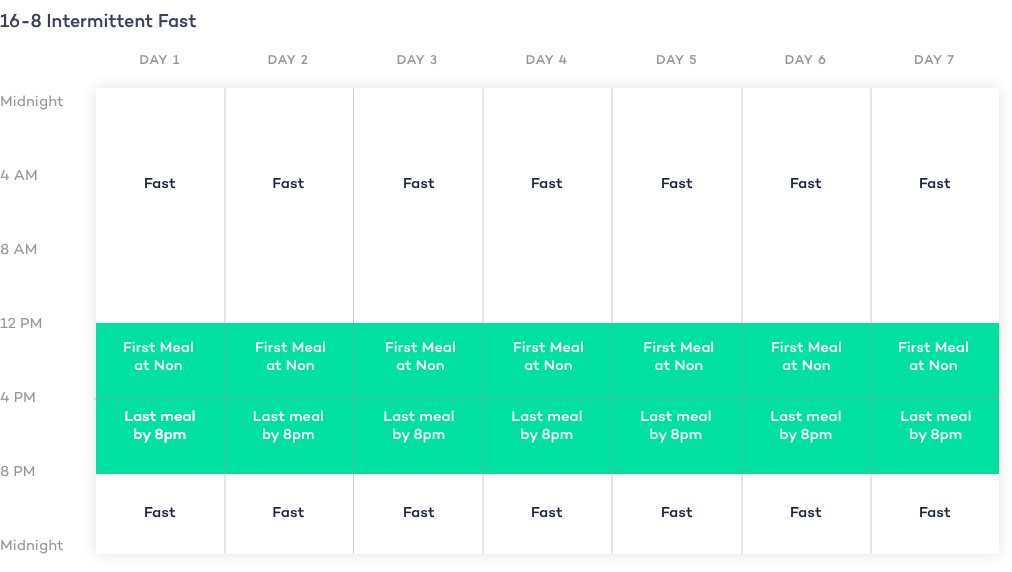
16/8 Intermittent Fasting to Reduce Inflammation
Since we know that autophagy only kicks in after at least 16 hours of caloric restriction, this is the least intense approach to activating the anti-inflammatory effects of autophagy.
It’s important to keep in mind that the duration of time and time of day that you restrict calories are equally important; Autophagy only activates if you’re fasting overnight.
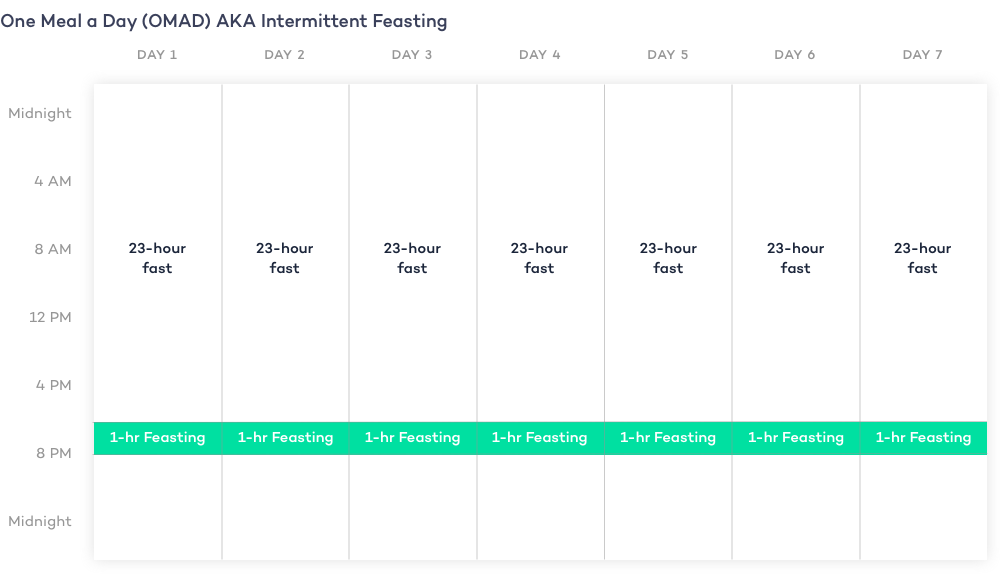
OMAD (One Meal A Day) to Reduce Inflammation
OMAD calls for consuming all of your daily calories in one large meal, or within a one-hour window.
When practicing OMAD it’s important to focus your meals around fatty, nutrient-dense whole foods. These are mostly animal products like red meat, butter, seafood, and full-fat dairy, including aged cheeses.
By consuming a high-fat, low-carb diet, your body becomes accustomed to and efficient at metabolizing fatty acids into powerful energy molecules called ketones.
Does Fasting Reduce Inflammation? The Takeaway
Cycles of fasting and feasting on nutrient-dense animal meats and fats are the evolutionary basis of human metabolism, which has a direct influence on our immune responses.
Inflammation is an important natural defense that our bodies evolved under these ancestral dietary practices and metabolic conditions.
Practicing intermittent and prolonged fasts in our modern lives is a way of realigning our metabolism with our genetic inheritance. This realignment regulates inflammatory responses by appropriately turning off inflammatory cells and activating autophagy, a process of cellular regeneration and renewal.
Article Sources
- 1. Bland JS. Fasting Physiology and Therapeutic Diets: A Look Back to the Future. Integr Med (Encinitas). 2019 Feb;18(1):16-21. PMID: 31341428; PMCID: PMC6601432.
- 2. Dietary Intake Regulates the Circulating Inflammatory Monocyte Pool
- 3. The western diet and lifestyle and diseases of civilization
- 4. Pahwa R, Goyal A, Jialal I. Chronic Inflammation.
- 5. Chronic Inflammation Roma Pahwa; Amandeep Goyal; Ishwarlal Jialal.
- 6. Fritsch J, Abreu MT. The Microbiota and the Immune Response: What Is the Chicken and What Is the Egg? Gastrointest Endosc Clin N Am. 2019 Jul;29(3):381-393. doi: 10.1016/j.giec.2019.02.005. Epub 2019 Apr 5. PMID: 31078242.
- 7. Barcelos IP, Troxell RM, Graves JS. Mitochondrial Dysfunction and Multiple Sclerosis. Biology (Basel). 2019 May 11;8(2):37. doi: 10.3390/biology8020037. PMID: 31083577; PMCID: PMC6627385.
- 8. Tsai DH, Riediker M, Berchet A, Paccaud F, Waeber G, Vollenweider P, Bochud M. Effects of short- and long-term exposures to particulate matter on inflammatory marker levels in the general population. Environ Sci Pollut Res Int. 2019 Jul;26(19):19697-19704.
- 9. Dietary Intake Regulates the Circulating Inflammatory Monocyte Pool Stefan Jordan Navpreet Tung Maria Casanova-Acebes Marie-Luise Berres Emily J. Gallagher Miriam Merad 17
- 10. Lumeng CN, Saltiel AR. Inflammatory links between obesity and metabolic disease. J Clin Invest. 2011 Jun;121(6):2111-7. doi: 10.1172/JCI57132. Epub 2011 Jun 1. PMID: 21633179; PMCID: PMC3104776.
- 11. Dietary Intake Regulates the Circulating Inflammatory Monocyte Pool Stefan Jordan Navpreet Tung Maria Casanova-Acebes Marie-Luise Berres Emily J. Gallagher Miriam Merad
- 12. Inflammation-Induced Alteration of Astrocyte Mitochondrial Dynamics Requires Autophagy for Mitochondrial Network Maintenance Elisa Motori 14 Julien Puyal Nicolas Toni Konstanze F. Winklhofer Silvana Hrelia 13 Matteo Bergami
- 13. Netea-Maier RT, Plantinga TS, van de Veerdonk FL, Smit JW, Netea MG. Modulation of inflammation by autophagy: Consequences for human disease. Autophagy. 2016;12(2):245-60. doi: 10.1080/15548627.2015.1071759. Epub 2015 Jul 29. PMID: 26222012; PMCID: PMC4836
- 14. Qian M, Fang X, Wang X. Autophagy and inflammation. Clin Transl Med. 2017 Dec;6(1):24. doi: 10.1186/s40169-017-0154-5. Epub 2017 Jul 26. PMID: 28748360; PMCID: PMC5529308.
- 15. Malinowski B, Zalewska K, Węsierska A, Sokołowska MM, Socha M, Liczner G, Pawlak-Osińska K, Wiciński M. Intermittent Fasting in Cardiovascular Disorders-An Overview. Nutrients. 2019 Mar 20;11(3):673. doi: 10.3390/nu11030673. PMID: 30897855; PMCID: PMC64713
- 16. Metabolic effects of fasting on human and mouse blood in vivo Federico Pietrocola,Yohann Demont,Francesca Castoldi,David Enot,Sylvère Durand,Michaela Semeraro,Elisa Elena Baracco,Jonathan Pol,Jose Manuel Bravo-San Pedro,Chloé Bordenave,Sarah Levesque,Julie
- 17. Rittig N, Bach E, Thomsen HH, Møller AB, Hansen J, Johannsen M, Jensen E, Serena A, Jørgensen JO, Richelsen B, Jessen N, Møller N. Anabolic effects of leucine-rich whey protein, carbohydrate, and soy protein with and without β-hydroxy-β-methylbutyrate (HMB
Follow Dr. Kiltz on Social Media for Daily Information and Inspiration
Subscribe to follow our Blog
Type your email*
Submit
Follow us on Social Media


