
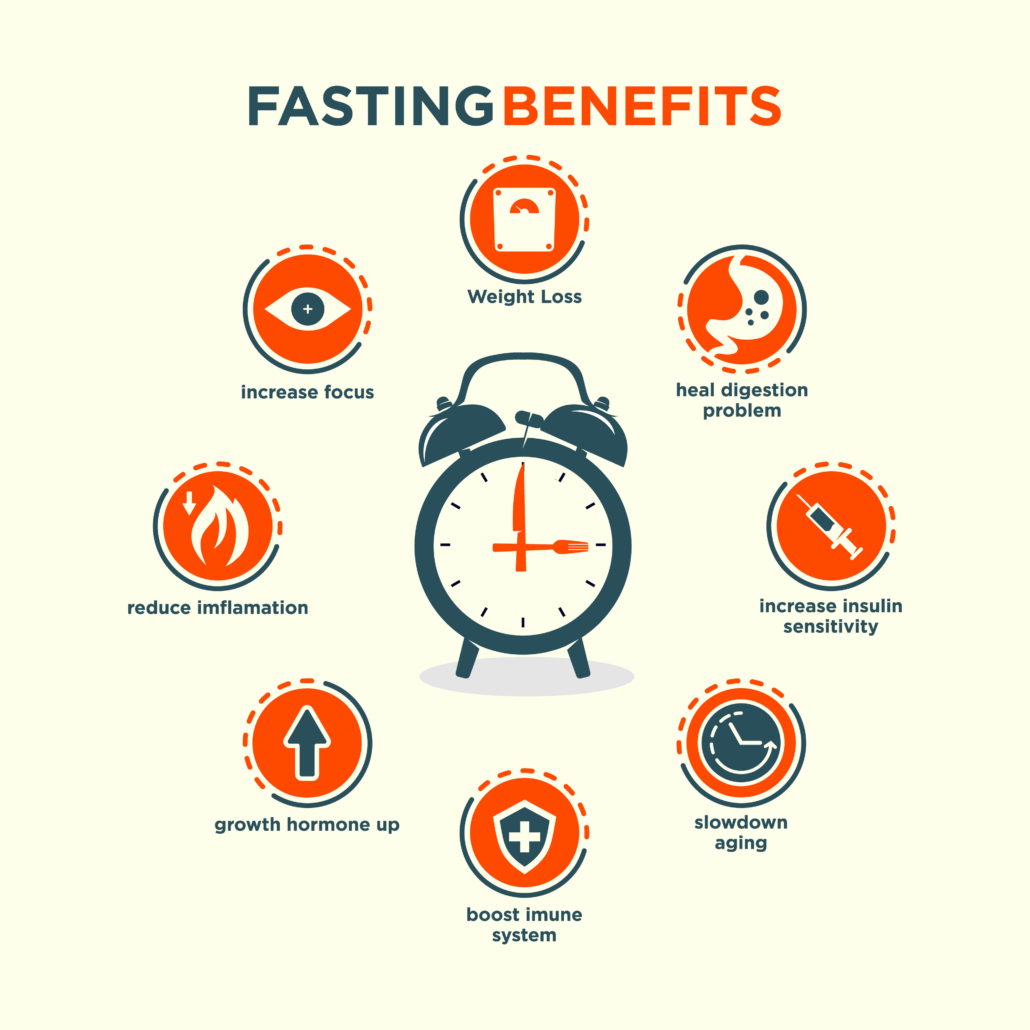
Intermittent fasting calls for alternating between periods of eating and fasting on a daily or weekly basis. People practice both intermittent and prolonged fasting to improve their overall health, reduce inflammation, induce cellular renewal (autophagy), lose weight, and boost brain function. [1]
The length of your fast activates different metabolic processes, each with specific, hour-by-hour benefits. [2]
In this article, we’ll take a deeper look at each of these processes and fasting benefits by hour.
Fasting Timeline
This fasting timeline will give you a sense of the beneficial processes taking place in your body and support you in determining the fasting length that works best for your health goals.

Phase1: Hours 0 – 4
The first four hours after eating is considered the “anabolic phase.”
Anabolic refers to the process where your body builds tissue, mainly muscle. During this time your body is converting the nutrients from your food into tissue growth. [3]
Your pancreas produces insulin to support the process of moving glucose out of your bloodstream and turning excess sugar into fat.
Of course, if you’re on a low-carb high-fat diet like keto or a meat-based diet, you’re body is processing far less glucose, and instead is focused on converting dietary fat into energy molecules called ketones to power your cells.
Phase 2: Hours 4 – 16
Fasting hours 4 to 16 constitute the “catabolic phase.”
This phase occurs when your body has depleted the energy reserves from the food you eat. It is characterized by the breakdown of larger molecules of stored energy into smaller energy molecules which are mobilized to fuel your cells.
For people practicing the most common intermittent fasting protocols, the health benefits come from the processes stimulated mainly in phase 2.
Ketosis Begins
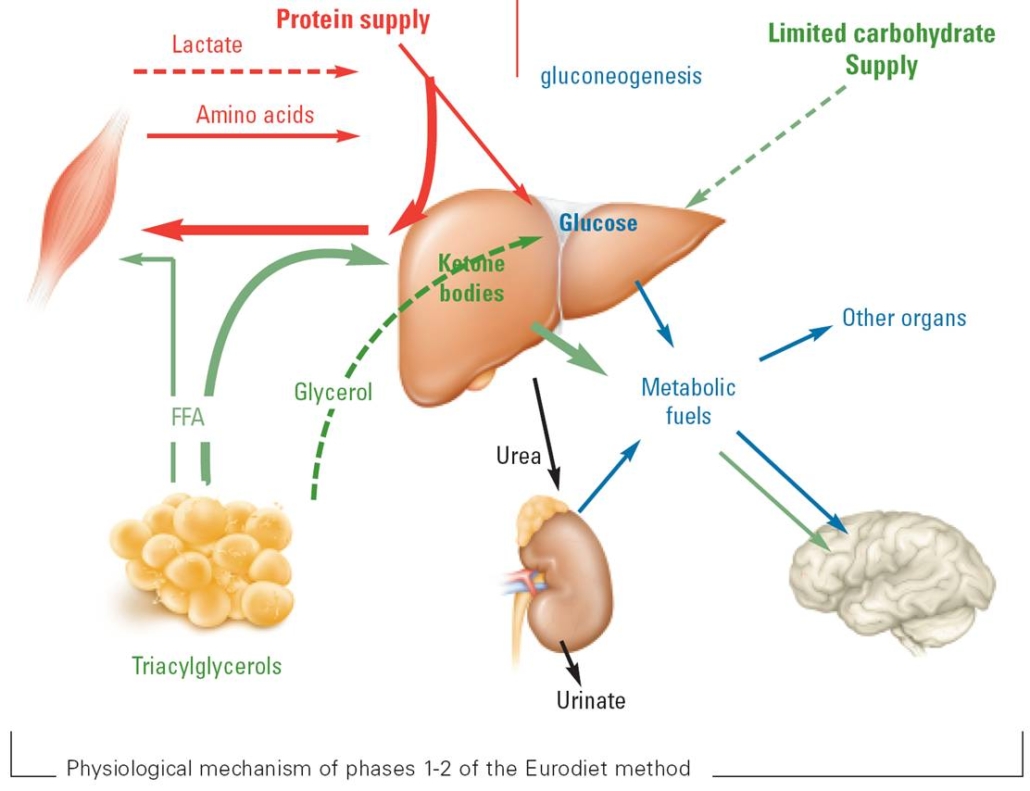
Overview of various metabolic pathways in the body. Source: https://gardenrain.files.wordpress.com/2009/04/ketosis.jpg
In your body, the anabolic process entails breaking down glycogen (stored glucose in the liver and muscles) as well as the fat stored on your body (triglycerides) into fuel sources for various bodily functions.
If you’re consuming a high-carb diet, that fat (triglyceride) burning stage generally occurs during the end of the 16-hour period.
But if you eat a generally low-carb, high-fat diet, your body will already be in a ketogenic state. In this case, phase 2 will serve to enhance this ketogenic state.
If you seldom practice intermittent fasting, you can enhance fat burning by reducing carb intake and increasing consumption of fatty, whole foods 1-3 days before fasting.
Autophagy Begins
Autophagy means “self-eating” and refers to a process of cellular repair and renewal.
Autophagy works by cleaning out misfolded proteins and damaged organelles and by removing infectious bacteria and viruses like mycobacterium, tuberculosis, streptococcus, mycotoxins, and herpes. [4] [5] [6] [7]
Fasting, calorie restriction, and exercise all induce this vital process. Yet our modern lives are characterized by sitting still and eating too much and constantly. Disrupting autophagy can cause a bevy of problems associated with abnormal cell growth, including diabetes, cancer, and infectious and neurological diseases. [8]
Though studies on autophagy and fasting are new and few, it appear that you need to fast for at least 16-18 hours. And you must fast in accord with your circadian rhythm, which means overnight. [9] [10] [11]
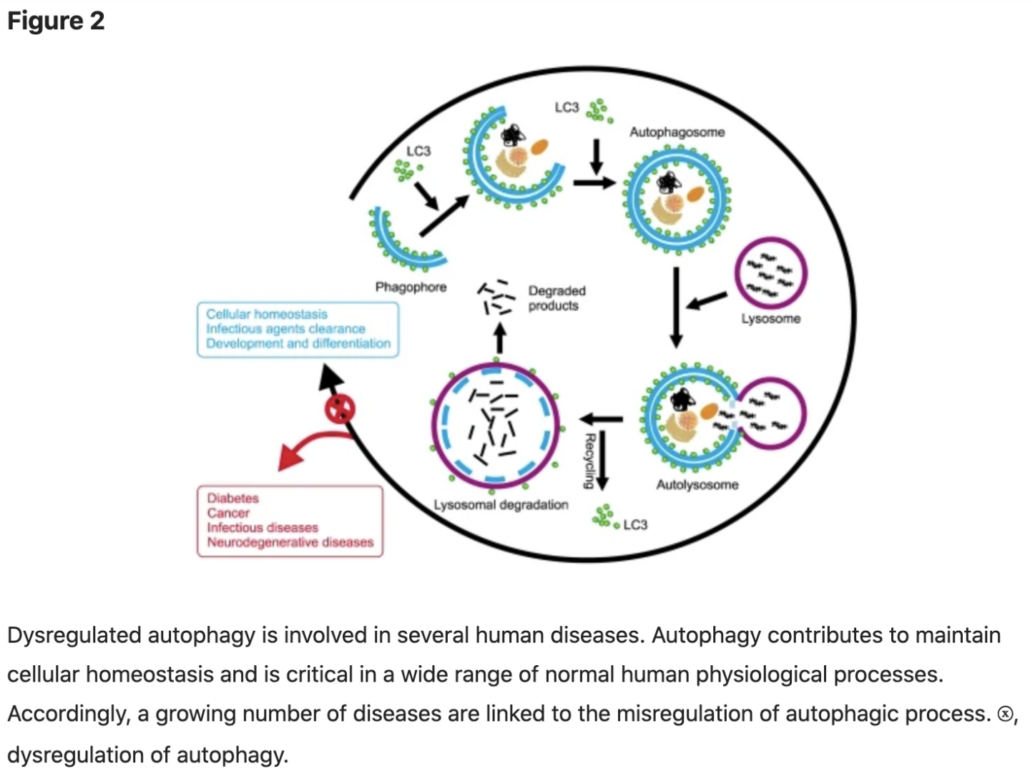
Source: Jing, K., Lim, K. Why is autophagy important in human diseases? Exp Mol Med 44, 69–72 (2012)
Phase 3: Hours 16 – 24
Phase 3 is your primary fat-burning and autophagic phase. Most people’s bodies will be completely depleted of energy from food, your glycogen will be used up, and your metabolism will have made the transition into ketosis.
During this period, an energy-sensing enzyme called AMPK gets fully triggered, activating gene expressions that promote more autophagy. [12]
Increased HGH (Human Growth Hormone)
Studies on 24-hour fasts have found that this period can increase HGH by a factor of 20 in men and 13 in women. [13]
Higher levels of serum HGH (human growth hormone) are associated with better memory, increased muscle mass, less water retention, and a reduction in the stress hormone cortisol. [14]
Phase 4: Hours 24 – 72
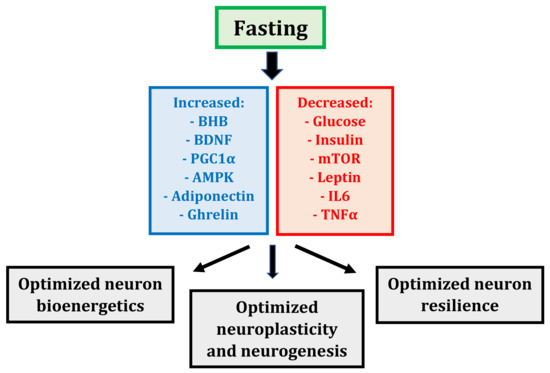
Source: Phillips, M.C.L. Fasting as a Therapy in Neurological Disease. Nutrients 2019, 11, 2501
Stage 4 is the “full bore” stage when ketosis and autophagy are at their peak. Your body is busy converting fat cells into ketone esters which fuel the mitochondria of nearly every cell. [15]
Studies have found that for relatively lean (but not obese) people, 72hs of fasting induces a form of beneficial insulin resistance that inhibits glucose uptake but is linked with increased fat burning (lipid oxidation) and increases of ketones muscle cells. This means your body is literally running on energy from fat. [16]
For many people, phase 3 is associated with laser-like mental clarity and stable mood, and we have this abundance of ketones to thank, along with a chemical called brain-derived nootropic factor, that we’ll turn to next. [17]
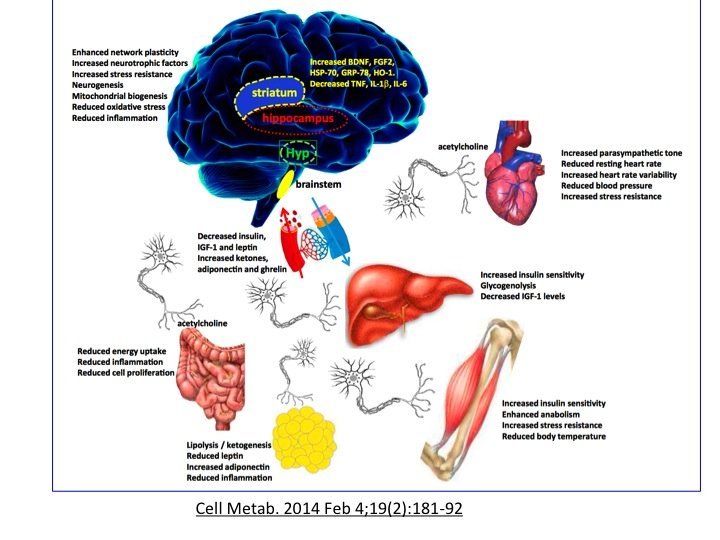
BDNF (Brain-Derived Nootropic Factor)
BDNF, which stands for brain-derived neurotrophic factor, is a protein that helps grow and maintain these new neurons. [18] Because of these features, leading neuropsychiatrist John J. Ratey deemed it “Miracle-Gro for the brain.”
Studies have found that increased levels of BDNF are associated with better learning. Low BDNF levels are associated with neurodegenerative diseases, including Parkinson’s and Alzheimer’s. [19]
Animal studies show that intermittent fasting can increase BDNF and that this effect may contribute to decreased incidences of depression, anxiety, and neurodegenerative diseases. [20]
Phase 5: Hours 72+
At 72+ hours, you are firmly in the realm of prolonged fasting. Most prolonged fasts terminate at five days.
After 72 hours, your body
- is in a deep state of ketosis where your metabolism is breaking down body fat into powerful energy molecules called ketones
- Autophagy is fully engaged–your cells are undergoing a process of renewal and repair that fights disease and infection
- Your body is producing high amounts of BDNF, supporting the creation of new neural networks
Stem Cell Production
During phase 5, your liver significantly reduces the production of a hormone called IGF-1, triggering stem cell production.
A 2014 study found that prolonged fasts between 48-120 hours activate pathways that induce stem cell production, leading to cellular toxin resistance, immune system regulation, and protection against cellular damage caused by chemotherapy. [21]
Fasting Benefits By Hour: The Takeaway
Fasting for both intermittent short-term and prolonged periods activates numerous beneficial metabolic processes. But they don’t all happen at once.
Rather, the benefits of fasting are activated and enhanced hour by hour.
Here’s a recap.
- Phase 1: 0 to 4 hours– “Anabolic” phase, which is business as usual as your body breaks down nutrients from food and converts them into energy and body tissue.
- Phase 2: 4 to 16 hours– “Catabolic” phase where you begin to metabolize body fat as energy and autophagy is activated.
- Phase 3: 16 to 24 hours– Fat metabolism, autophagy, and the production of Human Growth Hormone all increase.
- Phase 4: 24 to 72 hours– Increased production of ketones that fuel most cells in your body while BDNF increases to support brain function and neuroregeneration.
- Phase 5: 72+ hours– The fat-burning, neuroprotective, and anti-aging benefits activated in the previous hours are enhanced.
Article Sources
- 1. De Cabo R and Mattson MP. Effects of intermittent fasting on health, aging, and disease. New England Journal of Medicine. 2019;381(26):2541-2551. doi: 10.1056/NEJMra1905136.
- 2. Anton SD, Moehl K, Donahoo WT, Marosi K, Lee SA, Mainous AG 3rd, Leeuwenburgh C, Mattson MP. Flipping the Metabolic Switch: Understanding and Applying the Health Benefits of Fasting. Obesity (Silver Spring). 2018 Feb;26(2):254-268. doi: 10.1002/oby.22065.
- 3. Kelsey Gabel , Krista A Varady, Intermittent Fasting and Muscle Lipid Metabolism: Commentary on: Liu et al “Effects of intermittent fasting or calorie restriction on markers of lipid metabolism in human skeletal muscle”, The Journal of Clinical Endocrinolo
- 4. Gutierrez MG, Master SS, Singh SB, Taylor GA, Colombo MI, Deretic V. Autophagy is a defense mechanism inhibiting BCG and Mycobacterium tuberculosis survival in infected macrophages. Cell. 2004 Dec 17;119(6):753-66. doi: 10.1016/j.cell.2004.11.038. PMID: 15
- 5. Nakagawa I, Amano A, Mizushima N, Yamamoto A, Yamaguchi H, Kamimoto T, Nara A, Funao J, Nakata M, Tsuda K, Hamada S, Yoshimori T. Autophagy defends cells against invading group A Streptococcus. Science. 2004 Nov 5;306(5698):1037-40. doi: 10.1126/science.11
- 6. Singh SB, Davis AS, Taylor GA, Deretic V. Human IRGM induces autophagy to eliminate intracellular mycobacteria. Science. 2006 Sep 8;313(5792):1438-41. doi: 10.1126/science.1129577. Epub 2006 Aug 3. PMID: 16888103.
- 7. Tallóczy Z, Virgin HW 4th, Levine B. PKR-dependent autophagic degradation of herpes simplex virus type 1. Autophagy. 2006 Jan-Mar;2(1):24-9. doi: 10.4161/auto.2176. Epub 2006 Jan 15. PMID: 16874088.
- 8. Daniel J. Klionsky, Scott D. Emr ,Autophagy as a Regulated Pathway of Cellular Degradation.Science290,1717-1721(2000).DOI:10.1126/science.290.5497.1717
- 9. Federico Pietrocola, Yohann Demont, Francesca Castoldi, David Enot, Sylvère Durand, Michaela Semeraro, Elisa Elena Baracco, Jonathan Pol, Jose Manuel Bravo-San Pedro, Chloé Bordenave, Sarah Levesque, Juliette Humeau, Alexis Chery, Didier Métivier, Frank Ma
- 10. Rittig N, Bach E, Thomsen HH, Møller AB, Hansen J, Johannsen M, Jensen E, Serena A, Jørgensen JO, Richelsen B, Jessen N, Møller N. Anabolic effects of leucine-rich whey protein, carbohydrate, and soy protein with and without β-hydroxy-β-methylbutyrate (HMB
- 11. Ulgherait, M., Midoun, A.M., Park, S.J. et al. Circadian autophagy drives iTRF-mediated longevity. Nature 598, 353–358 (2021). https://doi.org/10.1038/s41586-021-03934-0
- 12. Park, JM., Lee, DH. & Kim, DH. Redefining the role of AMPK in autophagy and the energy stress response. Nat Commun 14, 2994 (2023). https://doi.org/10.1038/s41467-023-38401-z
- 13. Ho KY, Veldhuis JD, Johnson ML, Furlanetto R, Evans WS, Alberti KG, Thorner MO. Fasting enhances growth hormone secretion and amplifies the complex rhythms of growth hormone secretion in man. J Clin Invest. 1988 Apr;81(4):968-75. doi: 10.1172/JCI113450. PM
- 14. Hartman ML, Veldhuis JD, Johnson ML, Lee MM, Alberti KG, Samojlik E, Thorner MO. Augmented growth hormone (GH) secretory burst frequency and amplitude mediate enhanced GH secretion during a two-day fast in normal men. J Clin Endocrinol Metab. 1992 Apr;74(4
- 15, 16. Bak AM, Vendelbo MH, Christensen B, Viggers R, Bibby BM, Rungby J, Jørgensen JOL, Møller N, Jessen N. Prolonged fasting-induced metabolic signatures in human skeletal muscle of lean and obese men. PLoS One. 2018 Sep 5;13(9):e0200817. doi: 10.1371/journal.p
- 17. Ooi TC, Meramat A, Rajab NF, Shahar S, Ismail IS, Azam AA, Sharif R. Intermittent Fasting Enhanced the Cognitive Function in Older Adults with Mild Cognitive Impairment by Inducing Biochemical and Metabolic changes: A 3-Year Progressive Study. Nutrients. 2
- 18. Baik SH, Rajeev V, Fann DY, Jo DG, Arumugam TV. Intermittent fasting increases adult hippocampal neurogenesis. Brain Behav. 2020 Jan;10(1):e01444. doi: 10.1002/brb3.1444. Epub 2019 Dec 5. PMID: 31804775; PMCID: PMC6955834.
- 19. Lima Giacobbo B, Doorduin J, Klein HC, Dierckx RAJO, Bromberg E, de Vries EFJ. Brain-Derived Neurotrophic Factor in Brain Disorders: Focus on Neuroinflammation. Mol Neurobiol. 2019 May;56(5):3295-3312. doi: 10.1007/s12035-018-1283-6. Epub 2018 Aug 17. PMID
- 20. Elesawy BH, Raafat BM, Muqbali AA, Abbas AM, Sakr HF. The Impact of Intermittent Fasting on Brain-Derived Neurotrophic Factor, Neurotrophin 3, and Rat Behavior in a Rat Model of Type 2 Diabetes Mellitus. Brain Sci. 2021 Feb 15;11(2):242. doi: 10.3390/brain
- 21. Cheng CW, Adams GB, Perin L, Wei M, Zhou X, Lam BS, Da Sacco S, Mirisola M, Quinn DI, Dorff TB, Kopchick JJ, Longo VD. Prolonged fasting reduces IGF-1/PKA to promote hematopoietic-stem-cell-based regeneration and reverse immunosuppression. Cell Stem Cell.