

The weight loss journey is full of myths, fads, and conflicting advice. Amidst all the bogus info, there’s a nutritional powerhouse that’s been overlooked for too long.
Beef liver is gaining attention as a foundational food for overall health, of which losing excess weight plays a part for many people. Packed with essential nutrients and offering a range of benefits, beef liver might be the missing piece in your journey to weight loss and well-being.
In this article, we’ll explore the science-backed ways that beef liver is good for weight loss. From its unsurpassed nutrient profile to its influence on metabolism, we will uncover the ways in which beef liver can support your weight loss goals.
1. Nutrient-Packed Superfood
There’s a lot of “superfood” tagging going around, and most foods, especially in the plant kingdom, do not live up to the billing. Blueberries? You have to be kidding.
But beef liver stands head and shoulders above essentially every other food when considering the density, variety, and importance of the nutrients it provides.
Rich in vitamin A retinol, a complex of B vitamins (especially B12), iron, zinc, and selenium, beef liver is a naturally potent dose of nutrients that support key metabolic rates, lipid peroxidation (fat-burning), and various other bodily functions that are important for body composition and weight management.
Let’s explore some of these mechanisms in more detail.

2. Increased Energy and Stamina
More energy and stamina means more movement. More movement means you’re burning more calories. If you burn more calories than you take in, you will lose weight, period.
And we’re not talking about intensive CrossFit-type workouts. Simple daily activities like walking around the house or office, gardening, and doing chores are called nonexercise activity thermogenesis (NEAT) and can burn around 800 daily calories. [1]
Moving more also contributes to lean muscle mass. The greater your muscle mass, the higher your metabolic rate–which is the speed at which your body converts nutrients into energy to keep your body running. [2]
If you’re feeling sluggish, it’s likely a combination of consuming the wrong nutrients and lacking the right nutrients for boosting and sustaining energy.
Foods high in sugars, grains, and seed “vegetable” oils are considered “empty” foods because they provide low-quality calories with few essential micronutrients. Not to mention, they’re highly inflammatory.
Chronic consumption of these foods can lead to a hormonal condition called leptin resistance that causes your body to store calories as fat and reduces motivation for physical activity. [3] [4] [5]
The good news is that beef liver is one of the most energizing foods on earth. And scientists are still trying to figure out why.
Of course, beef liver is loaded with numerous nutrients that all support energy and stamina, including:
- Vitamin A (retinol)
- Vitamin B12
- Riboflavin (Vitamin B2)
- Niacin (Vitamin B3)
- Vitamin C
- Iron
- Magnesium
But these nutrients in isolation and together do not account for the anti-fatigue “X-factor” that has been known to science since at least 1951
In a 1951 article published in the Proceedings for the Society for Experimental Biology and Medicine, Benjamin K. Ershoff, PhD, detailed an experiment in which rats were divided into three groups.
Group 1 wasn’t fed anything. Group 2 was fed B vitamins. Group 3 was fed powdered liver.
The rats were then placed in a barrel of water and left to sink or swim.
Rats in group 1 (no food) swam for an average of 13.3 minutes.
Rats in group 2 (fed B vitamins) swam for an average of 13.4 minutes.
The twelve rats in group 3 ( ed liver) did a whole lot better. The weakling swam for 63 minutes. Two others swam for 83 minutes and 87 minutes. The remaining 9 rats were still swimming when the test ended after 2 hours (120 minutes). [6]
3. Boosts Metabolism
The health of your metabolism is a factor in how efficiently you burn calories. Studies show that B vitamins play a critical role in energy metabolism, or converting food into energy.
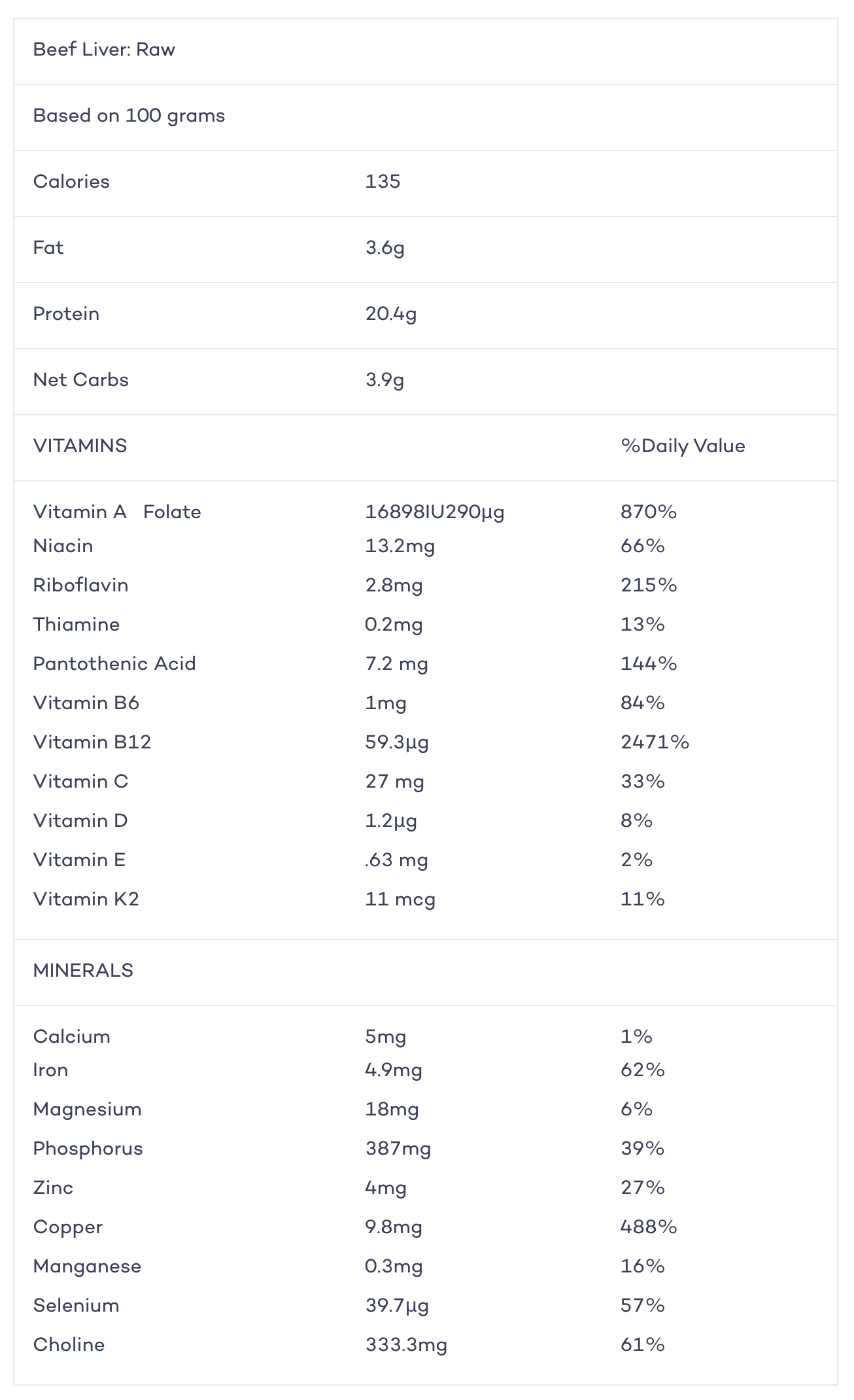
A single 100-gram (3.5 oz) serving of Beef liver provides 2471% of your daily B12, revving up your metabolism by helping to break down fats, carbohydrates, and proteins. [7]
A 2019 study found an inverse relationship between the levels of vitamin B12 in people’s blood and the likelihood of obesity. In other words, obese people generally have lower B12, while more fit people have higher levels. [8]

4. Increases Satiety and Appetite Regulation
As we touched on above, obesity and excess weight gain are associated with resistance to leptin and insulin. These hunger hormone imbalances lead to endless hunger cravings. [9] [10]
Protein is well known for its satiating effects, helping people feel fuller for longer. [11]
A 2019 study out of the University of Sydney revealed that all organisms–including us humans– have specific protein needs and will continue to eat until these protein needs are satisfied. [12]
Beef liver is an extremely high-protein food, offering 20.4 grams of complete proteins per 100-gram serving.
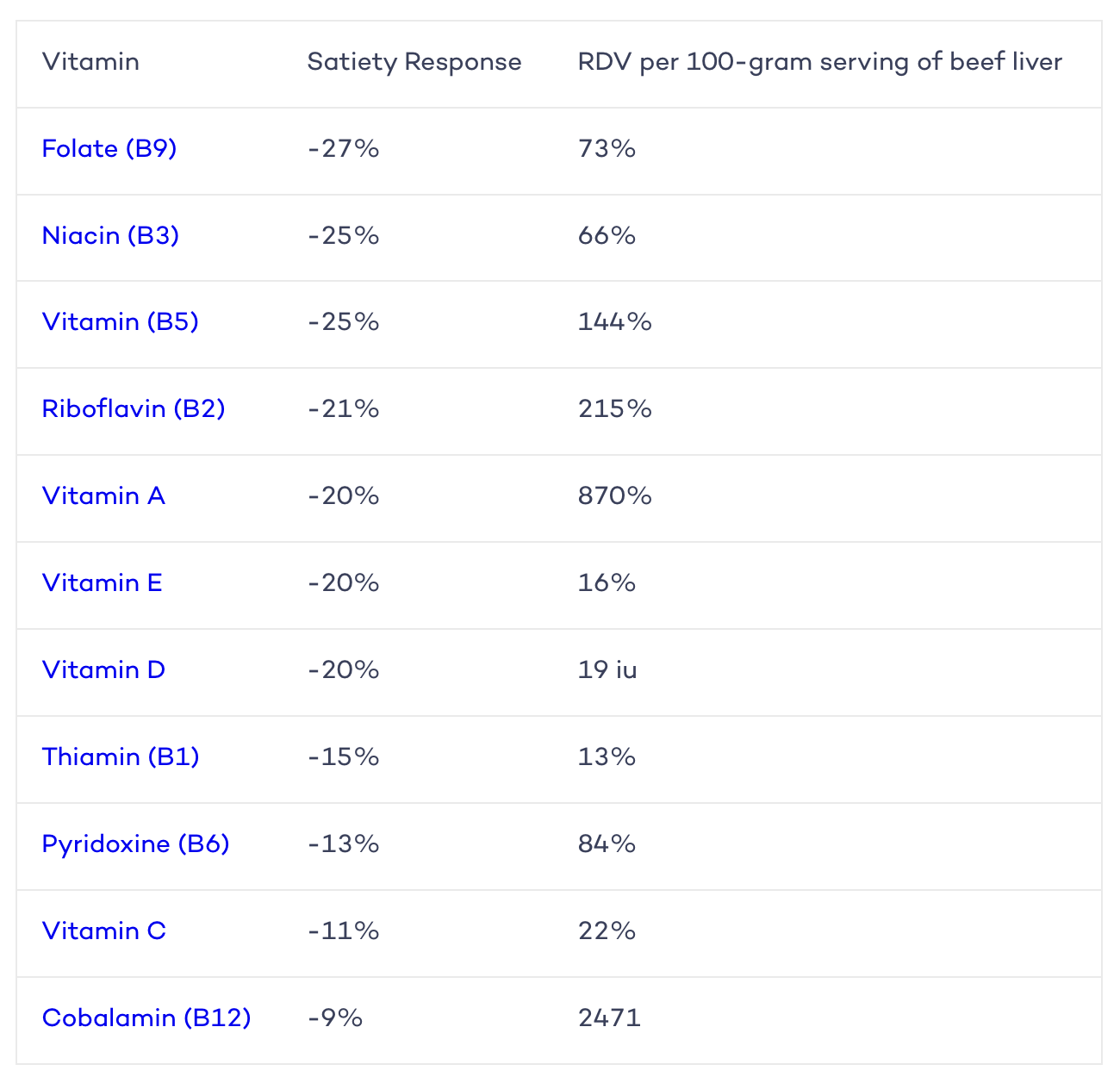
Additionally, beef liver is loaded with micronutrients that have been shown to reduce hunger. The chart below by Optimising Nutrition ranks the most satiating vitamins per calorie of food consumed. [13]
For example, on average, people who consume more folate per calorie consume 27% fewer calories.
5. Nutrient Synergy
The nutrients listed above work synergistically to promote energy and overall physiological health. For example, the combination of iron and vitamin B12 promotes the production of red blood cells. These cells transport oxygen into millions of other cells, supporting energy levels and athletic performance.
6. Thyroid Health
Proper thyroid function is essential to maintaining healthy body composition.
Your body requires iodine and selenium for thyroid hormone synthesis and function. [14]
With 57% of your RDV in selenium, beef liver supports thyroid function and helps regulate metabolism.
Beef Liver Nutrition
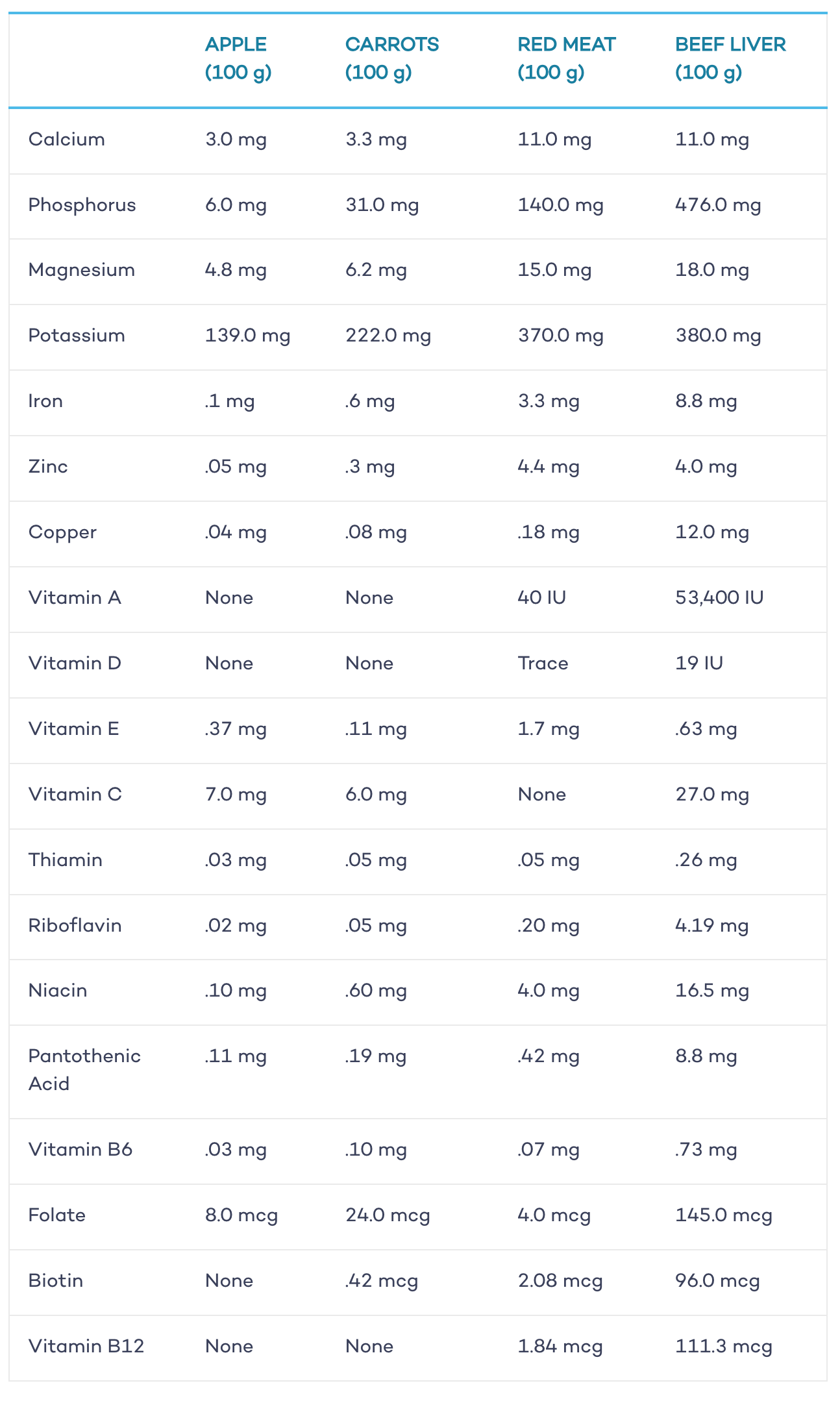
Beef liver is a nutrient-dense, high-protein, and low-carb superfood. In fact, it is so loaded it’s often referred to as nature’s multivitamin. Looking at the nutritional profile, you can see why:
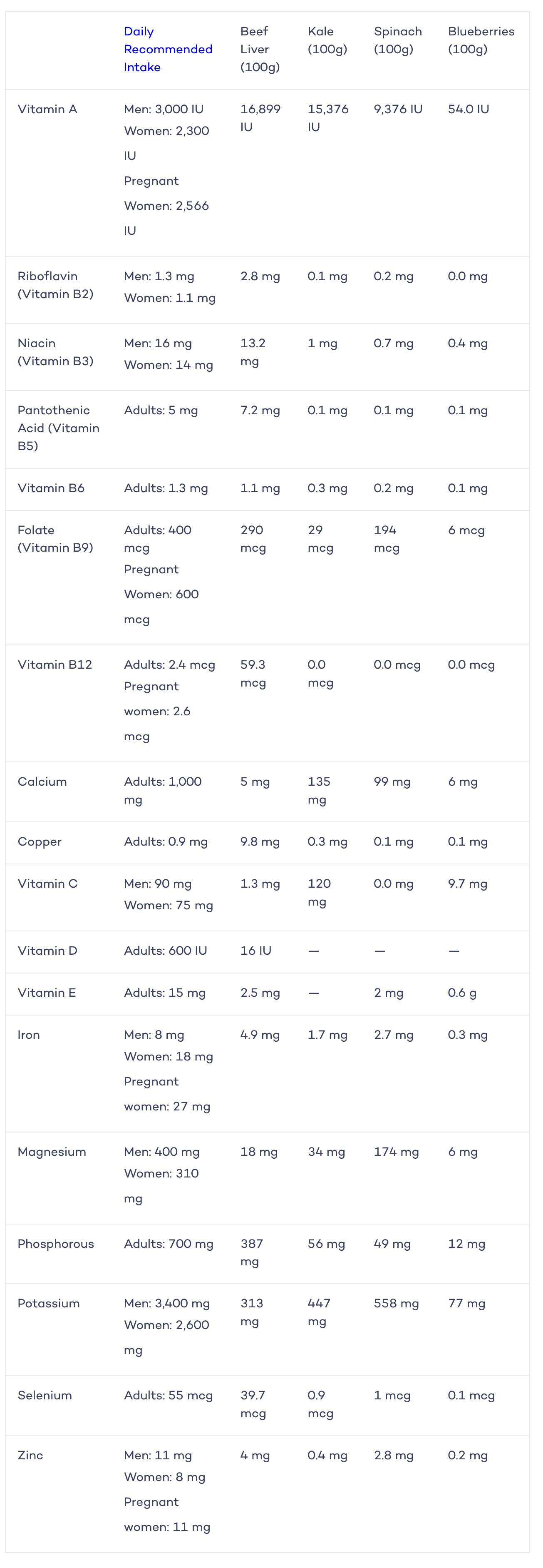
Check out the nutritional comparison between beef liver and other so-called superfoods:
Is Beef Liver Good for Weight Loss? The Bottom Line
After reading this article, if anyone asks, “Is beef liver good for weight loss?” You can justifiably respond, “Is the sky blue?”
Beef liver is likely one of the most effective foods that can support your weight loss goals.
Beef liver is the most nutrient-dense food on earth. Its abundance of nutrients is remarkably satiating, meaning that when you eat beef liver, you’ll likely want to eat less food, and you’ll stay full faster.
At the same time, the specific nutrients in beef liver contribute directly to metabolic and thyroid function, both of which are essential mechanisms of weight control.
Perhaps most importantly, beef liver is remarkably energizing and provides a powerful anti-fatigue factor. The aspects of beef liver support more physical activity. And the more you move, the more calories you burn.
Article Sources
- 1. Non-Exercise Activity Thermogenesis in Human Energy Homeostasis
- 2. McPherron AC, Guo T, Bond ND, Gavrilova O. Increasing muscle mass to improve metabolism. Adipocyte. 2013 Apr 1;2(2):92-8. doi: 10.4161/adip.22500. PMID: 23805405; PMCID: PMC3661116.
- 3. Mantzoros CS. The role of leptin in human obesity and disease: a review of current evidence. Ann Intern Med. 1999 Apr 20;130(8):671-80. doi: 10.7326/0003-4819-130-8-199904200-00014. PMID: 10215564.
- 4. Leptin: physiology and pathophysiology
- 5. Gautron L, Elmquist JK. Sixteen years and counting: an update on leptin in energy balance. J Clin Invest. 2011 Jun;121(6):2087-93. doi: 10.1172/JCI45888. Epub 2011 Jun 1. PMID: 21633176; PMCID: PMC3104762.
- 6. The Liver Files
- 7. Boachie J, Adaikalakoteswari A, Samavat J, Saravanan P. Low Vitamin B12 and Lipid Metabolism: Evidence from Pre-Clinical and Clinical Studies. Nutrients. 2020 Jun 29;12(7):1925. doi: 10.3390/nu12071925. PMID: 32610503; PMCID: PMC7400011.
- 8. Sun Y, Sun M, Liu B, Du Y, Rong S, Xu G, Snetselaar LG, Bao W. Inverse Association Between Serum Vitamin B12 Concentration and Obesity Among Adults in the United States. Front Endocrinol (Lausanne). 2019 Jun 27;10:414. doi: 10.3389/fendo.2019.00414. PMID:
- 9. Jastreboff AM, Lacadie C, Seo D, Kubat J, Van Name MA, Giannini C, Savoye M, Constable RT, Sherwin RS, Caprio S, Sinha R. Leptin is associated with exaggerated brain reward and emotion responses to food images in adolescent obesity. Diabetes Care. 2014 Nov
- 10. Anguah KO, Syed-Abdul MM, Hu Q, Jacome-Sosa M, Heimowitz C, Cox V, Parks EJ. Changes in Food Cravings and Eating Behavior after a Dietary Carbohydrate Restriction Intervention Trial. Nutrients. 2019 Dec 24;12(1):52. doi: 10.3390/nu12010052. PMID: 31878131;
- 11. Protein, weight management, and satiety
- 12. Raubenheimer D, Simpson SJ. Protein Leverage: Theoretical Foundations and Ten Points of Clarification. Obesity (Silver Spring). 2019 Aug;27(8):1225-1238. doi: 10.1002/oby.22531. PMID: 31339001.
- 13. The Role of Vitamins in Satiety and Weight Management
- 14. Triggiani V, Tafaro E, Giagulli VA, Sabbà C, Resta F, Licchelli B, Guastamacchia E. Role of iodine, selenium and other micronutrients in thyroid function and disorders. Endocr Metab Immune Disord Drug Targets. 2009 Sep;9(3):277-94. doi: 10.2174/18715300978