

In recent years, there’s been a revival of interest in animal-based ingredients, including the return of grass-fed butter, leading many people to wonder, “Is grass-fed butter good for you?”
Indeed, research tells us that a higher proportion of grasses in a cow’s diet increases its overall nutrient content. Yet, grass-fed dairy makes up a small percentage of butter produced in the United States. Most dairy cows are raised on grain-based or corn-based feed, and rarely get to graze pastures where they can indulge in their natural diet of grasses, alfalfa, clover, and hay.
In addition to providing an abundance of healthy fatty acids that support the immune system, prevent malignant cell growth, and aid in our digestion, grass-fed butter can be a supplemental source of essential vitamins.
In this article, we’ll discuss the nutritional benefits of grass-fed butter and detail the reasons why you’ll want to choose grass-fed butter over conventional butter.
What is Grass-Fed Butter

Grass-fed butter, sometimes called pasture-raised butter, comes from dairy cows who graze primarily on grass pastures or are fed a grass-based diet.
More than a trend, this type of dairy farming uses traditional methods that prove to be better for human and animal health. The feed of cows directly impacts the fat and nutrient quality of the products made from their milk. [1]
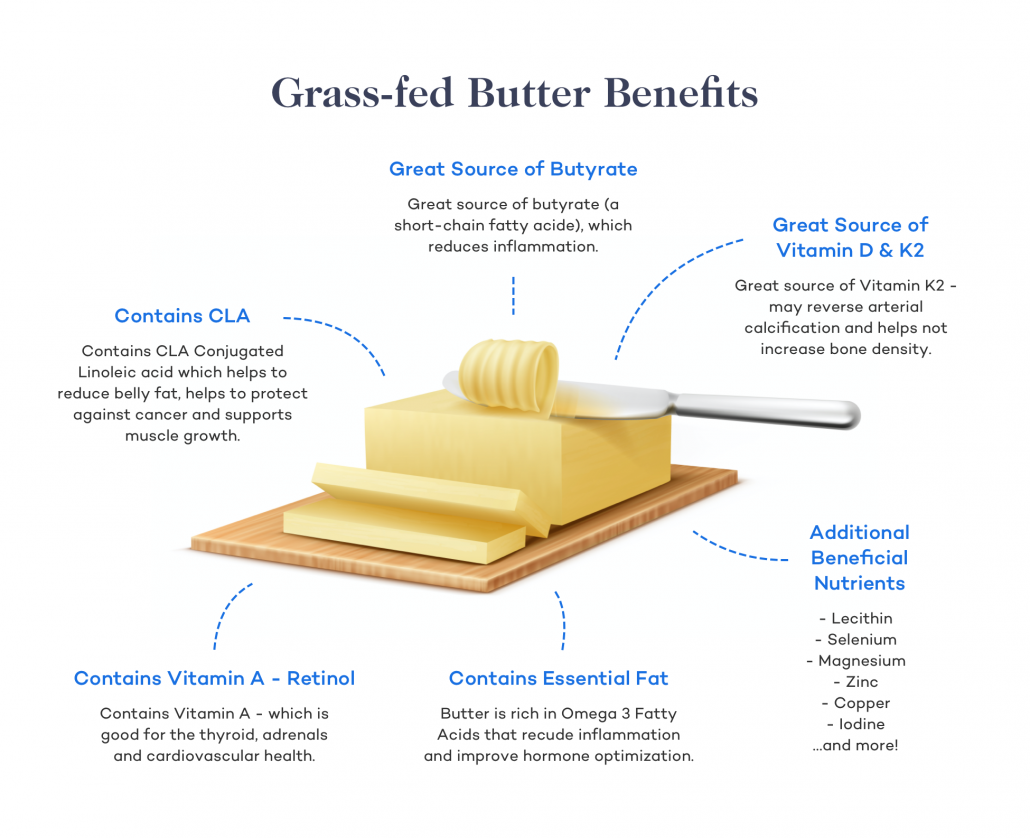

Is grass-fed butter healthy?
Yes! Grass-fed butter is packed with nearly 400 different fatty acids and some critical fat-soluble vitamins. [2]
So why have our food systems at large veered away from this whole food for decades? Well, the story is pretty unsavory. In the mid-20th century, butter was given a bad rap thanks in part to powerful food lobbies promoting vegetable and soybean oils.
The Demonization and Resurrection of Saturated Animal Fats
One physiologist by the name of Dr. Ancel Keys began to link the consumption of saturated fat, particularly from butter and other animal products, with heart disease. The newly industrialized food industry ran with it.
For example, in 1961 Proctor & Gamble, the maker of Crisco, funded the fledgling American Heart Association with the equivalent of $21 million dollars in today’s money. This became a powerful lobby influencing American dietary guidelines to jettison butter and eat more polyunsaturated seed oils. [3]
The consumer population was thereby misled for decades into thinking butter was to blame for chronic heart conditions and obesity.
Only in the 21st century has higher quality mainstream science been able to set the record straight–butter, especially from grass-fed sources is healthy in general, and far more healthy than seed oils. [4] [5]

What the Science Says About Butter and Heart Health
Is grass-fed butter healthy? Well, before turning to the health benefits, let’s run through some mainstream modern studies showing that saturated animal fats, including butter are not unhealthy. Since this seems to be the major sticking point in most conversations regarding butter.
In a 2016 re-evaluation of the diet-heart hypothesis, a randomized control trial looking at the efficacy of replacing saturated fat with polyunsaturated fats found that doing so did lower total cholesterol 14%. However, this resulted in a “22% higher risk of death for each 30 mg/dL reduction in serum cholesterol.” [6]
Another study known as the Sydney Heart Health study, was conducted to support the Australian Heart Association’s theory that replacing saturated fats like you get from butter with PUFAs from seed oils would improve CVD risk factors.
Ironically, people in the group that replaced saturated fat with vegetable oils suffered a 62% higher death rate!
In this 2019 study published in the British Medical Journal titled “Fat or Fiction: the diet-heart Hypothesis,” researchers concluded, “The preponderance of evidence indicates that low-fat diets that reduce serum cholesterol do not reduce cardiovascular events or mortality.” [7]
Then, in 2020, a study co-authored by researchers from leading international medical schools affirmed that “Whole-fat dairy [butter], unprocessed meat, and dark chocolate are SFA-rich foods with a complex matrix (of nutrients) that are not associated with an increased risk of CVD (cardiovascular disease). “The totality of available evidence does not support further limiting the intake of such foods.” [8]
Health Benefits of Grass-Fed Butter
Now that butter is no longer the boogyman at the table, let’s explore why grass-fed butter is a more nutritious option than conventional butter.
Omega-3 Fatty Acids
- Grass-fed butter contains, on average, as much as 26% more omega-3 fatty acids than conventional butter. [9] [10]
- Omega-3’s play a vital role in reducing cellular inflammation and thereby preventing various chronic and autoimmune diseases.
Conjugated Linoleic Acid (CLA)
- Grass-fed butter has a higher concentration of conjugated linoleic acid (CLA) than regular butter. One study suggests as much as 500% more CLA can be found in grass-fed dairy over dairy from conventionally raised cattle. [11]
- Higher amounts of CLA may block the growth of certain cancer cells and prevent the disease altogether. [12] [13]
- A 2005 study on women found that participants who consumed at least four servings of high-fat dairy per day had a 34% lower risk of colon cancer. [14]
- CLA has also been found to reduce cholesterol in people with type 2 diabetes and improve insulin sensitivity in young, sedentary adults. [15] [16]
Vitamin A
- Grass-fed butter is rich in vitamin A – an essential fat-soluble vitamin, meaning that our bodies can’t produce it, and that we must get it through the foods we eat.
- Vitamin A helps our body maintain good vision, promotes steady growth and early life development, and supports our immune system as well as both male and female reproductive systems. [17]
- 2 tbsp of grass-fed butter (28 grams) can provide as much as 22% of your suggested daily intake of vitamin A.
Vitamin K2
- Grass-fed butter provides a moderate amount of vitamin K2, another fat-soluble vitamin essential to skin health, bone health, and the maintenance of proper brain function. [18] [19]
- Vitamin K2 plays a crucial role in regulating calcium metabolism in the body and can help prevent osteoporosis, cardiovascular diseases, and sperm motility, among other conditions. [20]
- One study of over 4,000 participants found there to be a 50% reduction in death from heart disease with a daily consumption of 32 mcg per day of vitamin K2. [21]
- 100 grams of grass-fed butter provides 21 mcg of K2, or 18% RDV.
Butyrate
- Grass-fed butter is high in butyrate, a beneficial short-chain fatty acid (SCFA)
- There is approximately 150 mg of butyrate in 1 teaspoon of butter.
- Most butyrate, or butyric acid, is produced in the gut through fermentation. However, butter is the best dietary source of butyrate and can help restore and support our digestive functions, and is effective against stroke, high cholesterol, and genetic metabolic disorders. [22] [23] [24]
- In people with Crohn’s disease, butyric acid has been shown to decrease inflammation is in the intestines. [25]
Beta Carotene
- Grass-fed butter is rich in the antioxidant beta carotene, which the body uses to convert to vitamin A as needed.
- Studies reveal that grass-fed butter is higher in beta carotene than conventional butter. [26] [27]
- Beta carotene protects the body from free radicals and is linked to reducing the risk of type 2 diabetes, boosting immunological function, and combating certain cancers and chronic diseases. [28] [29]
Arachidonic Acid
- Grass-fed butter is a good source of an unsaturated fat called arachidonic acid. [30]
- Arachidonic acid plays an important role in infant development
- This fatty acid is a precursor to various signaling molecules critical to proper immune response and function. [31]
Best Grass-Fed Butter Brands
Now that we’ve covered the health benefits of grass-fed butter, below is a rundown of what’s on the market and what makes these brands stand out.
1. Frankie’s A2/A2 Raw 100% Grass-Fed “Amish” Butter
Available online only from Frankie’s Free Range Foods. This animal-based food company was started by Frank Tufano, a well-known carnivore diet enthusiast.
What sets Frankie’s butter apart is that it is made from a local Amish farm, it’s 100% Grass Fed, and it’s made from raw A2/A2 dairy fat.
Raw dairy has been linked to reduced allergies, improved digestion, and better immune function. [32] [33] [34] [35] [36]
A2 dairy is free from a dairy protein called beta-casomorphin-7 (casein), which is typical in A1 dairy–the standard for most butter.
Beta-casomorphin -7 has been associated (at least theoretically) with various diseases and disorders. These include type 1 diabetes, Cardiovascular diseases, Autism (in people with immune deficiencies), Schizophrenia (in people with immune deficiencies), sudden infant death syndrome (SIDS), apnea, and constipation. [37] [38] [39] [40]
Does this mean you should only consume A2 dairy? The jury is still out. For now, what we know is that grass-fed butter, whether made from A1 or A2, are both healthy whole foods. But for people with dairy allergies, A2 is a great choice.
2. Organic Valley Cultured Pasture Butter
Organic Valley butter is made at the peak of its pasture season when the cow’s milk is naturally high in omega-3s and CLAs.
Organic Valley boasts never to use any synthetic ingredients in their production, claiming the golden color comes entirely from their summer grasses.
3. Vital Farms Pasture-Raised Butter
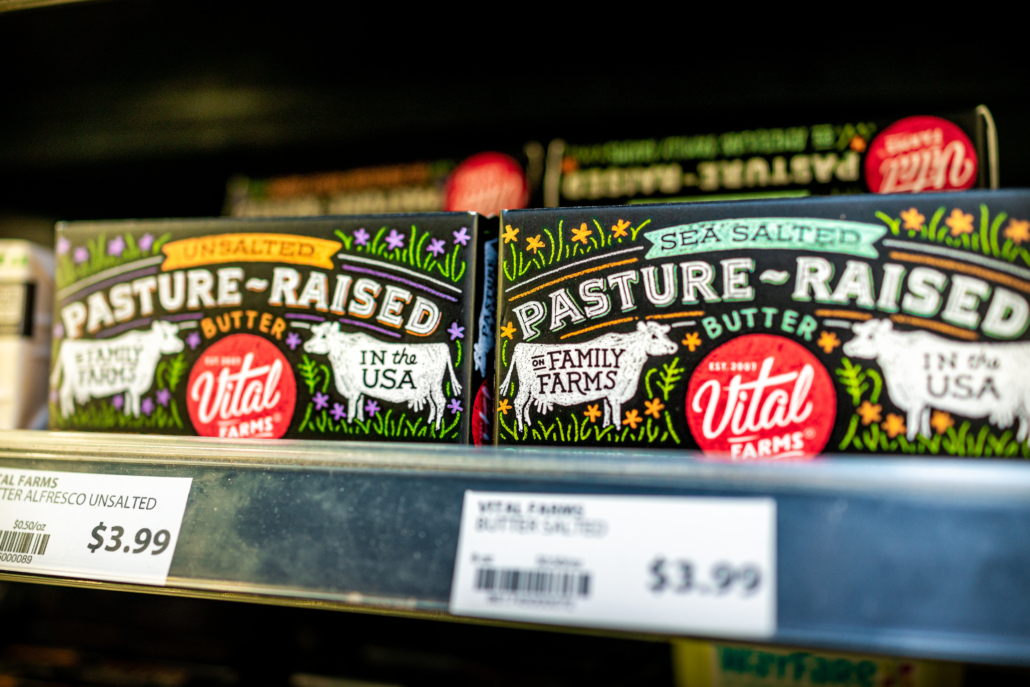
Established in 2007, Vital Farms bills itself as a brand based on sustainability, quality production, and premium ingredients.
Made with 85% butterfat, their pasture-raised butter is rich in color and packed with flavor.
Vital Farms claims that their cows’ primary diet consists of grasses. However, in colder months, they are given a supplement feed, which includes some non-GMO grains.
4. Kirkland Grass-Fed New Zealand Butter
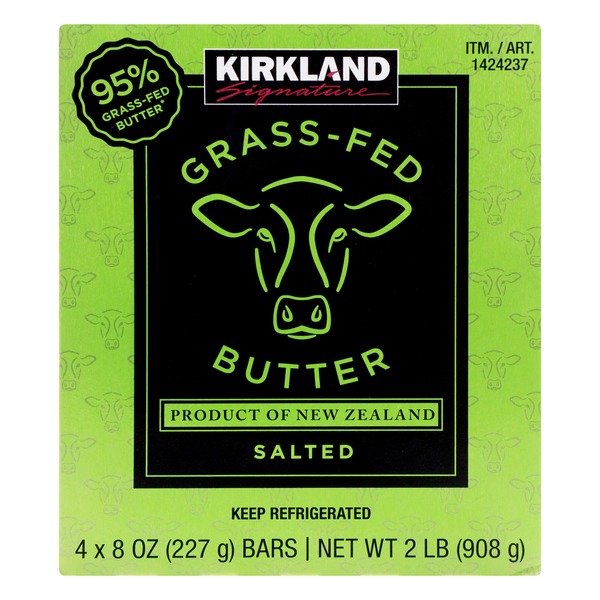
Dairy from New Zealand cows is among the most nutritious on earth, thanks to ideal year-round access to verdant grasslands.
Kirkland is also among the less expensive grass-fed options we found, making it a staple on the budget carnivore shopping list.
5. Kerrygold Pure Irish Butter
Kerrygold Irish butter has the richest golden color of the brands we tested and a smooth, creamy texture. Another bonus is its wide market availability.
Kerrygold claims that about 85% of their Irish cows’ diet is grass-fed, and the rest is supplemental feed during colder months.
Bonus: Local Butcher
It’s always a good idea to check with your local butcher to see what types of butter they carry.
They are typically smaller batch brands that don’t get as much airtime as these other heavy hitters we’ve listed.
And, of course, grass-fed butter and a juicy ribeye cut are a match made in carnivore heaven.
Is Grass-Fed Butter Good for You? The Bottom Line
Grass-fed butter is a healthy addition to any meal. More nutritious than conventional butter, grass-fed butter boasts higher amounts of anti-inflammatory omega-3 fatty acids and butyrate, anti-carcinogenic Conjugated Linoleic Acid (CLA), and vitamins A and K2.
The abundance of fatty acids and antioxidant compounds in grass-fed butter, especially from raw dairy, can improve immunological function, restore gut health, and reduce inflammation.
Consider swapping out conventional butter with grass-fed or pasture-raised options to ensure maximum nutrient absorbency, not to mention flavor!
Article Sources
- 1. Couvreur S, Hurtaud C, Lopez C, Delaby L, Peyraud JL. The linear relationship between the proportion of fresh grass in the cow diet, milk fatty acid composition, and butter properties. J Dairy Sci. 2006 Jun;89(6):1956-69. doi: 10.3168/jds.S0022-0302(06)722
- 2, 22. Månsson HL. Fatty acids in bovine milk fat. Food Nutr Res. 2008;52. doi: 10.3402/fnr.v52i0.1821. Epub 2008 Jun 11. PMID: 19109654; PMCID: PMC2596709.
- 3. Teicholz N. A short history of saturated fat: the making and unmaking of a scientific consensus. Curr Opin Endocrinol Diabetes Obes. 2023 Feb 1;30(1):65-71. doi: 10.1097/MED.0000000000000791. Epub 2022 Dec 8. PMID: 36477384; PMCID: PMC9794145.
- 4. Pipoyan D, Stepanyan S, Stepanyan S, Beglaryan M, Costantini L, Molinari R, Merendino N. The Effect of Trans Fatty Acids on Human Health: Regulation and Consumption Patterns. Foods. 2021 Oct 14;10(10):2452. doi: 10.3390/foods10102452. PMID: 34681504; PMCID
- 5. Ginter E, Simko V. New data on harmful effects of trans-fatty acids. Bratisl Lek Listy. 2016;117(5):251-3. doi: 10.4149/bll_2016_048. PMID: 27215959.
- 6. Ramsden CE, Zamora D, Majchrzak-Hong S, Faurot KR, Broste SK, Frantz RP, Davis JM, Ringel A, Suchindran CM, Hibbeln JR. Re-evaluation of the traditional diet-heart hypothesis: analysis of recovered data from Minnesota Coronary Experiment (1968-73). BMJ. 20
- 7. Fat or fiction: the diet-heart hypothesis
- 8. Arne Astrup, Faidon Magkos, Dennis M. Bier, J. Thomas Brenna, Marcia C. de Oliveira Otto, James O. Hill, Janet C. King, Andrew Mente, Jose M. Ordovas, Jeff S. Volek, Salim Yusuf, Ronald M. Krauss, Saturated Fats and Health: A Reassessment and Proposal for
- 9. Pustjens AM, Boerrigter-Eenling R, Koot AH, Rozijn M, van Ruth SM. Characterization of Retail Conventional, Organic, and Grass Full-Fat Butters by Their Fat Contents, Free Fatty Acid Contents, and Triglyceride and Fatty Acid Profiling. Foods. 2017 Mar 31;6
- 10. Hebeisen DF, Hoeflin F, Reusch HP, Junker E, Lauterburg BH. Increased concentrations of omega-3 fatty acids in milk and platelet rich plasma of grass-fed cows. Int J Vitam Nutr Res. 1993;63(3):229-33. PMID: 7905466.
- 11. Dhiman TR, Anand GR, Satter LD, Pariza MW. Conjugated linoleic acid content of milk from cows fed different diets. J Dairy Sci. 1999 Oct;82(10):2146-56. doi: 10.3168/jds.S0022-0302(99)75458-5. PMID: 10531600.
- 12. den Hartigh LJ. Conjugated Linoleic Acid Effects on Cancer, Obesity, and Atherosclerosis: A Review of Pre-Clinical and Human Trials with Current Perspectives. Nutrients. 2019 Feb 11;11(2):370. doi: 10.3390/nu11020370. PMID: 30754681; PMCID: PMC6413010.
- 13. Rodríguez-Alcalá LM, Castro-Gómez MP, Pimentel LL, Fontecha J. Milk fat components with potential anticancer activity-a review. Biosci Rep. 2017 Nov 15;37(6):BSR20170705. doi: 10.1042/BSR20170705. PMID: 29026007; PMCID: PMC6372256.
- 14. Larsson SC, Bergkvist L, Wolk A. High-fat dairy food and conjugated linoleic acid intakes in relation to colorectal cancer incidence in the Swedish Mammography Cohort. Am J Clin Nutr. 2005 Oct;82(4):894-900. doi: 10.1093/ajcn/82.4.894. PMID: 16210722.
- 15. Eyjolfson V, Spriet LL, Dyck DJ. Conjugated linoleic acid improves insulin sensitivity in young, sedentary humans. Med Sci Sports Exerc. 2004 May;36(5):814-20. doi: 10.1249/01.mss.0000126391.42896.31. PMID: 15126715.
- 16. Baghi AN, Mazani M, Nemati A, Amani M, Alamolhoda S, Mogadam RA. Anti-inflammatory effects of conjugated linoleic acid on young athletic males. J Pak Med Assoc. 2016 Mar;66(3):280-4. PMID: 26968277.
- 17. Gilbert C. What is vitamin A and why do we need it? Community Eye Health. 2013;26(84):65. PMID: 24782580; PMCID: PMC3936685.
- 18. Grazing increases the unsaturated fatty acid concentration of milk from grass-fed cows: A review of the contributing factors, challenges and future perspectives
- 19, 21. Maresz K. Proper Calcium Use: Vitamin K2 as a Promoter of Bone and Cardiovascular Health. Integr Med (Encinitas). 2015 Feb;14(1):34-9. PMID: 26770129; PMCID: PMC4566462.
- 20. Khalil Z, Alam B, Akbari AR, Sharma H. The Medical Benefits of Vitamin K2 on Calcium-Related Disorders. Nutrients. 2021 Feb 21;13(2):691. doi: 10.3390/nu13020691. PMID: 33670005; PMCID: PMC7926526.
- 23. Mayorga-Ramos A, Barba-Ostria C, Simancas-Racines D, Guamán LP. Protective role of butyrate in obesity and diabetes: New insights. Front Nutr. 2022 Nov 24;9:1067647. doi: 10.3389/fnut.2022.1067647. PMID: 36505262; PMCID: PMC9730524.
- 24. Canani RB, Costanzo MD, Leone L, Pedata M, Meli R, Calignano A. Potential beneficial effects of butyrate in intestinal and extraintestinal diseases. World J Gastroenterol. 2011 Mar 28;17(12):1519-28. doi: 10.3748/wjg.v17.i12.1519. PMID: 21472114; PMCID: PM
- 25. Di Sabatino A, Morera R, Ciccocioppo R, Cazzola P, Gotti S, Tinozzi FP, Tinozzi S, Corazza GR. Oral butyrate for mildly to moderately active Crohn's disease. Aliment Pharmacol Ther. 2005 Nov 1;22(9):789-94. doi: 10.1111/j.1365-2036.2005.02639.x. PMID: 1622
- 26. O'Callaghan TF, Faulkner H, McAuliffe S, O'Sullivan MG, Hennessy D, Dillon P, Kilcawley KN, Stanton C, Ross RP. Quality characteristics, chemical composition, and sensory properties of butter from cows on pasture versus indoor feeding systems. J Dairy Sci.
- 27. Faulkner H, O'Callaghan TF, McAuliffe S, Hennessy D, Stanton C, O'Sullivan MG, Kerry JP, Kilcawley KN. Effect of different forage types on the volatile and sensory properties of bovine milk. J Dairy Sci. 2018 Feb;101(2):1034-1047. doi: 10.3168/jds.2017-131
- 28. Institute of Medicine (US) Panel on Dietary Antioxidants and Related Compounds. Dietary Reference Intakes for Vitamin C, Vitamin E, Selenium, and Carotenoids. Washington (DC): National Academies Press (US); 2000. 8, β-Carotene and Other Carotenoids. Availa
- 29. Mayne ST. Beta-carotene, carotenoids, and disease prevention in humans. FASEB J. 1996 May;10(7):690-701. PMID: 8635686.
- 30. A.W. Bosworth, E.W. Sisson, ARACHIDONIC ACID IN BUTTER FAT, Journal of Biological Chemistry, Volume 107, Issue 2, 1934, Pages 489-496, ISSN 0021-9258, https://doi.org/10.1016/S0021-9258(18)75367-2.
- 31. Hadley KB, Ryan AS, Forsyth S, Gautier S, Salem N Jr. The Essentiality of Arachidonic Acid in Infant Development. Nutrients. 2016 Apr 12;8(4):216. doi: 10.3390/nu8040216. PMID: 27077882; PMCID: PMC4848685.
- 32. Braun-Fahrländer C, von Mutius E. Can farm milk consumption prevent allergic diseases? Clin Exp Allergy. 2011 Jan;41(1):29-35. doi: 10.1111/j.1365-2222.2010.03665.x. PMID: 21155907.
- 33. Loss G, Apprich S, Waser M, Kneifel W, Genuneit J, Büchele G, Weber J, Sozanska B, Danielewicz H, Horak E, van Neerven RJ, Heederik D, Lorenzen PC, von Mutius E, Braun-Fahrländer C; GABRIELA study group. The protective effect of farm milk consumption on ch
- 34. Sozańska B, Pearce N, Dudek K, Cullinan P. Consumption of unpasteurized milk and its effects on atopy and asthma in children and adult inhabitants in rural Poland. Allergy. 2013;68(5):644-50. doi: 10.1111/all.12147. Epub 2013 Mar 27. PMID: 23534445.
- 35. Waser M, Michels KB, Bieli C, Flöistrup H, Pershagen G, von Mutius E, Ege M, Riedler J, Schram-Bijkerk D, Brunekreef B, van Hage M, Lauener R, Braun-Fahrländer C; PARSIFAL Study team. Inverse association of farm milk consumption with asthma and allergy in
- 36. Sozańska B. Raw Cow's Milk and Its Protective Effect on Allergies and Asthma. Nutrients. 2019 Feb 22;11(2):469. doi: 10.3390/nu11020469. PMID: 30813365; PMCID: PMC6413174.
- 37. A1 and A2 Bovine Milk, the Risk of Beta-casomorphin-7 and Its Possible Effects on Human Health: (II) Possible Effects of Beta-casomorphin-7 on Human Health
- 38. Birgisdottir BE, Hill JP, Thorsson AV, Thorsdottir I. Lower consumption of cow milk protein A1 beta-casein at 2 years of age, rather than consumption among 11- to 14-year-old adolescents, may explain the lower incidence of type 1 diabetes in Iceland than i
- 39. Wasilewska J, Sienkiewicz-Szłapka E, Kuźbida E, Jarmołowska B, Kaczmarski M, Kostyra E. The exogenous opioid peptides and DPPIV serum activity in infants with apnoea expressed as apparent life threatening events (ALTE). Neuropeptides. 2011 Jun;45(3):189-95
- 40. Kost NV, Sokolov OY, Kurasova OB, Dmitriev AD, Tarakanova JN, Gabaeva MV, Zolotarev YA, Dadayan AK, Grachev SA, Korneeva EV, Mikheeva IG, Zozulya AA. Beta-casomorphins-7 in infants on different type of feeding and different levels of psychomotor developmen