
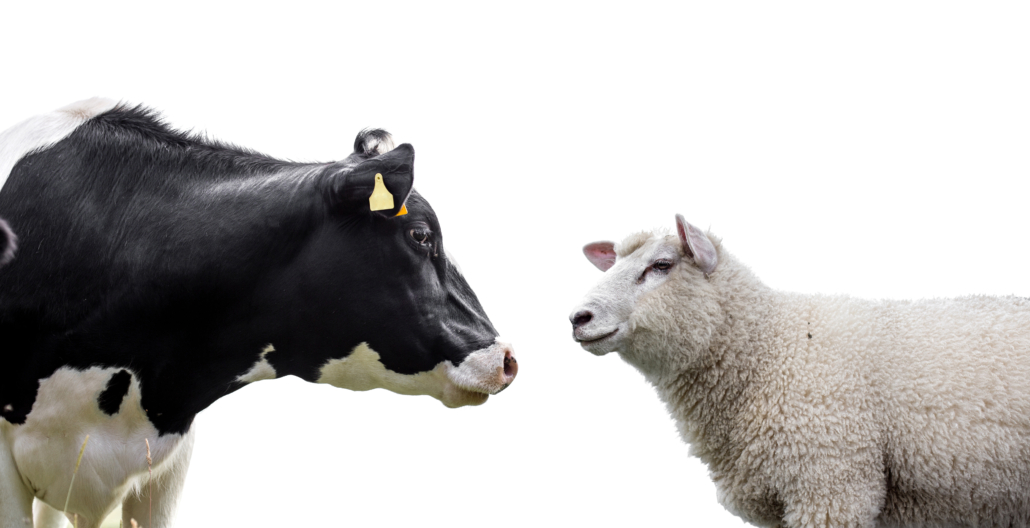
Lamb vs. beef? Both of these red meats are bonafide superfoods loaded with healthy fats, complete proteins, and a robust matrix of essential vitamins and minerals.
In fact, lamb and beef are so nutritionally-replete that they’re the centerpiece of a movement of “Lion Dieters” thriving on only red meat, salt, and water. You may have heard of this approach from popular meat-based enthusiasts like psychologist Jordan Peterson and podcast host Joe Rogan.
But even when considering that both lamb and beef are healthy whole foods, is one healthier than the other?
In this article, we’ll explore the question of lamb vs. beef using a head-to-head nutritional comparison.
Lamb vs. Beef for Health
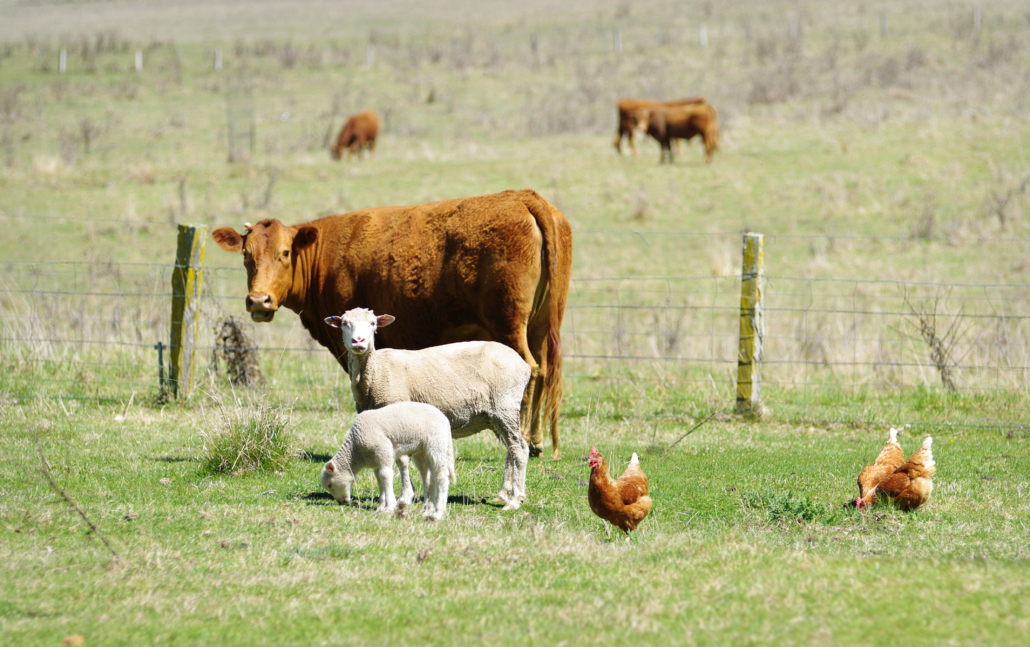
Lamb and beef are both red meat from ruminant animals.
Ruminant animals graze on grass and rely on a rumen stomach that ferments cellulose from plants into fatty acids as a primary energy source.
Ruminant animals are better than nonruminant animals like pigs, fish, and fowl at transforming foods into an optimal fatty acid profile for humans.
The ruminant digestive process also does a good job of eliminating naturally occurring plant toxins and antinutrients from the plant they eat.
Since humans don’t have a rumen, when we eat plant foods, their natural plant defense mechanisms can inhibit nutrient absorption, degrade our intestinal barrier, and cause inflammation.
The Human Body is Designed to Eat Lamb and Beef
Though the plant-based movement is loudly promoted by health institutions, modern research is telling a different story. One in which meat is an unfairly maligned and ultimately extremely healthy food.
In fact, numerous lines of evidence suggest that the human body evolved on a mostly carnivorous diet of fatty meat for nearly 2 million years until the dawn of agriculture only 10,000 years ago. [1]
Our ability to harvest and eat the meat of large fatty animals is what gave us the abundance of brain-boosting nutrients that eventually separated us from our herbivorous primate ancestors.
Our modern bodies are nearly identical to our hunter-gatherer ancestors and preserve these same physiological traits for thriving on meat.
A 2023 study published in Animal Frontiers, concluded that “Aspects of human anatomy, digestion, and metabolism diverged from other primates, indicating evolutionary reliance on, and compatibility with, substantial meat intake. Implications of a disconnect from evolutionary dietary patterns may contribute to today’s burden of disease, increasing the risk for both nutrient deficiencies and chronic diseases.” [2]
Centering your diet around red ruminant meats like lamb and beef while cutting processed industrial foods like grains, sugars, and vegetable oils can be viewed as a way to reclaim your metabolic healthy by aligning your food choices with ancestral eating patterns.
If you’re still influenced by the anti-meat dogma that has plagued the dietary guidelines since the 1950s, here’s a rundown of what mainstream modern nutritional science has to say.
- For the vast majority of people, fresh meat is remarkably healthy. Lamb and beef are loaded with bioavailable and meat-specific nutrients, highly satiating, and associated with various markers of health, fertility, and longevity. [3] [4]
- Eating more meat is correlated with longer life expectancy. This is true even when considering total caloric intake, socioeconomic status, the advantages of modern health care and urban living, and obesity [3]
- Saturated fat–the part of lamb and beef that is most demonized– is part of a complex and healthy matrix of nutrients and is healthy for most people [5] [6] [7] [8] [9] [10] [11] . A study published in the Journal of the American College of Cardiology found, “Although intake of processed meat has been associated with increased risk of CHD, intake of unprocessed red meat is not, which indicates that the saturated fat content of meat is unlikely to be responsible for this association” [12]
- Studies that compare high-meat, low-carb diets to non-meat diets routinely reveal that high-meat diets result in better cardiovascular health, weight loss, and blood sugar regulation [13] [14] [15]

Lamb vs. Beef: Nutrition
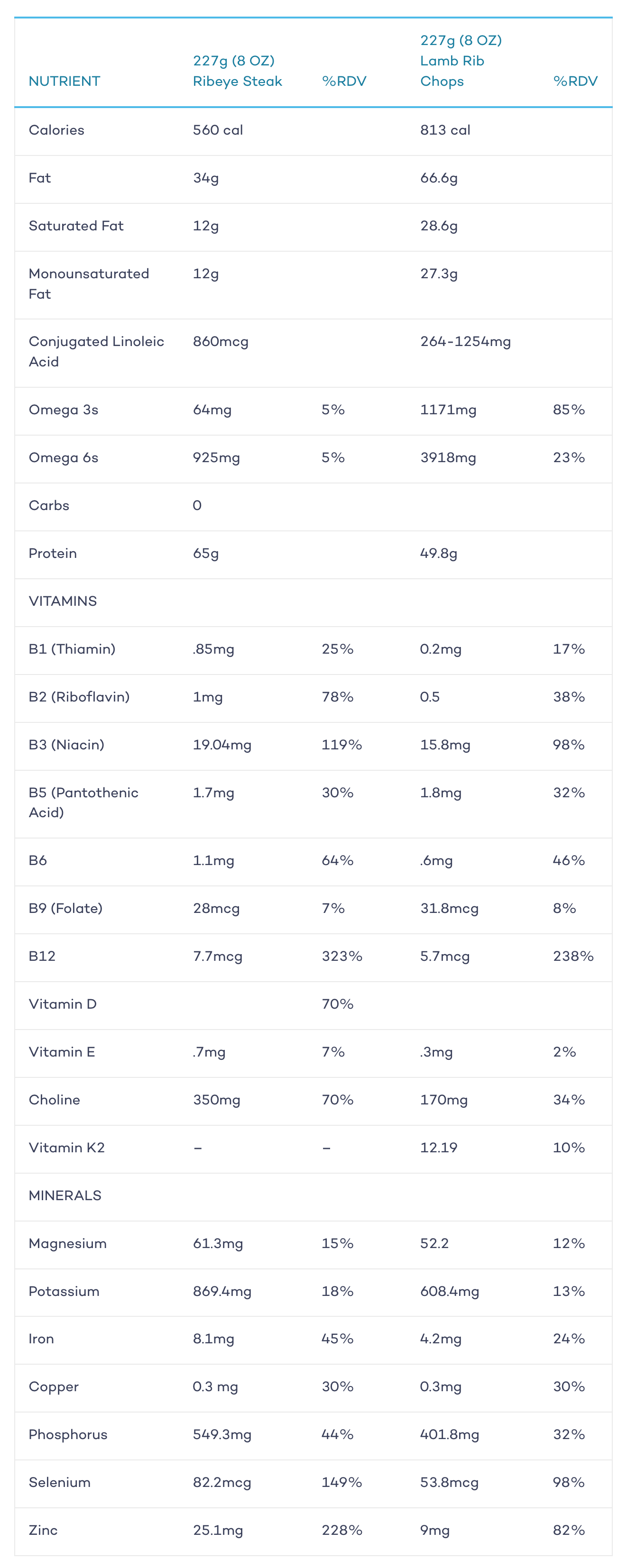
Source: MyFoodData.com and USDA
Lamb vs. Beef Health Benefits
When determining the health benefits of lamb vs. beef, the best place to start is by comparing their beneficial nutrients. This entails fats, proteins, vitamins, minerals, and antioxidants. Let’s dig in.
Lamb vs. Beef: Fatty Acid Profiled
Both lamb and ribeye steak have excellent fatty acid profiles, but lamb has the edge thanks to a hyper-abundance of a highly beneficial fatty acid called Conjugated Linoleic Acid (CLA).
Conjugated Linoleic Acid
CLA is formed in when plants are fermented during the ruminant process. The outcome is a fatty acid that has been clinically shown to [16] [17] [18] [19] [20] :
- Reduce excess body fat and increase lean muscle mass
- Reduced the risk of heart disease
- Boost immune function
- Prevents and reverse symptoms of type-2 diabetes
- Supports bone formation and mineral density
CLA is a fatty acid that the human body can’t make on its own, so we need to get it from animal food sources.
Lamb provides more CLA than any other food, boasting 4 – 19.0 mg CLA per gram of fat.
Monounsaturated Fat
Around ⅓ of the fat in both lamb and beef is monounsaturated fat.
Studies show that monounsaturated fat provides anti-inflammatory properties, reduces bad cholesterol, and increases good cholesterol, which may reduce the risk of heart disease [21] [22] [23] [24] [25] [26]
Stearic Acid
Stearic acid is a beneficial saturated fatty acid that has been shown to [27] [28]
- improve body fat ratio
- support mitochondrial function–the energy factories inside your cells
- promote weight loss
- Lower or have a neutral effect on LDL (bad) cholesterol
In beef, stearic acid makes up 31.4% of the saturated fat. In lamb it accounts for 35.3% of the total saturated fat. This gives lamb a very slight edge.
Omega 3 Fatty Acids
For a land animal, lamb provides a remarkable dose of omega-3 fatty acids, with 85% RDV per 8 oz. serving.
Ribeye steak eeks out only 5% RDV.
Omega 3 fatty acids provide numerous benefits for your body and brain, including.
- Protection against depression and anxiety [29] [30]
- Supports eye health [31]
- Blood sugar regulation [32]
- Reduced inflammation [33]
Lamb vs. Beef: Vitamins
The vitamin content of lamb vs. beef is neck and neck, with both providing significant B and important minerals. But let’s look at a few areas where they vary.
Vitamin B12
Both lamb and beef provide an abundance of B12, but beef tops lamb with 323% vs. 238% RDV.
B12 is one of the most important vitamins and plays a key role in vital functions, including [34]
- Formation of red blood cells,
- Converting food into energy
- Synthesizing DNA
- Brain function
- Deficiency in B12 can lead to dementia and Alzheimer’s disease
- Overall well-being and vitality
The importance of b12 to neurological function is reflected in the numerous studies showing that people who eat more meat experience significantly lower incidences of depression and psychiatric disorders than vegetarians and vegans. [35] [36] [37] [38]
Choline
Here’s another nutrient where beef comes out on top with 70% vs. 34% in lamb.
Not exactly a vitamin nor a mineral, choline straddles both worlds, but is often grouped with B vitamins based on the critical roles it plays in the body, including [39]
- neurotransmitter synthesis
- cell-membrane signaling
- Transporting fat
- Critical for infant brain development–specifically of memory systems
- Lowers the risk of neural tube defects in infants
Not getting enough choline can increase the risk of pregnancy complications, including preeclampsia, premature birth, and low birth weight. [40]
Lamb vs. Beef: Minerals and Amino Acids
Both lamb and beef provide an abundance of minerals and meat-specific amino acids with powerful health benefits. Let’s compare.
Carnitine
Lamb has the highest concentration of carnitine of all foods, with 434mg per 8oz.
While beef provides 112-324mg per 8oz.
Carnitine has been found to [41]
- significantly improve male fertility
- Reduce anemia
- Boost mitochondrial function and improve insulin sensitivity for people with type 2 diabetes
- Support heart health
Carnosine
Beef provides 365mg/100g, and lamb provides 400mg/100g, giving us another instance where lamb packs slightly more nutritional punch than beef. [42]
Carnosine provides anti-aging properties, protects the heart, prevents glycation, and acts as an antioxidant that protects telomeres. [43]
Creatine
Lamb contains only half the creatine as beef, yet both are excellent dietary sources.
Creatine Improves cognitive function. Enhances athletic performance. Alzheimer’s patients show low creatine levels. Supports cardiovascular health and glycemic control. [44] [45]
Taurine
Beef provides 46.3mg of taurine per 100-gram serving, while lamb provides 43.8mg per 100 grams. So, for this important amino acid, it’s a toss-up.
Taurine acts as a powerful antioxidant that reduces glycation, inflammation, and oxidative stress, while offering dramatic anti-depressive effects in animal studies. [46] [47]
Zinc
With 228% of your RDV in zinc per 8 oz serving, beef is superior to lamb’s still substantial 82% for the same serving size.
Zinc is an essential nutrient that supports heart health, immune function, wound healing, sperm formation, sexual function, and insulin formation, among other vital functions. [48] [49]
The zinc found in both lamb and beef is 400% more useable than the kind of zinc that is found in cereals and 0ther plant foods. [50]
Heme Iron
A type of iron found only in red meats, including lamb and beef, heme iron supports immune function, cognition, and energy metabolism. [51]
With 45% per 8 oz serving compared to 24% from lamb, beef is the better source.
Selenium
Selenium is another mineral that beef offers more of than lamb with 149% vs 98%.
Selenium reduces oxidative stress and finallation, boosts immune function, protects against various cancers, and supports thyroid health. [52] [53]
Grass-Fed Lamb vs. Beef
Historically all lamb is grass-fed, but now about 15% is grain-fed. At the same time, only 4% of American beef is grass-fed.
So it’s likely that you’ll get grass-fed lamb by default and have to pay a premium for grass-fed beef. Is it worth it?
Grass-fed beef offers 500% more omega-3s than grain-fed beef, 200% more CLA, and is much higher in vitamin E and various other antioxidants. [54] [55] [56] [57]
So yes, it is worth it, and the grass-fed aspect can make up for some of the key nutrient gaps between beef and lamb.
Lamb vs. Beef: Taste

Both lamb and beef are delicious, succulent, and satiating. Lamb has a slightly stronger flavor, making it a favorite for stews and curries. In contrast, the milder flavor of beef makes it more versatile.
So when considering taste, it’s lamb vs beef is a toss-up, or at least it’s simply up to you.
Lamb vs. Beef: The Bottom Line
Lamb vs. Beef? This one is too close to call based on the nutritional information.
Both lamb and beef are remarkably healthy whole foods with an excellent matrix of healthy fats, complete proteins, beneficial amino acids, essential vitamins, and vital nutrients.
It is fair to say that these are two of the most nutritionally complete foods on earth.
If we were pressed to differentiate them, we’d point to the fact that lamb has more CLA and Omega 3s than beef–this makes it marginally healthier.
But beef has more vitamin B12, zinc, and selenium. So, it really depends on what your nutritional goals are.
The bottom line is that both are excellent, foundational foods, and there’s no reason to choose one over the other. Enjoy both with abandon!
Article Sources
- 1. The evolution of the human trophic level during the Pleistocene Miki Ben-Dor, Raphael Sirtoli, Ran Barkai First published: 05 March 2021 https://doi.org/10.1002/ajpa.24247
- 2. Frédéric Leroy and others, The role of meat in the human diet: evolutionary aspects and nutritional value, Animal Frontiers, Volume 13, Issue 2, April 2023, Pages 11–18, https://doi.org/10.1093/af/vfac093
- 3. Wyness, L. (2016). The role of red meat in the diet: Nutrition and health benefits. Proceedings of the Nutrition Society, 75(3), 227-232. doi:10.1017/S0029665115004267
- 4. Belinda S Lennerz and others, Behavioral Characteristics and Self-Reported Health Status among 2029 Adults Consuming a “Carnivore Diet”, Current Developments in Nutrition, Volume 5, Issue 12, December 2021, nzab133, https://doi.org/10.1093/cdn/nzab133
- 5. Hooper L, Martin N, Abdelhamid A, Davey Smith G. Reduction in saturated fat intake for cardiovascular disease. Cochrane Database Syst Rev. 2015 Jun 10;(6):CD011737. doi: 10.1002/14651858.CD011737. Update in: Cochrane Database Syst Rev. 2020 May 19;5:CD0117
- 6. de Souza RJ, Mente A, Maroleanu A, Cozma AI, Ha V, Kishibe T, Uleryk E, Budylowski P, Schünemann H, Beyene J, Anand SS. Intake of saturated and trans unsaturated fatty acids and risk of all cause mortality, cardiovascular disease, and type 2 diabetes: syst
- 7. Siri-Tarino PW, Sun Q, Hu FB, Krauss RM. Meta-analysis of prospective cohort studies evaluating the association of saturated fat with cardiovascular disease. Am J Clin Nutr. 2010 Mar;91(3):535-46. doi: 10.3945/ajcn.2009.27725. Epub 2010 Jan 13. PMID: 20071
- 8. Chowdhury R, Warnakula S, Kunutsor S, Crowe F, Ward HA, Johnson L, Franco OH, Butterworth AS, Forouhi NG, Thompson SG, Khaw KT, Mozaffarian D, Danesh J, Di Angelantonio E. Association of dietary, circulating, and supplement fatty acids with coronary risk:
- 9. Schwab U, Lauritzen L, Tholstrup T, Haldorssoni T, Riserus U, Uusitupa M, Becker W. Effect of the amount and type of dietary fat on cardiometabolic risk factors and risk of developing type 2 diabetes, cardiovascular diseases, and cancer: a systematic revie
- 10. Red and Processed Meat Consumption and Risk of Incident Coronary Heart Disease, Stroke, and Diabetes Mellitus A Systematic Review and Meta-Analysis
- 11, 27. Senyilmaz-Tiebe D, Pfaff DH, Virtue S, Schwarz KV, Fleming T, Altamura S, Muckenthaler MU, Okun JG, Vidal-Puig A, Nawroth P, Teleman AA. Dietary stearic acid regulates mitochondria in vivo in humans. Nat Commun. 2018 Aug 7;9(1):3129. doi: 10.1038/s41467-01
- 12. Red and Processed Meat Consumption and Risk of Incident Coronary Heart Disease, Stroke, and Diabetes Mellitus A Systematic Review and Meta-Analysis Renata Micha, Sarah K. Wallace and Dariush Mozaffarian
- 13. Allen BG, Bhatia SK, Anderson CM, Eichenberger-Gilmore JM, Sibenaller ZA, Mapuskar KA, Schoenfeld JD, Buatti JM, Spitz DR, Fath MA. Ketogenic diets as an adjuvant cancer therapy: History and potential mechanism. Redox Biol. 2014;2:963-70. doi: 10.1016/j.re
- 14. Phillips, M.C.L., Deprez, L.M., Mortimer, G.M.N. et al. Randomized crossover trial of a modified ketogenic diet in Alzheimer’s disease. Alz Res Therapy 13, 51 (2021). https://doi.org/10.1186/s13195-021-00783-x
- 15. Athinarayanan SJ, Adams RN, Hallberg SJ, McKenzie AL, Bhanpuri NH, Campbell WW, Volek JS, Phinney SD, McCarter JP. Long-Term Effects of a Novel Continuous Remote Care Intervention Including Nutritional Ketosis for the Management of Type 2 Diabetes: A 2-Yea
- 16. Lehnen, T.E., da Silva, M.R., Camacho, A. et al. A review on effects of conjugated linoleic fatty acid (CLA) upon body composition and energetic metabolism. J Int Soc Sports Nutr 12, 36 (2015). https://doi.org/10.1186/s12970-015-0097-4
- 17. Bruen R, Fitzsimons S, Belton O. Atheroprotective effects of conjugated linoleic acid. Br J Clin Pharmacol. 2017 Jan;83(1):46-53. doi: 10.1111/bcp.12948. Epub 2016 May 7. PMID: 27037767; PMCID: PMC5338159.
- 18. O'Shea M, Bassaganya-Riera J, Mohede IC. Immunomodulatory properties of conjugated linoleic acid. Am J Clin Nutr. 2004 Jun;79(6 Suppl):1199S-1206S. doi: 10.1093/ajcn/79.6.1199S. PMID: 15159257.
- 19. Fat That May Benefit Diabetics Reduces Weight, Blood Sugar
- 20. Rahman MM, Halade GV, Williams PJ, Fernandes G. t10c12-CLA maintains higher bone mineral density during aging by modulating osteoclastogenesis and bone marrow adiposity. J Cell Physiol. 2011 Sep;226(9):2406-14. doi: 10.1002/jcp.22578. PMID: 21660964; PMCID
- 21. Cândido FG, Valente FX, Grześkowiak ŁM, Moreira APB, Rocha DMUP, Alfenas RCG. Impact of dietary fat on gut microbiota and low-grade systemic inflammation: mechanisms and clinical implications on obesity. Int J Food Sci Nutr. 2018 Mar;69(2):125-143. doi: 10
- 22. Sacks FM, Lichtenstein AH, Wu JHY, Appel LJ, Creager MA, Kris-Etherton PM, Miller M, Rimm EB, Rudel LL, Robinson JG, Stone NJ, Van Horn LV; American Heart Association. Dietary Fats and Cardiovascular Disease: A Presidential Advisory From the American Heart
- 23. Wang DD, Li Y, Chiuve SE, Stampfer MJ, Manson JE, Rimm EB, Willett WC, Hu FB. Association of Specific Dietary Fats With Total and Cause-Specific Mortality. JAMA Intern Med. 2016 Aug 1;176(8):1134-45. doi: 10.1001/jamainternmed.2016.2417. PMID: 27379574; PM
- 24. Mata P, Garrido JA, Ordovas JM, Blazquez E, Alvarez-Sala LA, Rubio MJ, Alonso R, de Oya M. Effect of dietary monounsaturated fatty acids on plasma lipoproteins and apolipoproteins in women. Am J Clin Nutr. 1992 Jul;56(1):77-83. doi: 10.1093/ajcn/56.1.77. P
- 25. Pelkman CL, Fishell VK, Maddox DH, Pearson TA, Mauger DT, Kris-Etherton PM. Effects of moderate-fat (from monounsaturated fat) and low-fat weight-loss diets on the serum lipid profile in overweight and obese men and women. Am J Clin Nutr. 2004 Feb;79(2):20
- 26. Williams CM, Francis-Knapper JA, Webb D, Brookes CA, Zampelas A, Tredger JA, Wright J, Meijer G, Calder PC, Yaqoob P, Roche H, Gibney MJ. Cholesterol reduction using manufactured foods high in monounsaturated fatty acids: a randomized crossover study. Br J
- 28. Hunter JE, Zhang J, Kris-Etherton PM. Cardiovascular disease risk of dietary stearic acid compared with trans, other saturated, and unsaturated fatty acids: a systematic review. Am J Clin Nutr. 2010 Jan;91(1):46-63. doi: 10.3945/ajcn.2009.27661. Epub 2009
- 29. Chae M, Park K. Association between dietary omega-3 fatty acid intake and depression in postmenopausal women. Nutr Res Pract. 2021 Aug;15(4):468-478. doi: 10.4162/nrp.2021.15.4.468. Epub 2021 Mar 8. PMID: 34349880; PMCID: PMC8313386.
- 30. Sánchez-Villegas A, Álvarez-Pérez J, Toledo E, Salas-Salvadó J, Ortega-Azorín C, Zomeño MD, Vioque J, Martínez JA, Romaguera D, Pérez-López J, López-Miranda J, Estruch R, Bueno-Cavanillas A, Arós F, Tur JA, Tinahones FJ, Lecea O, Martín V, Ortega-Calvo M,
- 31. Jiang H, Shi X, Fan Y, Wang D, Li B, Zhou J, Pei C, Ma L. Dietary omega-3 polyunsaturated fatty acids and fish intake and risk of age-related macular degeneration. Clin Nutr. 2021 Dec;40(12):5662-5673. doi: 10.1016/j.clnu.2021.10.005. Epub 2021 Oct 12. PMI
- 32. García-López S, Villanueva Arriaga RE, Nájera Medina O, Rodríguez López CP, Figueroa-Valverde L, Cervera EG, Muñozcano Skidmore O, Rosas-Nexticapa M. One month of omega-3 fatty acid supplementation improves lipid profiles, glucose levels and blood pressure
- 33. Jang H, Park K. Omega-3 and omega-6 polyunsaturated fatty acids and metabolic syndrome: A systematic review and meta-analysis. Clin Nutr. 2020 Mar;39(3):765-773. doi: 10.1016/j.clnu.2019.03.032. Epub 2019 Apr 5. PMID: 31010701.
- 34. Vitamin B12 Fact Sheet for Health Professionals
- 35. Catherine A. Forestell & John B. Nezlek (2018) Vegetarianism, depression, and the five factor model of personality, Ecology of Food and Nutrition, 57:3, 246-259, DOI: 10.1080/03670244.2018.1455675
- 36. Sangle P, Sandhu O, Aftab Z, Anthony AT, Khan S. Vitamin B12 Supplementation: Preventing Onset and Improving Prognosis of Depression. Cureus. 2020 Oct 26;12(10):e11169. doi: 10.7759/cureus.11169. PMID: 33251075; PMCID: PMC7688056.
- 37. Syed EU, Wasay M, Awan S. Vitamin B12 supplementation in treating major depressive disorder: a randomized controlled trial. Open Neurol J. 2013 Nov 15;7:44-8. doi: 10.2174/1874205X01307010044. PMID: 24339839; PMCID: PMC3856388.
- 38. Vitamin B12 Levels and Psychiatric Symptomatology: A Case Series Naveen Jayaram, M.B.B.S., M.D., Mukund G. Rao, M.B.B.S., M.D., Aniruddh Narasimha, M.B.B.S, Dhanya Raveendranathan, M.B.B.S., M.D., Shivarama Varambally, M.B.B.S., M.D., Ganesan Venkatasubram
- 39, 40. Zeisel SH, da Costa KA. Choline: an essential nutrient for public health. Nutr Rev. 2009 Nov;67(11):615-23. doi: 10.1111/j.1753-4887.2009.00246.x. PMID: 19906248; PMCID: PMC2782876.
- 41. R Lango and others, Influence of L-carnitine and its derivatives on myocardial metabolism and function in ischemic heart disease and during cardiopulmonary bypass, Cardiovascular Research, Volume 51, Issue 1, July 2001, Pages 21–29, https://doi.org/10.1016
- 42. September 2007 Nutritional composition of red meat P. G. Williams University of Wollongong, peterw@uow.edu.au
- 43. Lan Shao, Qing-huan Li, Zheng Tan, l-Carnosine reduces telomere damage and shortening rate in cultured normal fibroblasts, Biochemical and Biophysical Research Communications, Volume 324, Issue 2,
- 44. Gualano B, DE Salles Painneli V, Roschel H, Artioli GG, Neves M Jr, De Sá Pinto AL, Da Silva ME, Cunha MR, Otaduy MC, Leite Cda C, Ferreira JC, Pereira RM, Brum PC, Bonfá E, Lancha AH Jr. Creatine in type 2 diabetes: a randomized, double-blind, placebo-con
- 45. Kreider RB, Stout JR. Creatine in Health and Disease. Nutrients. 2021 Jan 29;13(2):447. doi: 10.3390/nu13020447. PMID: 33572884; PMCID: PMC7910963.
- 46. Taurine as a possible antiaging therapy: A controlled clinical trial on taurine antioxidant activity in women ages 55 to 70 Author links open overlay panelGabriela Ferreira Abud M.Sc. a, Flavia Giolo De Carvalho Ph.D. b, Gabriela Batitucci Ph.D. a, Sofia G
- 47. Wu GF, Ren S, Tang RY, Xu C, Zhou JQ, Lin SM, Feng Y, Yang QH, Hu JM, Yang JC. Antidepressant effect of taurine in chronic unpredictable mild stress-induced depressive rats. Sci Rep. 2017 Jul 10;7(1):4989. doi: 10.1038/s41598-017-05051-3. PMID: 28694433; P
- 48. Fukunaka A, Fujitani Y. Role of Zinc Homeostasis in the Pathogenesis of Diabetes and Obesity. Int J Mol Sci. 2018 Feb 6;19(2):476. doi: 10.3390/ijms19020476. PMID: 29415457; PMCID: PMC5855698.
- 49. Roohani N, Hurrell R, Kelishadi R, Schulin R. Zinc and its importance for human health: An integrative review. J Res Med Sci. 2013 Feb;18(2):144-57. PMID: 23914218; PMCID: PMC3724376.
- 50. Maares M, Haase H. A Guide to Human Zinc Absorption: General Overview and Recent Advances of In Vitro Intestinal Models. Nutrients. 2020 Mar 13;12(3):762. doi: 10.3390/nu12030762. PMID: 32183116; PMCID: PMC7146416.
- 51. Hooda J, Shah A, Zhang L. Heme, an essential nutrient from dietary proteins, critically impacts diverse physiological and pathological processes. Nutrients. 2014 Mar 13;6(3):1080-102. doi: 10.3390/nu6031080. PMID: 24633395; PMCID: PMC3967179.
- 52. Ju W, Li X, Li Z, Wu GR, Fu XF, Yang XM, Zhang XQ, Gao XB. The effect of selenium supplementation on coronary heart disease: A systematic review and meta-analysis of randomized controlled trials. J Trace Elem Med Biol. 2017 Dec;44:8-16. doi: 10.1016/j.jtem
- 53. Cai X, Wang C, Yu W, Fan W, Wang S, Shen N, Wu P, Li X, Wang F. Selenium Exposure and Cancer Risk: an Updated Meta-analysis and Meta-regression. Sci Rep. 2016 Jan 20;6:19213. doi: 10.1038/srep19213. PMID: 26786590; PMCID: PMC4726178.
- 54. McAfee AJ, McSorley EM, Cuskelly GJ, Fearon AM, Moss BW, Beattie JA, Wallace JM, Bonham MP, Strain JJ. Red meat from animals offered a grass diet increases plasma and platelet n-3 PUFA in healthy consumers. Br J Nutr. 2011 Jan;105(1):80-9. doi: 10.1017/S00
- 55. Daley CA, Abbott A, Doyle PS, Nader GA, Larson S. A review of fatty acid profiles and antioxidant content in grass-fed and grain-fed beef. Nutr J. 2010 Mar 10;9:10. doi: 10.1186/1475-2891-9-10. PMID: 20219103; PMCID: PMC2846864.
- 56. Descalzo AM, Rossetti L, Grigioni G, Irurueta M, Sancho AM, Carrete J, Pensel NA. Antioxidant status and odour profile in fresh beef from pasture or grain-fed cattle. Meat Sci. 2007 Feb;75(2):299-307. doi: 10.1016/j.meatsci.2006.07.015. Epub 2006 Sep 28. P
- 57. Gatellier P, Mercier Y, Renerre M. Effect of diet finishing mode (pasture or mixed diet) on antioxidant status of Charolais bovine meat. Meat Sci. 2004 Jul;67(3):385-94. doi: 10.1016/j.meatsci.2003.11.009. PMID: 22061512.