

Prolonged fasting for health has been practiced throughout history and across cultures, including ancient Egypt, Greece, Rome, and China. In ancient Greece, Hippocrates, considered by many to be the father of Western medicine, recommended prolonged fasting, believing that it allowed the body to enter a rebalancing and self-healing mode. [1]
In modern times, fasting is seeing a major revival, especially with the rising popularity of intermittent fasting. This has led many people who practice intermittent fasting to wonder about the benefits of significantly increasing fasting periods to multiple days.
In this article, we’ll explore how to safely prepare for and do a prolonged fast, as well as its various health benefits.
What is Prolonged Fasting?
There is some debate about what exactly constitutes a prolonged fast. Some people think of anything over 24 hours as prolonged. Others say 72 hours, while some institutional sources designate a prolonged fast as 5 days to 3 weeks. [2]
During this period, you will not consume any calories. Most people drink only water, while some people supplement with electrolytes. This approach is also called water fasting.

Metabolic and Hormonal Changes Triggered by Prolonged Fasting
This 72-hour minimum makes sense when considering that for nearly everyone, this length of fast guarantees that essentially everybody will fully initiate significant metabolic changes, including [3] [4] [5] [6]
A deep state of ketosis where your body derives its energy from metabolizing body fat into potent energy molecules called ketones
- Autophagic cellular repair and renewal that protects against various infections and diseases
- Increased production of hormones HGH (Human Growth Hormone) that improve memory and increase lean muscle mass
- Increased production of BDNF (Brain Derived Neurotropic factor that protects the brain from neurodegeneration and supports the creation of new neural networks.
- Stem cell production significantly increases, protecting your body from cellular toxins and regulating the immune system.
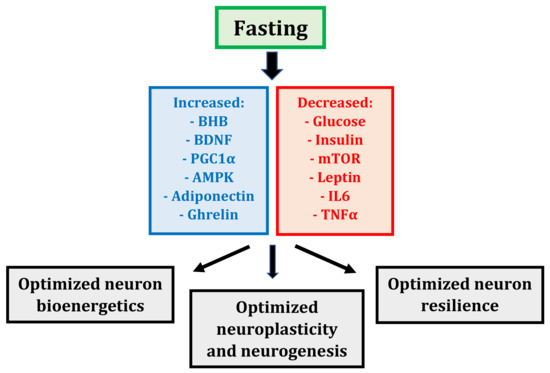
Source: Phillips MCL. Fasting as a Therapy in Neurological Disease. Nutrients. 2019
How to Do a Prolonged Fast
A prolonged fast is a dramatic departure from the three meals plus snacks approach to the Standard American Diet. For this reason, it is necessary to prepare properly, undertake the fast safely, and refuel responsibly after you complete it. We’ll detail each stage below.
Before a Prolonged Fast
If you’re coming from a mainstream eating pattern, it is best to spend at least two weeks conditioning your body to enter a fasted metabolic state. This means taking a step-up approach where you graduate from mild to more intense intermittent fasting methods.
Here’s an example of a step-up approach
- 16/8 intermittent fasting, or “Time Restricted Eating” daily for 3-5 days
- 20-hour fast or OMAD for at least 2-3 days
- 24-hour fast for one day
- OMAD or 16/8 until you’re ready to undertake your prolonged fast
Here’s an example of a 16/8 fasting plan
Nourish Your Body with Nutrient-Dense Whole Foods
Eliminate all processed foods for at least a week before your fast. If you’re serious about taking control of your metabolic health, you’ll want to stay away from all processed foods whether or not you’re preparing for a fast. But this week is the bare minimum.
Processed foods are loaded with numerous ingredients that cause chronic inflammation while imbalancing blood sugar and hormones that play critical roles in your health. Be sure to eliminate all
Nourish your body with healthy fats, complete proteins, and essential vitamins and minerals by focusing your meals around fresh, animal-based foods, including:
- Red ruminant meat: steak, lamb, bison, pork
- Animal fats: butter, ghee, tallow
- Fish and shellfish–wild salmon, oysters, mussels
- Full-fat dairy: ripened cheeses, raw cheese, cream (including Doctor Kiltz’s homemade ice cream), yogurt
- Supplement with organ meats including liver, heart, kidney
By focusing on these nutrient-dense animal products, you’re effectively charging your body’s nutritional batteries. Your body will draw on these nutrients to support fasting-induced metabolic changes, including ketosis and stem cell production.
During the Fast
During your prolonged fast you will abstain from all calories.
What to drink?
The best beverage when fasting is natural mineral water. True mineral water contains calcium and sulfur, along with electrolytes like potassium and sodium. These minerals are not found in distilled or tap water unless they are added.
Unsweetened coffee or black, green, or herbal tea are also permitted on most prolonged fasts.
Salt and Electrolytes
Even when fasting, your body will need salt. Consume at least 3.5-5g of sodium a day, or roughly 1.5-2 tsp. Pink “Himalayan” and sea salt are best.
When your body enters ketosis it dumps sodium electrolytes, so it’s important to replenish. In addition to salt, many people use a keto electrolyte like “keto chow” designed by Dr. Ken Berry.
After the Fast
After a prolonged fast, it is important to take precautions to avoid “refeeding syndrome–potentially fatal shifts in fluids and electrolytes.” [7]
Proper re-feeding calls for consuming 50% of your caloric requirements for the first day. Then to gradually increase calories if your body shows no symptoms, including shakiness, sweating, confusion, and even seizures. [8]
During this time, it’s equally important to consume only nutrient-dense whole foods and to avoid processed foods.
Health Benefits of Prolonged Fasting
Although the health benefits of intermittent fasting are well documented, specific research on prolonged fasting is few and far between.
That said, several studies examining prolonged fasting show positive impacts on health. At the same time, numerous other studies on fasts of various lengths show numerous benefits. [9] Let’s explore.
Cellular Repair and Slowed Aging
Prolonged fasts induce a process of cellular repair and renewal that may delay tissue aging. [10] [11]
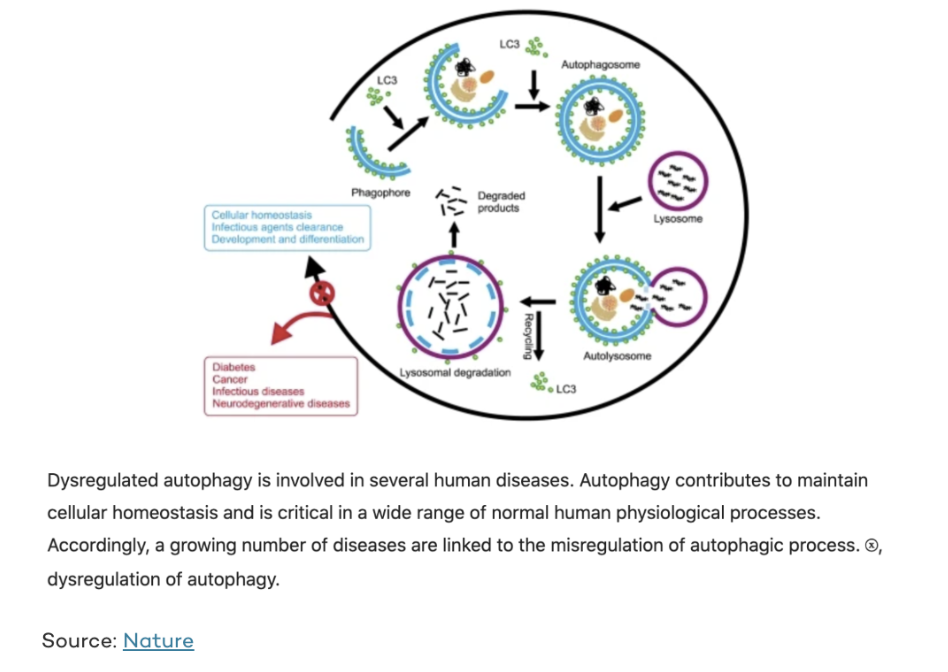
This process, known as autophagy, recycles damaged cell parts into fresh, new cellular material. Autophagy has been linked with powerful health benefits, including reduced risk of various diseases. [12] [13] [14] [15] [16]
Reduces Inflammation
Chronic inflammation is a driver of the deadliest diseases on earth, including cancer and heart disease. [17]
Fasting longer than 24 hours has been found to reduce markers of oxidative stress and inflammation on a cellular level. [18]
Supports Weight Loss
One study looking at the effects of prolonged fasting on weight loss found that after 10 days, participants lost an average of 16 lbs or 9.8% of their body weight. 7
A review of various studies looking at the effects of fasting between 5-20 days found that prolonged fasting routinely results in weight loss of 2-10% of total body weight.7
Cognitive Protection and Mood Regulation
Fasting has been found to offer neurological protection, boost cognition, and regulate mood. [19] [20] [21]
Prolonged fasting benefits the brain and cognition by
- Reducing excess body fat and increasing blood flow to the brain
- Activating hormones that promote neuroplasticity
- Renewing old and damaged brain cells
- Protecting against excess blood sugar that damages brain cells
- Supplying brain cells with powerful ketone energy molecules
- Reducing inflammation
Improves insulin sensitivity and blood sugar levels
Prolonged fasting depletes stored carbohydrates and reduces insulin levels. [22]
A study looking at fasts of more than 24 hours found that these longer fasts may be more effective for blood sugar control than shorter fasts. [23]
Freedom from Food Cravings and Eating Habit Rest
Prolonged fasting can be a way to reset your relationship with food. Many people eat for emotional rather than nutritional reasons. Many others contend with addictions to various ultra-processed and high-carb foods.
One of the ways that prolonged fasting can support a healthier relationship with food is by improving leptin sensitivity. Leptin is a hormone largely responsible for food cravings, weight gain, and loss. [24] [25]
Say goodbye to mindless snacking and intractable sugar addiction. Say hello to a deep awareness and appreciation of food as a nourishing medicine.
Potential Challenges and Considerations
Though prolonged fasting is potentially beneficial for most people, it’s important to consider the challenges.
Most people will contend with expected side effects like temporary periods of fatigue, hunger, and brain fog.
If you have underlying health conditions, it may be wise to consult with a health professional who has experience with fasting.
Prolonged fasting is not an appropriate dietary intervention for pregnant and breastfeeding women or for people with eating disorders.
As with any dietary intervention, it is crucial that you closely monitor your body and mental state throughout the fasting period.
Prolonged Fasting: The Bottom Line
Prolonged fasting has been practiced for millennia, and incorporating it into modern life can have transformative effects. Many people practice fasting as a kind of secular spirituality, citing remarkable mental and emotional clarity, self-connection, and freedom from emotionally numbing food addictions.
Prolonged fasting activates innate healing mechanisms within the body, including cellular renewal and neuroprotective hormones.
If you’re interested in exploring the power of prolonged fasting, it’s important to work your way up to by eliminating processed foods, eating nutrient-dense whole foods, and practicing with shorter fasting periods.
Article Sources
- 1, 12. Bland JS. Fasting Physiology and Therapeutic Diets: A Look Back to the Future. Integr Med (Encinitas). 2019 Feb;18(1):16-21. PMID: 31341428; PMCID: PMC6601432.
- 2, 3. Ezpeleta M, Cienfuegos S, Lin S, Pavlou V, Gabel K, Varady KA. Efficacy and safety of prolonged water fasting: a narrative review of human trials. Nutr Rev. 2023 Jun 27:nuad081. doi: 10.1093/nutrit/nuad081. Epub ahead of print. PMID: 37377031.
- 4. Cheng CW, Adams GB, Perin L, Wei M, Zhou X, Lam BS, Da Sacco S, Mirisola M, Quinn DI, Dorff TB, Kopchick JJ, Longo VD. Prolonged fasting reduces IGF-1/PKA to promote hematopoietic-stem-cell-based regeneration and reverse immunosuppression. Cell Stem Cell.
- 5. Ho KY, Veldhuis JD, Johnson ML, Furlanetto R, Evans WS, Alberti KG, Thorner MO. Fasting enhances growth hormone secretion and amplifies the complex rhythms of growth hormone secretion in man. J Clin Invest. 1988 Apr;81(4):968-75. doi: 10.1172/JCI113450. PM
- 6. Hartman ML, Veldhuis JD, Johnson ML, Lee MM, Alberti KG, Samojlik E, Thorner MO. Augmented growth hormone (GH) secretory burst frequency and amplitude mediate enhanced GH secretion during a two-day fast in normal men. J Clin Endocrinol Metab. 1992 Apr;74(4
- 7. Mehanna HM, Moledina J, Travis J. Refeeding syndrome: what it is, and how to prevent and treat it. BMJ. 2008 Jun 28;336(7659):1495-8. doi: 10.1136/bmj.a301. PMID: 18583681; PMCID: PMC2440847.
- 8. Scharf E, Zeiler E, Ncube M, Kolbe P, Hwang SY, Goldhamer A, Myers TR. The Effects of Prolonged Water-Only Fasting and Refeeding on Markers of Cardiometabolic Risk. Nutrients. 2022 Mar 11;14(6):1183. doi: 10.3390/nu14061183. PMID: 35334843; PMCID: PMC89515
- 9. Bak AM, Vendelbo MH, Christensen B, Viggers R, Bibby BM, Rungby J, Jørgensen JOL, Møller N, Jessen N. Prolonged fasting-induced metabolic signatures in human skeletal muscle of lean and obese men. PLoS One. 2018 Sep 5;13(9):e0200817. doi: 10.1371/journal.p
- 10. Dietary Restriction and AMPK Increase Lifespan via Mitochondrial Network and Peroxisome Remodeling
- 11. Aly SM. Role of intermittent fasting on improving health and reducing diseases. Int J Health Sci (Qassim). 2014 Jul;8(3):V-VI. doi: 10.12816/0023985. PMID: 25505868; PMCID: PMC4257368.
- 13. Nakagawa I, Amano A, Mizushima N, Yamamoto A, Yamaguchi H, Kamimoto T, Nara A, Funao J, Nakata M, Tsuda K, Hamada S, Yoshimori T. Autophagy defends cells against invading group A Streptococcus. Science. 2004 Nov 5;306(5698):1037-40. doi: 10.1126/science.11
- 14. Singh SB, Davis AS, Taylor GA, Deretic V. Human IRGM induces autophagy to eliminate intracellular mycobacteria. Science. 2006 Sep 8;313(5792):1438-41. doi: 10.1126/science.1129577. Epub 2006 Aug 3. PMID: 16888103.
- 15. Tallóczy Z, Virgin HW 4th, Levine B. PKR-dependent autophagic degradation of herpes simplex virus type 1. Autophagy. 2006 Jan-Mar;2(1):24-9. doi: 10.4161/auto.2176. Epub 2006 Jan 15. PMID: 16874088.
- 16. Levine B, Klionsky DJ. Autophagy wins the 2016 Nobel Prize in Physiology or Medicine: Breakthroughs in baker's yeast fuel advances in biomedical research. Proc Natl Acad Sci U S A. 2017 Jan 10;114(2):201-205. doi: 10.1073/pnas.1619876114. Epub 2016 Dec 30
- 17. Hunter P. The inflammation theory of disease. The growing realization that chronic inflammation is crucial in many diseases opens new avenues for treatment. EMBO Rep. 2012 Nov 6;13(11):968-70. doi: 10.1038/embor.2012.142. Epub 2012 Oct 9. PMID: 23044824; P
- 18. Inflammation-Induced Alteration of Astrocyte Mitochondrial Dynamics Requires Autophagy for Mitochondrial Network Maintenance
- 19. Ooi TC, Meramat A, Rajab NF, Shahar S, Ismail IS, Azam AA, Sharif R. Intermittent Fasting Enhanced the Cognitive Function in Older Adults with Mild Cognitive Impairment by Inducing Biochemical and Metabolic changes: A 3-Year Progressive Study. Nutrients. 2
- 20. Dias, G.P., Murphy, T., Stangl, D. et al. Intermittent fasting enhances long-term memory consolidation, adult hippocampal neurogenesis, and expression of longevity gene Klotho. Mol Psychiatry 26, 6365–6379 (2021). https://doi.org/10.1038/s41380-021-01102-4
- 21. Mattson MP. An Evolutionary Perspective on Why Food Overconsumption Impairs Cognition. Trends Cogn Sci. 2019 Mar;23(3):200-212. doi: 10.1016/j.tics.2019.01.003. Epub 2019 Jan 19. PMID: 30670325; PMCID: PMC6412136.
- 22. Anton SD, Moehl K, Donahoo WT, Marosi K, Lee SA, Mainous AG 3rd, Leeuwenburgh C, Mattson MP. Flipping the Metabolic Switch: Understanding and Applying the Health Benefits of Fasting. Obesity (Silver Spring). 2018 Feb;26(2):254-268. doi: 10.1002/oby.22065.
- 23. Metabolic Effects of Intermittent Fasting Ruth E. Patterson and Dorothy D. Sears Annual Review of Nutrition 2017 37:1, 371-393
- 24. Maria Dalamaga, Sharon H. Chou, Kelsey Shields, Panagiotis Papageorgiou, Stergios A. Polyzos, Christos S. Mantzoros, Leptin at the Intersection of Neuroendocrinology and Metabolism: Current Evidence and Therapeutic Perspectives, Cell Metabolism, Volume 18,
- 25. Friedman JM, Halaas JL. Leptin and the regulation of body weight in mammals. Nature. 1998 Oct 22;395(6704):763-70. doi: 10.1038/27376. PMID: 9796811.