
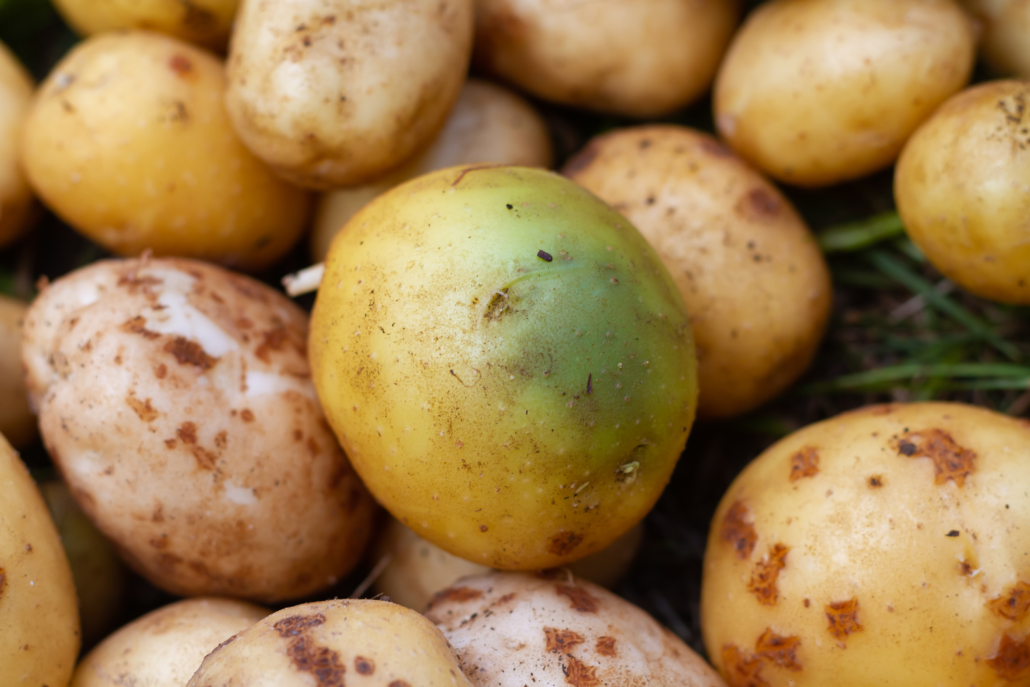
Mainstream nutritional recommendations call for eating lots of plants. But what they fail to mention, either out of ignorance or agenda, is that plants contain numerous naturally occurring chemicals that can harm you. One of the most common and potentially harmful plant toxins is called solanine. [1] [2] [3]
Found in potatoes, tomatoes, eggplants, and peppers, solanine inhibits enzymes, destroys cell membranes, harms your intestines, and acts as a neurotoxin. [4]
In this article, we’ll explore what solanine is, why plants contain it in the first place, how much is harmful, and what you can do to avoid solanine poisoning.
What is Solanine, and Why is it in Plants?
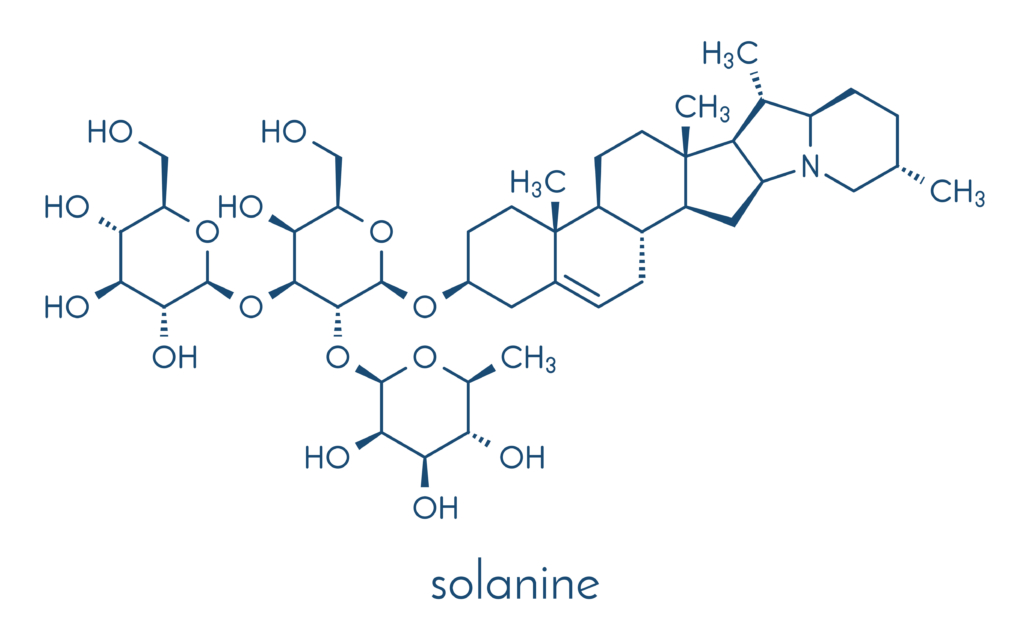
Solanine is a class of plant toxin called a glycoalkaloid
A glycoalkaloid is one of numerous plant defense mechanisms evolved to protect against being eaten by predators and infected by bacteria, fungi, and viruses.
At first, most people find it surprising that plants are armed and dangerous.
But consider that plants, like all other forms of lifeforms, prioritize survival above all else. They certainly don’t prioritize human health!
Without fangs, feet, fists, and claws, plants evolved an arsenal of chemical defenses called phytoalexins. Humans are predators, and these plant defenses are aimed at us.

What Does Solanine Do to Humans?
Research shows solanine can weaken and breach the membranes of red blood cells and destroy mitochondria–the parts of cells that generate energy.
The ability of solanine to rupture cells may be one of the key factors in intestinal permeability, known as “leaky gut.” [5] [6]
Intestinal permeability allows plant toxins and other pathogens to cross into the bloodstream, where they become deposited throughout the body leading to widespread chronic inflammation and autoimmune conditions.
Though for most people, small amounts of solanine won’t cause much harm, research shows that with repeated ingestion over time, alpha-solanine can enter the bloodstream and that it can take a long time for your body to break it down, allowing it to accumulate and cause damage. [7]
Other research shows that solanine can act as neurotoxins and enzyme inhibitors with sometimes fatal effects. [8]
In animal studies, glycoalkaloids, including solanine, have been shown to damage a thin cellular membrane called the glycocalyx in the intestine resulting in limited nutrient absorption [5].
While other animal studies have shown that consuming glycoalkaloids can result in birth defects. [9]
Solanine Poisoning Symptoms
Symptoms of solanine poisoning can present themselves after consuming just 1 kg of tainted potatoes.
Though having a healthy gastrointestinal tract will help limit the symptoms of solanine exposure, consuming large amounts of green, damaged, and sprouting potatoes can result in acute and dangerous toxicity.
Symptoms of mild to moderate solanine poisoning include [10] [11] [12] :
- Headache
- Vomiting
- Diarrhea
- Apathy
- Restlessness
- Drowsiness
- Fever
- Low blood pressure
- Weakness
- Tremors
Extreme physical symptoms of solanine poisoning can result in:
- Spina bifida birth defect
- Cardiac arrest
- Fatality
Solanine poisoning can also present as cognitive impairments, including
- mental confusion
- Rambling
- Incoherence
- Stupor
- Hallucinations
- Dizziness
- visual disturbances
How Much Solanine is Harmful?
Solanine poisoning typically occurs after ingesting large amounts of solanine, typically found in green or unripe potatoes, tomatoes, or eggplants.
The toxic solanine dose can vary depending on various factors such as body weight, age, and overall health.
Humans can experience solanine toxicity when ingesting as little as 1 mg of solanine per kg body weight.
3 mg/kg of body weight can lead to death.
For example, a 150 lb person can experience toxicity when consuming 68 mg of solanine. For a 150 lb person, 302 mg of solanine may be fatal.
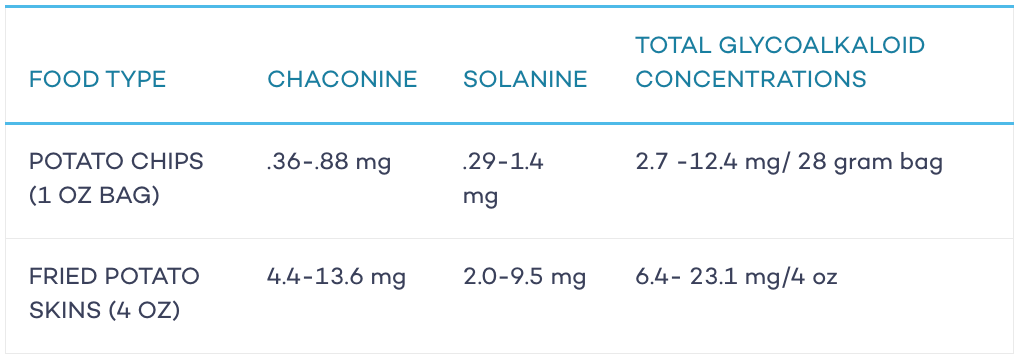
The American Food and Drug Administration hasn’t established a maximum solanine content in foods. However, the Canadian equivalent, Health Canada, has stated that the max level of total glycoalkaloids, including solanine, is 20 mg per 100 grams of potatoes consumed. [13]
Glycoalkaloid and solanine levels in common potato products [14]
A Story of Mass Solanine Poisoning

Autumn, South London1979. 78 schoolboys and their monitors all feel suddenly and violently ill.
They suffered from vomiting, abdominal pain, and diarrhea. Some were even incapacitated by effects on the central nervous system. Some went comatose and violently convulsed. Others experienced the collapse of parts of their circulatory system. Some students hallucinated for days following the incident.
Luckily, all the boys and their caretakers recovered.
The cause of this violent and debilitating distress was merely a bag of potatoes that had been in storage since the previous summer. [15] [16]
How to Identify Solanine in Potatoes?
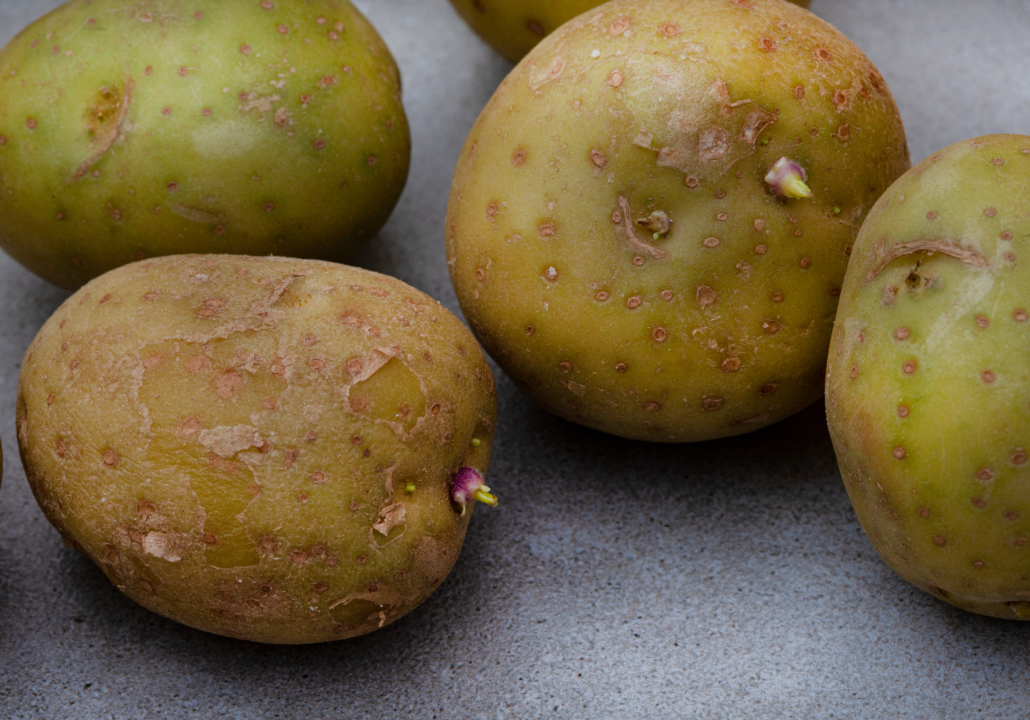
The main way to identify the presence of solanine in potatoes–their most common dietary source–is by a green color.
Though the green color itself is caused by chlorophyll, it signifies that the plant has been exposed to lots of light, which causes concentrations of solanine.
Solanine Foods
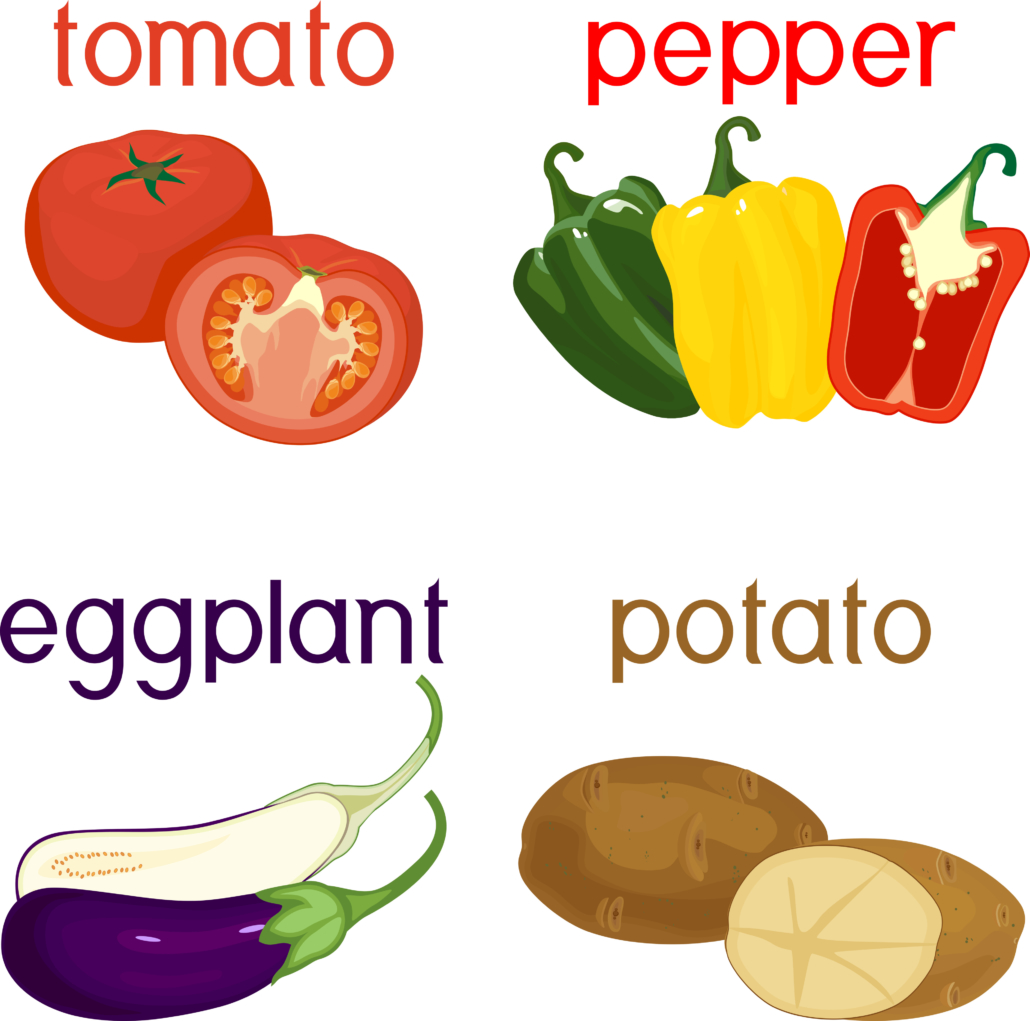
Solanine is also found in the stems, leaves, and unripe or overripe fruit of numerous nightshade vegetables.
Not coincidentally, nightshades go by the scientific name Solanaceae. Common nightshades that contain solanine include
- Potatoes
- Tomatoes
- Eggplants
- Peppers
How to Avoid Solanine Poisoning
A few tips for avoiding solanine poisoning include:
- Avoid eating green or unripe nightshade vegetables: Solanine is found in the stems, leaves, and unripe fruit of nightshade plants, such as potatoes, tomatoes, and eggplants. The solanine content of these plants decreases as they ripen, so ripe fruit and vegetables generally have lower levels of solanine.
- Remove the green parts of nightshade vegetables: If you do decide to consume nightshade vegetables, be sure to remove the green parts, such as the shoots and leaves.
- Store nightshade vegetables properly: Proper storage can help to prevent the formation of solanine in nightshade vegetables. Keep potatoes in a cool, dry place away from light. Exposure to light can cause them to turn green and increase their solanine content.
- Don’t eat spoiled or moldy nightshade vegetables.
- Wash nightshade vegetables thoroughly: Washing nightshade vegetables thoroughly before consuming them can help to remove any dirt, bacteria, or other contaminants that may be present.
The Bottom Line on Solanine Poisoning
Solanine is a naturally occurring plant toxin common in nightshade vegetables, including potatoes, eggplant, peppers, and tomatoes.
These plants evolved solanine as a chemical defense against predation and infection.
Vegetables can develop high concentrations of solanine when they are unripe or stored improperly and for too long.
Solanine poisoning can occur at relatively low doses of contaminated vegetables.
Symptoms of solanine poisoning run along a spectrum of mild digestive discomfort to severe physical and cognitive impairment, including death.
Chronic, low-dose exposure may contribute to intestinal permeability and autoimmune disorders.
To avoid solanine poisoning, it’s best to avoid nightshades and, at the very least, to ensure that your vegetables are fresh, ripe, undamaged, and well-cooked.
Article Sources
- 1. Tumer NE. Introduction to the toxins special issue on plant toxins. Toxins (Basel). 2015 Nov;7(11):4503-6. doi: 10.3390/toxins7114503. PMID: 26837094; PMCID: PMC4663517.
- 2. Welch KD, Panter KE, Gardner DR, Stegelmeier BL. The good and the bad of poisonous plants: an introduction to the USDA-ARS Poisonous Plant Research Laboratory. J Med Toxicol. 2012 Jun;8(2):153-9. doi: 10.1007/s13181-012-0215-5. PMID: 22367563; PMCID: PMC35
- 3. General Mechanisms of Plant Defense and Plant Toxins
- 4, 8. Dolan LC, Matulka RA, Burdock GA. Naturally occurring food toxins. Toxins (Basel). 2010 Sep;2(9):2289-332. doi: 10.3390/toxins2092289. Epub 2010 Sep 20. PMID: 22069686; PMCID: PMC3153292.
- 5. Patel B, Schutte R, Sporns P, Doyle J, Jewel L, Fedorak RN. Potato glycoalkaloids adversely affect intestinal permeability and aggravate inflammatory bowel disease. Inflamm Bowel Dis. 2002 Sep;8(5):340-6. doi: 10.1097/00054725-200209000-00005. PMID: 124796
- 6. J.M. Gee, G.M. Wortley, I.T. Johnson, K.R. Price, A.A.J.J.L. Rutten, G.F. Houben, A.H. Penninks, Effects of saponins and glycoalkaloids on the permeability and viability of mammalian intestinal cells and on the integrity of tissue preparations in vitro,
- 7. EFSA Panel on Contaminants in the Food Chain (CONTAM); Schrenk D, Bignami M, Bodin L, Chipman JK, Del Mazo J, Hogstrand C, Hoogenboom LR, Leblanc JC, Nebbia CS, Nielsen E, Ntzani E, Petersen A, Sand S, Schwerdtle T, Vleminckx C, Wallace H, Brimer L, Cottri
- 9. Barceloux DG. Potatoes, tomatoes, and solanine toxicity (Solanum tuberosum L., Solanum lycopersicum L.). Dis Mon. 2009 Jun;55(6):391-402. doi: 10.1016/j.disamonth.2009.03.009. PMID: 19446683.
- 10, 14. Milner SE, Brunton NP, Jones PW, O'Brien NM, Collins SG, Maguire AR. Bioactivities of glycoalkaloids and their aglycones from Solanum species. J Agric Food Chem. 2011 Apr 27;59(8):3454-84. doi: 10.1021/jf200439q. Epub 2011 Mar 14. PMID: 21401040.
- 11. Mensinga TT, Sips AJ, Rompelberg CJ, van Twillert K, Meulenbelt J, van den Top HJ, van Egmond HP. Potato glycoalkaloids and adverse effects in humans: an ascending dose study. Regul Toxicol Pharmacol. 2005 Feb;41(1):66-72. doi: 10.1016/j.yrtph.2004.09.004.
- 12. P. Slanina, Solanine (glycoalkaloids) in potatoes: Toxicological evaluation, Food and Chemical Toxicology, Volume 28, Issue 11, 1990, Pages 759-761, ISSN 0278-6915, https://doi.org/10.1016/0278-6915(90)90074-W
- 13. Health Canada's Maximum Levels for Chemical Contaminants in Foods
- 15. OLANINE AND CHACONINE First draft prepared by Dr T. Kuiper-Goodman and Dr P.S. Nawrot Bureau of Chemical Safety Health and Welfare Canada Ottawa, Ontario, Canada
- 16. Horrific Tales of Potatoes That Caused Mass Sickness and Even Death