
Tryptophan is most well known for its purported role in Thanksgiving turkey naps. But the effects of tryptophan foods are far more complex. Tryptophan is an amino acid that factors in regulating mood, sleep, and even cognitive function. In addition to turkey, tryptophan is found in high concentrations in most whole animal products, such as beef, lamb, pork, poultry, and dairy. [1]
In this article, we’ll explore what exactly tryptophan is, its significance in our bodies, and most importantly, the foods that are abundant in this essential amino acid.
What is Tryptophan?
Tryptophan is an essential amino acid. Amino acids are molecules that combine to form proteins–the building blocks of life. [2]
“Essential” in nutritional jargon means that your body can’t create it independently, so you need to get it from food.
Tryptophan is found mostly in animal products and in smaller concentrations in nuts, seeds, whole grains, and legumes.
Of all the various amino acids, tryptophan has the lowest concentration in your body, yet you need it for many crucial functions.

Why Do You Need Tryptophan?
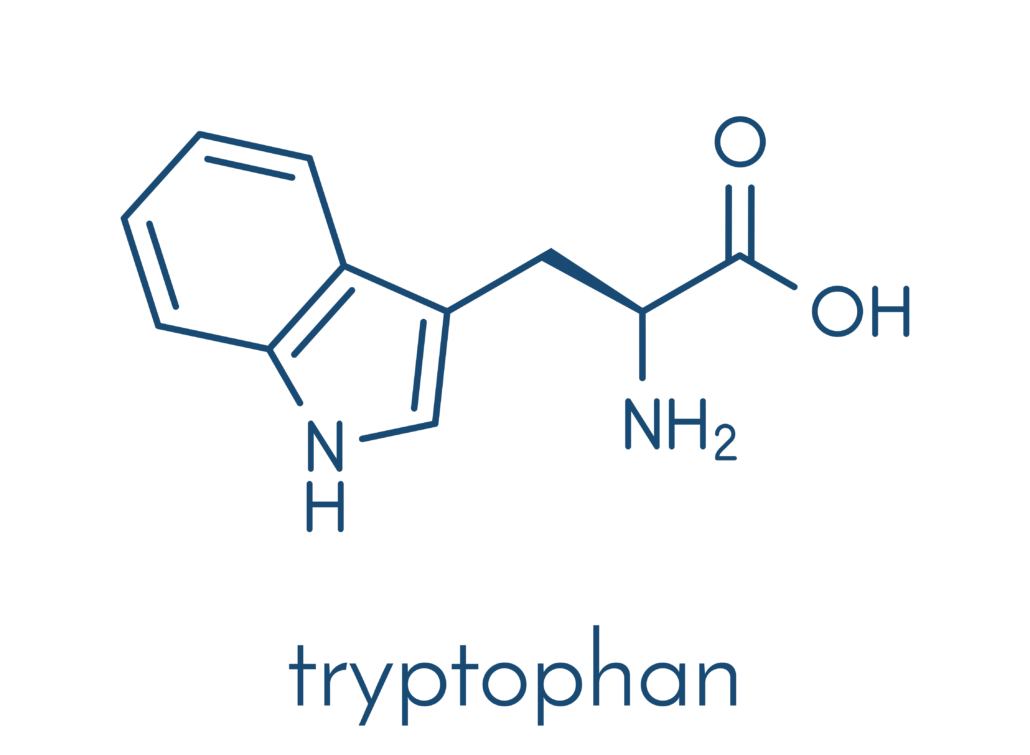
When you consume tryptophan foods, your body converts a portion of it into a compound called 5-HTP.
Your body then uses 5-HTP in the creation of the neurotransmitter called serotonin and the hormone melatonin.7 Both serotonin and melatonin from tryptophan are important factors in mood stabilization and healthy sleep patterns. [3] [4]
Additionally, your body converts some tryptophan into a molecule called nicotinamide adenine dinucleotide (NAD). NAD does many important jobs. It helps our cells produce energy, repairs cellular damage, and factors in the creation of DNA. All of these processes help increase energy, protect against disease, and may even slow down aging. [5] [6]
Considering the foundational role of Tryptophan in serotonin, melatonin, and NAd, it’s no surprise that research has shown that tryptophan provides numerous benefits, including:
- Mood regulation
- Reduced depression
- Improved learning
- Improved memory
- Improved visual cognition
- Regulation of aggressive behavior
- Reducing seasonal affective disorder
- Reducing premenstrual discomfort
- Supports quitting smoking by reducing anxiety
Tryptophan Foods for Sleep
Research shows that diet has a strong influence on sleep and that tryptophan foods can improve sleep quality. [7] [8]
The link between tryptophan and sleep is the hormone melatonin. Your body creates melatonin exclusively from tryptophan. [9]

Side Effects of Tryptophan Supplements & Why You Should Only Get It From Food!
The tryptophan we get from whole tryptophan-rich foods has no adverse side effects. But the same can’t be said for tryptophan supplements.
Tryptophan supplements have numerous unpleasant and even dangerous side effects, including
- Heartburn
- Gas pain and belching
- Stomach cramps
- Vomiting and nausea
- Diarrhea
- Appetite loss
- Headaches
- Dry mouth
- Sexual dysfunction
- Drowsiness
- Blurred vision
- Physical weakness
Tryptophan supplements, when taken with SSRIs and other antidepressants, can cause overly high levels of serotonin.
With these warnings in place, let’s turn to a list of side-effect-free tryptophan foods.
Foods Highest In Tryptophan
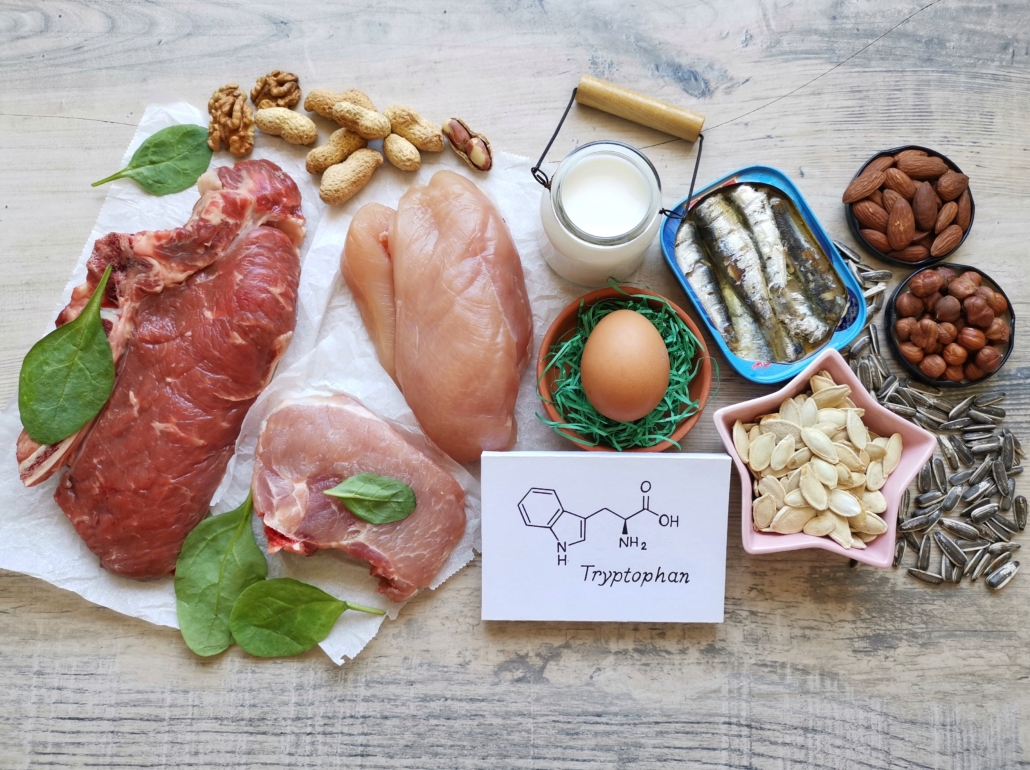
The foods highest in tryptophan are among the most nutrient-dense whole foods on earth.
In addition to tryptophan, these foods will provide your body with all nine essential amino acids and healthy fats, along with critical B vitamins and vital minerals that are only found in animal products.
Tryptophan in Turkey
Tryptophan gained fame by way of Thanksgiving turkey. For decades, the tryptophan in turkey has been associated with after-feast naps and pleasant drowsiness.
There may be some scientific truth to this common experience, but it’s not just due to the tryptophan in turkey.
Indeed, roast turkey does contain high levels of tryptophan, with 495mg (177% RDI) per 6 oz serving.
In addition to turkey, thanksgiving meals are loaded with carb-rich potatoes and pies. High-carb foods trigger your body to produce a hormone called insulin.
Interestingly, tryptophan removes all other amino acids from the bloodstream but tryptophan. In the absence of high insulin levels, tryptophan competes with other amino acids for transport into the brain. Indeed, studies show that high insulin slightly increases insulin in the brain. [10]
However, high carb intake can lead to blood sugar spikes and troughs that can cause drowsiness. So, the Thanksgiving tryptophan haze is likely a combination of these two factors.
Ruminants and Pork
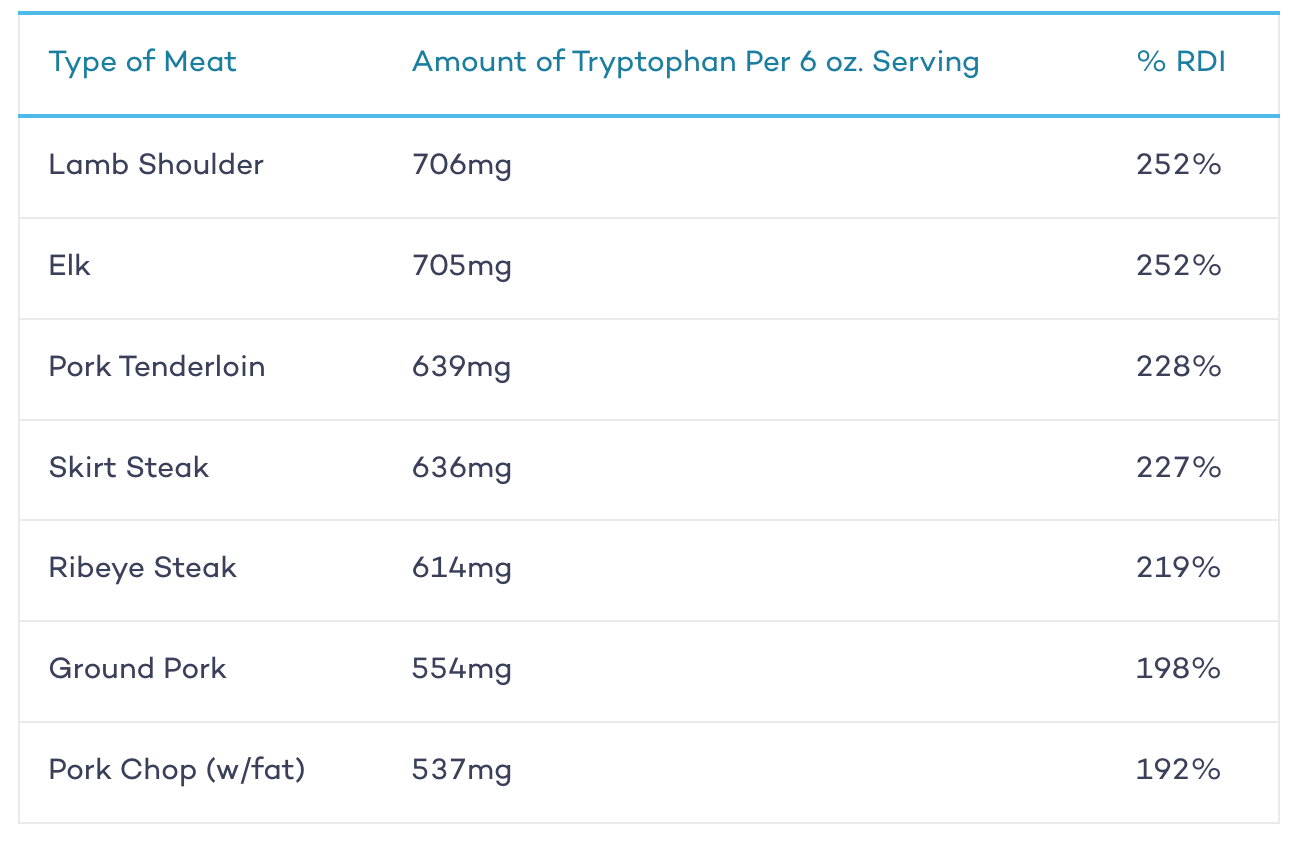
Ruminant animals have the most complete nutrient profile of any food group. For example, in addition to over 200% of tryptophan, a 6 oz cut of ribeye steak provides over 200% of B12, over 100%, over 100% of zinc and selenium, and over 50% of at least three other essential B vitamins.

Let’s look at a list of the top tryptophan meats from ruminant animals (beef, lamb, bison), and pork.
Dairy and Eggs
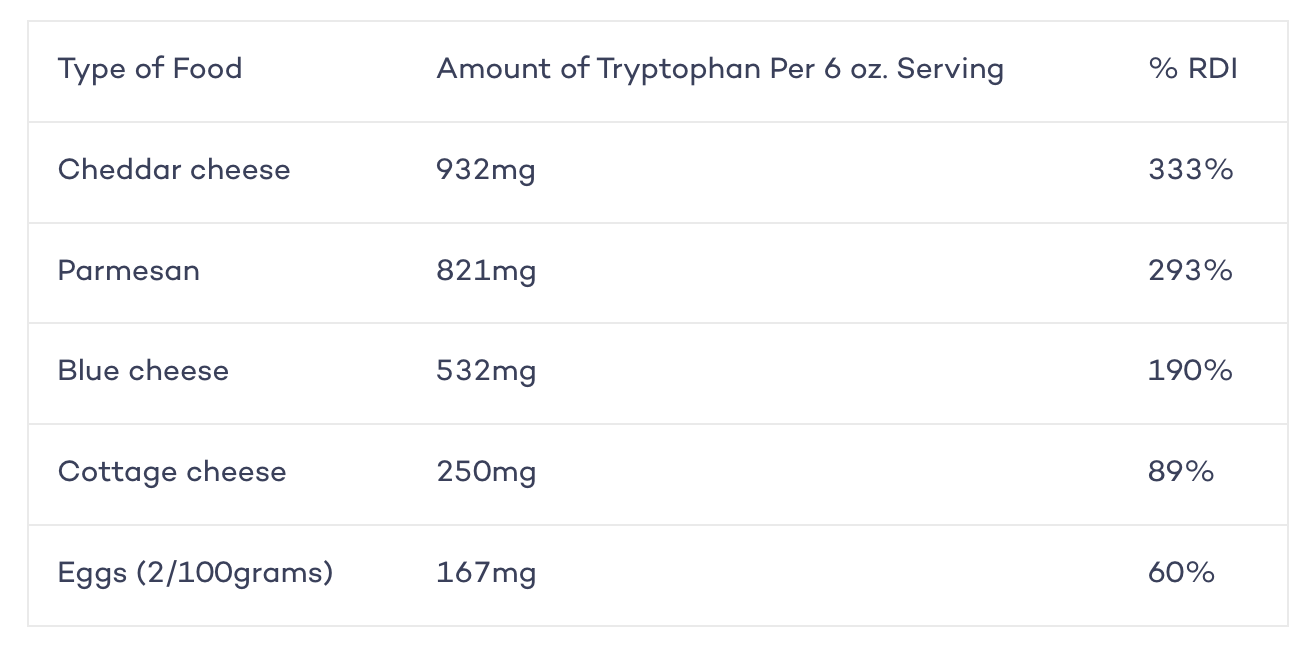
Dairy and eggs are another nutrient-dense whole food that is loaded with complete proteins, including an abundance of tryptophan.
Eggs in particular are a superfood loaded with nearly every nutrient needed to grow an entire animal.
Poultry
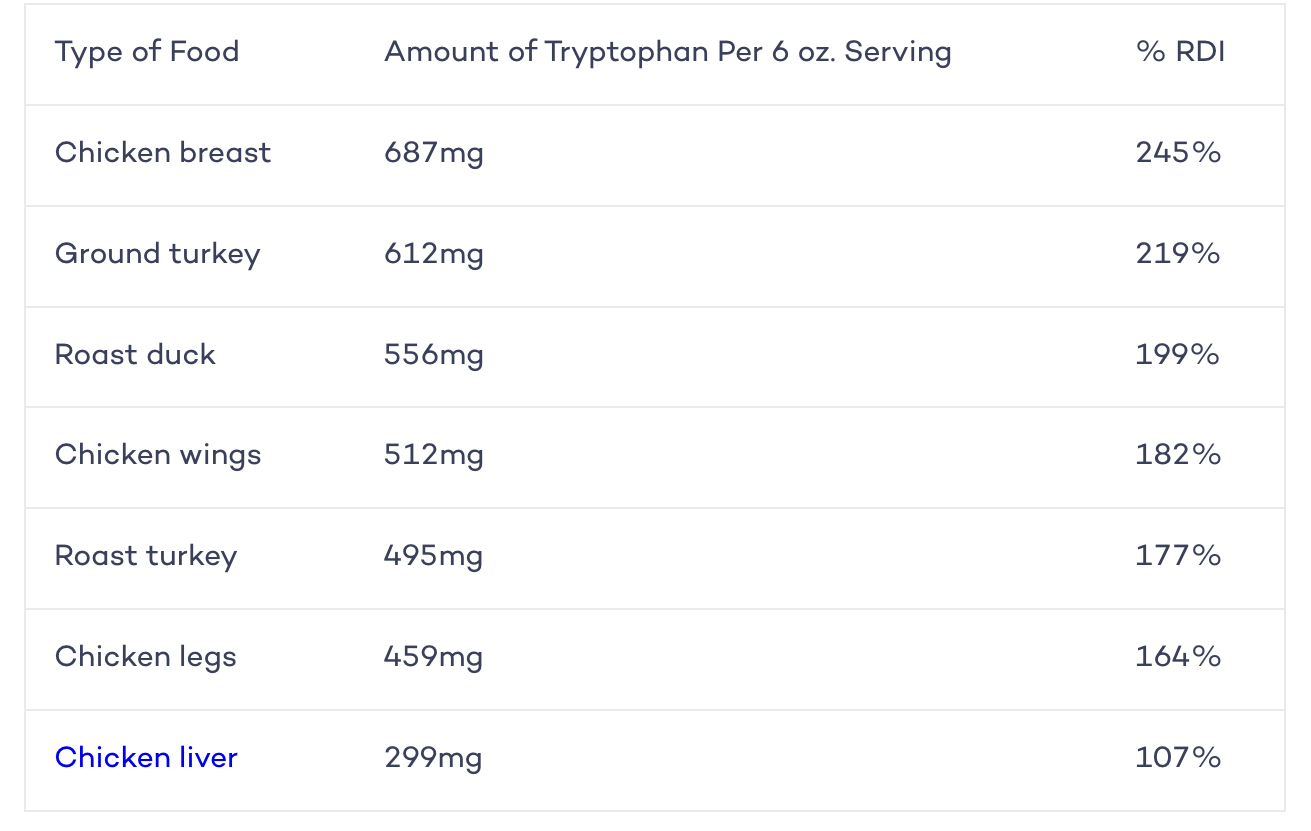
Poultry is another class of foods that are high in tryptophan. However, poultry generally has lower levels of other essential nutrients, including healthy fats and B vitamins.
That is unless we’re considering chicken and duck liver, which are among the most vitamin B and vitamin A-dense foods on earth.
Type of FoodAmount of Tryptophan Per 6 oz. Serving% RDIChicken breast687mg245%Ground turkey612mg219%Roast duck556mg 199%Chicken wings512mg182%Roast turkey495mg 177%Chicken legs459mg164%Chicken liver299mg107%
Tryptophan in Seafood
Seafood is another fantastic natural source of tryptophan. Keep in mind that the fattiest seafood options provide essential omega-3 fatty acids.
Getting enough omega-3s in the context of a Western diet loaded in omega-6s from seed oils can help combat inflammation. [11]
However, most seafood is contaminated with some level of mercury, making it imperative to choose low-mercury options.
Tryptophan Foods: The Bottom Line
Tryptophan is an essential amino acid found in abundance in meat, poultry, seafood, and dairy.
This amino acid is a building block for important molecules, including 5-HTP, melatonin, and serotonin. These tryptophan-derived compounds are critical to a number of vital physiological processes, including mood regulation, healthy sleep patterns, DNA synthesis, cellular health, and protection against aging.
Getting your tryptophan from foods is important when considering that tryptophan supplements are associated with various unpleasant and physically compromising side effects. Furthermore, whole animal foods high in tryptophan are also fantastic sources of nearly every essential nutrient your body needs to thrive.
Article Sources
- 1. Friedman M. Analysis, Nutrition, and Health Benefits of Tryptophan. Int J Tryptophan Res. 2018 Sep 26;11:1178646918802282. doi: 10.1177/1178646918802282. PMID: 30275700; PMCID: PMC6158605.
- 2. Richard DM, Dawes MA, Mathias CW, Acheson A, Hill-Kapturczak N, Dougherty DM. L-Tryptophan: Basic Metabolic Functions, Behavioral Research and Therapeutic Indications. Int J Tryptophan Res. 2009 Mar 23;2:45-60. doi: 10.4137/ijtr.s2129. PMID: 20651948; PMCI
- 3. Jenkins TA, Nguyen JC, Polglaze KE, Bertrand PP. Influence of Tryptophan and Serotonin on Mood and Cognition with a Possible Role of the Gut-Brain Axis. Nutrients. 2016 Jan 20;8(1):56. doi: 10.3390/nu8010056. PMID: 26805875; PMCID: PMC4728667.
- 4. Paredes SD, Barriga C, Reiter RJ, Rodríguez AB. Assessment of the Potential Role of Tryptophan as the Precursor of Serotonin and Melatonin for the Aged Sleep-wake Cycle and Immune Function: Streptopelia Risoria as a Model. Int J Tryptophan Res. 2009;2:23-3
- 5. Braidy N, Berg J, Clement J, Khorshidi F, Poljak A, Jayasena T, Grant R, Sachdev P. Role of Nicotinamide Adenine Dinucleotide and Related Precursors as Therapeutic Targets for Age-Related Degenerative Diseases: Rationale, Biochemistry, Pharmacokinetics, an
- 6. Fang EF, Lautrup S, Hou Y, Demarest TG, Croteau DL, Mattson MP, Bohr VA. NAD+ in Aging: Molecular Mechanisms and Translational Implications. Trends Mol Med. 2017 Oct;23(10):899-916. doi: 10.1016/j.molmed.2017.08.001. Epub 2017 Sep 9. PMID: 28899755; PMCID:
- 7. Zuraikat FM, Wood RA, Barragán R, St-Onge MP. Sleep and Diet: Mounting Evidence of a Cyclical Relationship. Annu Rev Nutr. 2021 Oct 11;41:309-332. doi: 10.1146/annurev-nutr-120420-021719. Epub 2021 Aug 4. PMID: 34348025; PMCID: PMC8511346.
- 8. Jun N. Ong, Daniel A. Hackett & Chin-Moi Chow (2017) Sleep quality and duration following evening intake of alpha-lactalbumin: a pilot study#, Biological Rhythm Research, 48:4, 507-517, DOI: 10.1080/09291016.2016.1275398
- 9. Zuraikat FM, Makarem N, Liao M, St-Onge MP, Aggarwal B. Measures of Poor Sleep Quality Are Associated With Higher Energy Intake and Poor Diet Quality in a Diverse Sample of Women From the Go Red for Women Strategically Focused Research Network. J Am Heart
- 10. Daniel PM, Love ER, Moorhouse SR, Pratt OE. The effect of insulin upon the influx of tryptophan into the brain of the rabbit. J Physiol. 1981 Mar;312:551-62. doi: 10.1113/jphysiol.1981.sp013643. PMID: 7021801; PMCID: PMC1275568.
- 11. DiNicolantonio JJ, O'Keefe J. The Importance of Maintaining a Low Omega-6/Omega-3 Ratio for Reducing the Risk of Autoimmune Diseases, Asthma, and Allergies. Mo Med. 2021 Sep-Oct;118(5):453-459. PMID: 34658440; PMCID: PMC8504498.