

Vitamin K2 is probably the most important vitamin you’ve never heard of, but fortunately, you can get a substantial dose of K2 from the humble egg. The type of vitamin K in eggs is called MK-4, and it plays a critical role in bone and heart health and contributes to many other important functions in the body.
Yet the amount of vitamin K2 in eggs can vary depending on factors such as the diet of the chickens that laid the eggs and how the eggs are prepared.
In this article, we’ll explore why K2 is so important and the amount of vitamin K2 in eggs, and we’ll provide a rundown of other K2-rich foods.
Table of Contents
- What is Vitamin K2?
- How Much Vitamin K2 Do You Need?
- Health Benefits of K2 in Eggs
- How Much Vitamin K2 In Eggs?
- Other Vitamin K2 Sources
- Vitamin K in Eggs: The Takeaway
What is Vitamin K2?
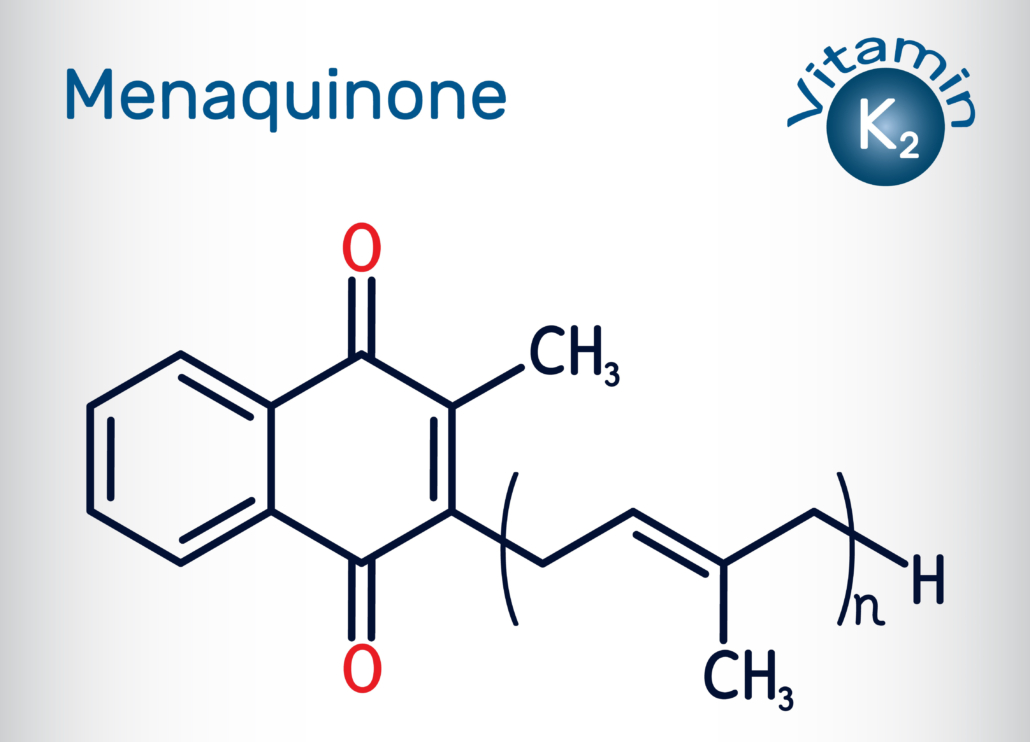
Vitamin K2, also known as menaquinone, is an essential vitamin.
Though research on the function of K2 is still emerging, it has been found to activate proteins that contribute to blood clotting, calcium metabolism, and heart health.
It was first discovered in Germany in 1929 and identified for its blood clotting effects. Which is where the “K” comes from. It’s the first letter in the German word for coagulation, “koagulieren.” [1]
K2 was also indirectly discovered in the early 20th century by the pioneering American dentist and nutrition researcher Weston A. Price.
Dr. Price traveled the globe in a quest to discover the dietary factors that contributed to the absence of modern diseases and the prevalence of stellar dental and bone health among populations consuming traditional pre-industrial diets.
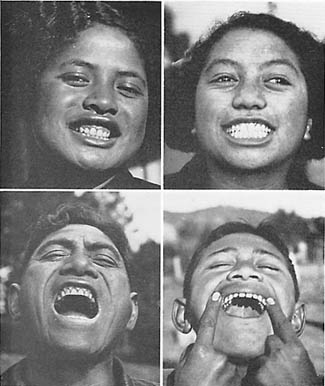
Price observed that non-industrialized people consumed an abundance of fatty animal products and organ meats. This led him to speculate that these whole ancestral foods contained an as-yet-to-be-discovered vitamin that helped the body absorb and use other fat-soluble vitamins (A, D, E) and minerals, especially calcium. He called this mysterious nutrient “activator-X.”
Modern science has since confirmed Price’s observations, and activator-X is now identified as vitamin K2 MK-4. [2]
Vitamin K2 MK-4 is only found in whole, fatty animal products, including eggs–specifically the yolk.
When you consume vitamin K2 in eggs, your body efficiently absorbs it into various tissues, including your brain, face, salivary glands, testes, pancreas, eyes, kidneys, bones, veins, and arteries.
From these storage tissues, K2 gets mobilized and interacts with numerous genes and “K-dependent proteins” (VKDP). These proteins and gene expressions rely on the presence of vitamin K to fulfill their critical roles in the body. [3] [4]
Let’s take a brief look at how these intricate K2 activations support your health. Vitamin K2 Benefits

How Much Vitamin K2 Do You Need?
The recommended amount of vitamin K2 per day is at least 120 mcg, with an upper recommendation of 300 mcg. [5]
Yet large population surveys have found that over half of all adults in Ireland, the United Kingdom (UK), and America have low vitamin K intakes. [6]
Health Benefits of K2 in Eggs
Though originally discovered for its role in blood clotting, modern science has found that K2 in eggs and other whole animal foods has various other vital roles in the body.
The benefits of K2 stem primarily from how body tissues utilize K2 to absorb calcium in the bones and teeth. This prevents calcium from building up in soft tissues like kidneys, prostate, and arteries. [7]
Supports Heart Health
- Numerous studies have found that K2 binds calcium to bones, thereby preventing the calcification of arteries, blood vessels, and kidneys. The importance of this property cannot be overstated–calcium deposits in the arteries are one of the most significant risk factors in heart disease. [8] [9] [10] [11] [12] [13]
- A study of 16,057 women found that for every 10 mcg of K2 a participant consumed per day, their heart disease risk dropped by 9% [14]
- Another study found that people in the highest third of K2 intakes had a 52% lower risk of developing severe calcification of the arteries, 41% lower risk of heart disease, and a 57% percent lower risk of death from heart disease. [15]
Supports Bone and Dental Health
- Two of the proteins that K2 in eggs activates–osteocalcin and matrix GLA–are directly responsible for binding calcium to bones and teeth. [16] [17]
- Studies in Japan, where the most research on K2 for bone health has been conducted, have found that K2 supplementation K2 reduced all non-spinal fractures by 81%, hip fractures by 77%, and spinal fractures by 60%. [18]
- The Osteocalcin activated by K2, promotes calcification of the dental tissue beneath tooth enamel, leading to stronger, cavity-resistant teeth. K2 also activates vitamins A and D, contributing to this calcification process. [19] [20] [21] [22]
Reduces Risk of Certain Cancers
- Studies have shown that K2 can reduce the recurrence of liver cancer and increase survival time [23] [24]
- A study of over 11,000 men found that participants who consumed the highest amounts of K2 demonstrated a 63% reduced risk of advanced prostate cancer. [25]
How Much Vitamin K2 In Eggs?

An egg yolk can contain between 46 and 192 micrograms of vitamin K2.
The amount of vitamin K2 in eggs is highly dependent on how the chickens are raised.
Pasture-raised hens consume grass and insects that contribute to higher levels of K2 when compared to conventionally raised hens fed a diet of industrial grains.
One study found that eggs from pastured hens provide 20% more vitamin K2 than grain-fed hens.
On average, the yolks of 2 eggs from pasture-raised chickens will provide around 120 mcg of K2. That’s good for 100% of your recommended daily intake.
While biofortified eggs from hens fed a diet enriched with vitamin k2 produce between 46–51 µg/100 g of K2. [26]
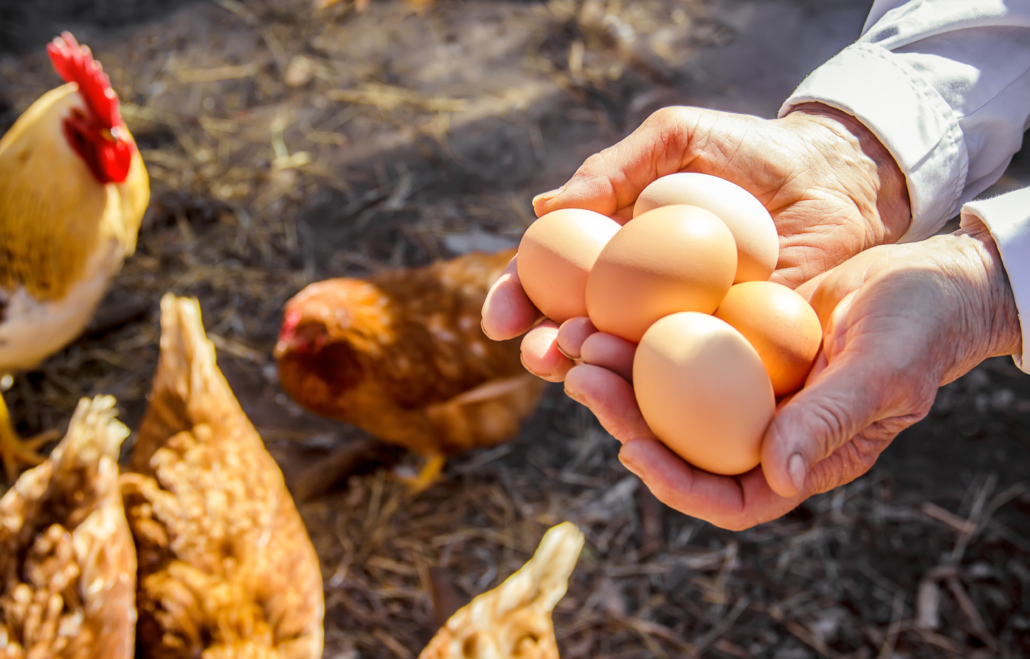
Other Vitamin K2 Sources
Vitamin K2 is so important that having numerous sources lined up is a good idea.
Not surprisingly, the foods with the highest vitamin K2 are also loaded with other important nutrients like B12, CoQ10, vitamin A (retinol), and vitamin D, among others.
Vitamin K in Eggs: The Takeaway
Eggs are an overlooked and easily accessible superfood loaded with numerous vital nutrients, including K2.
When you consume Vitamin K2 in eggs, it acts like both a hormone and a vitamin in the body, activating genes and proteins that factor in many important bodily functions.
Vitamin K2 is best known for its role in helping blood coagulate and in helping your bones absorb calcium. This latter role is especially important for heart health since calcium deposits in the arteries are a leading cause of heart disease.
If you’re looking to get significant vitamin K from eggs, opt for eggs that are either explicitly biofortified with vitamin K or from pasture-raised hens.
Article Sources
- 1, 2. Newman, P., Shearer, M.J. (1998). Vitamin K Metabolism. In: Quinn, P.J., Kagan, V.E. (eds) Fat-Soluble Vitamins. Subcellular Biochemistry, vol 30. Springer, Boston, MA. https://doi.org/10.1007/978-1-4899-1789-8_19
- 3. ”Komai
- 4. Oxholm Gordeladze, J. (2019). Vitamin K2: A Vitamin that Works like a Hormone, Impinging on Gene Expression. IntechOpen. doi: 10.5772/intechopen.80388
- 5. Vitamin K
- 6, 26. O'Sullivan SM, E Ball ME, McDonald E, Hull GLJ, Danaher M, Cashman KD. Biofortification of Chicken Eggs with Vitamin K-Nutritional and Quality Improvements. Foods. 2020 Nov 6;9(11):1619. doi: 10.3390/foods9111619. PMID: 33172200; PMCID: PMC7694954.
- 7. Spronk HM, Soute BA, Schurgers LJ, Thijssen HH, De Mey JG, Vermeer C. Tissue-specific utilization of menaquinone-4 results in the prevention of arterial calcification in warfarin-treated rats. J Vasc Res. 2003 Nov-Dec;40(6):531-7. doi: 10.1159/000075344. E
- 8. Kramer CK, Zinman B, Gross JL, Canani LH, Rodrigues TC, Azevedo MJ, Retnakaran R. Coronary artery calcium score prediction of all cause mortality and cardiovascular events in people with type 2 diabetes: systematic review and meta-analysis. BMJ. 2013 Mar 2
- 9. Detrano R, Guerci AD, Carr JJ, Bild DE, Burke G, Folsom AR, Liu K, Shea S, Szklo M, Bluemke DA, O'Leary DH, Tracy R, Watson K, Wong ND, Kronmal RA. Coronary calcium as a predictor of coronary events in four racial or ethnic groups. N Engl J Med. 2008 Mar 2
- 10. Thompson GR, Partridge J. Coronary calcification score: the coronary-risk impact factor. Lancet. 2004 Feb 14;363(9408):557-9. doi: 10.1016/s0140-6736(04)15544-x. PMID: 14976978.
- 11. Hauschka PV. Osteocalcin: the vitamin K-dependent Ca2+-binding protein of bone matrix. Haemostasis. 1986;16(3-4):258-72. doi: 10.1159/000215298. PMID: 3530901.
- 12, 13. Theuwissen E, Smit E, Vermeer C. The role of vitamin K in soft-tissue calcification. Adv Nutr. 2012 Mar 1;3(2):166-73. doi: 10.3945/an.111.001628. PMID: 22516724; PMCID: PMC3648717.
- 14. Gast GC, de Roos NM, Sluijs I, Bots ML, Beulens JW, Geleijnse JM, Witteman JC, Grobbee DE, Peeters PH, van der Schouw YT. A high menaquinone intake reduces the incidence of coronary heart disease. Nutr Metab Cardiovasc Dis. 2009 Sep;19(7):504-10. doi: 10.1
- 15. Geleijnse JM, Vermeer C, Grobbee DE, Schurgers LJ, Knapen MH, van der Meer IM, Hofman A, Witteman JC. Dietary intake of menaquinone is associated with a reduced risk of coronary heart disease: the Rotterdam Study. J Nutr. 2004 Nov;134(11):3100-5. doi: 10.1
- 16. Shearer MJ, Fu X, Booth SL. Vitamin K nutrition, metabolism, and requirements: current concepts and future research. Adv Nutr. 2012 Mar 1;3(2):182-95. doi: 10.3945/an.111.001800. PMID: 22516726; PMCID: PMC3648719.
- 17. Misra D, Booth SL, Tolstykh I, Felson DT, Nevitt MC, Lewis CE, Torner J, Neogi T. Vitamin K deficiency is associated with incident knee osteoarthritis. Am J Med. 2013 Mar;126(3):243-8. doi: 10.1016/j.amjmed.2012.10.011. PMID: 23410565; PMCID: PMC3641753.
- 18. Cockayne S, Adamson J, Lanham-New S, Shearer MJ, Gilbody S, Torgerson DJ. Vitamin K and the prevention of fractures: systematic review and meta-analysis of randomized controlled trials. Arch Intern Med. 2006 Jun 26;166(12):1256-61. doi: 10.1001/archinte.16
- 19. Koshihara Y, Hoshi K. Vitamin K2 enhances osteocalcin accumulation in the extracellular matrix of human osteoblasts in vitro. J Bone Miner Res. 1997 Mar;12(3):431-8. doi: 10.1359/jbmr.1997.12.3.431. PMID: 9076586.
- 20. Thaweboon S, Thaweboon B, Choonharuangdej S, Chunhabundit P, Suppakpatana P. Induction of type I collagen and osteocalcin in human dental pulp cells by retinoic acid. Southeast Asian J Trop Med Public Health. 2005 Jul;36(4):1066-9. PMID: 16295569.
- 21. Huang GT, Shagramanova K, Chan SW. Formation of odontoblast-like cells from cultured human dental pulp cells on dentin in vitro. J Endod. 2006 Nov;32(11):1066-73. doi: 10.1016/j.joen.2006.05.009. PMID: 17055908.
- 22. Oliva A, Della Ragione F, Fratta M, Marrone G, Palumbo R, Zappia V. Effect of retinoic acid on osteocalcin gene expression in human osteoblasts. Biochem Biophys Res Commun. 1993 Mar 31;191(3):908-14. doi: 10.1006/bbrc.1993.1303. PMID: 8466530.
- 23. Mizuta T, Ozaki I, Eguchi Y, Yasutake T, Kawazoe S, Fujimoto K, Yamamoto K. The effect of menatetrenone, a vitamin K2 analog, on disease recurrence and survival in patients with hepatocellular carcinoma after curative treatment: a pilot study. Cancer. 2006
- 24. Ishizuka M, Kubota K, Shimoda M, Kita J, Kato M, Park KH, Shiraki T. Effect of menatetrenone, a vitamin k2 analog, on recurrence of hepatocellular carcinoma after surgical resection: a prospective randomized controlled trial. Anticancer Res. 2012 Dec;32(12
- 25. Nimptsch K, Rohrmann S, Linseisen J. Dietary intake of vitamin K and risk of prostate cancer in the Heidelberg cohort of the European Prospective Investigation into Cancer and Nutrition (EPIC-Heidelberg). Am J Clin Nutr. 2008 Apr;87(4):985-92. doi: 10.1093