
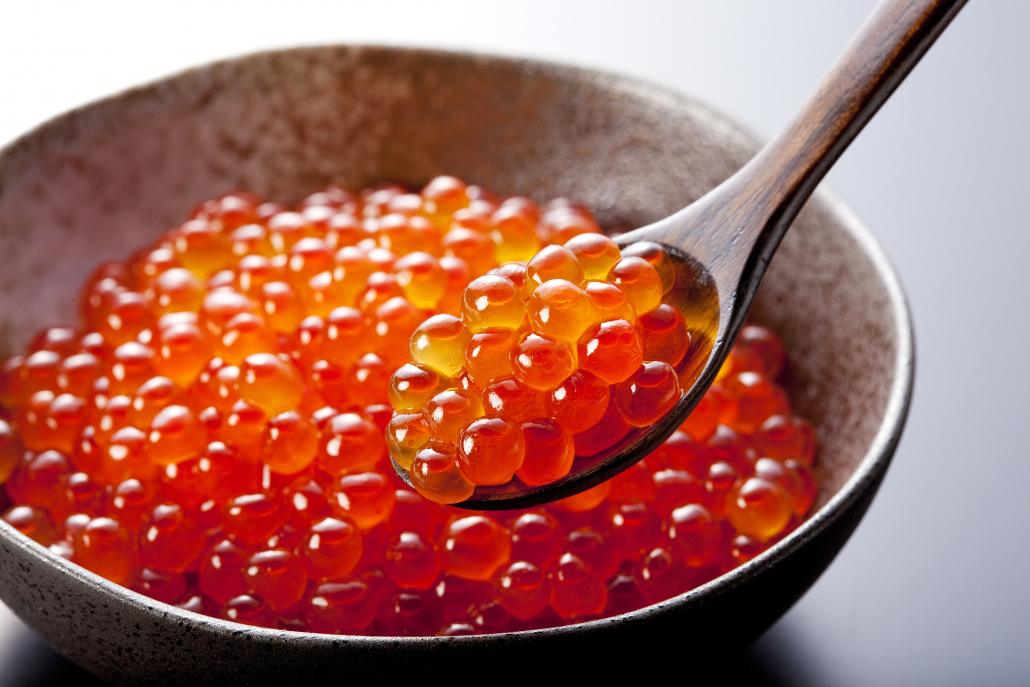
What is Salmon Roe?
Salmon roe is the eggs of salmon, and they’re one of the most nutrient-dense foods on earth.
Known variously as ikura, “red caviar” and “salmon caviar,” these fish eggs have been a sacred food for traditional cultures for millennia.
In the Andes, pioneering nutrition researcher Weston A. Price discovered that people would walk hundreds of miles to get fish eggs to supply women of childbearing age with the nutrients needed for the healthiest babies.
And modern science tells us that these efforts weren’t in vain. Salmon eggs are loaded with bioavailable vitamins A, B, D, and K2, zinc, iodine, along with the neuroprotective and omega 3 brain-building fatty acids EPA and DHA.
And we can see the natural prizing of salmon roe in other species like this black bear who instinctively knows exactly what to focus his efforts on.
How is Salmon Roe Made?
Salmon roe varies in size from 1-5mm. The highest quality roe tends to be the firmest. They’re processed by removing the entire egg sack from the fish and soaking it in salt. The eggs are then separated and cured with brine, with fresher eggs needing less brine. So the higher the egg quality the less salty the taste.
What Does Salmon Roe Taste Like?
Since roe isn’t very common in the Standard American Diet, it can be an acquired taste for some people. They have a unique texture and flavor, bursting with a subtly audible pop. They’re considered mild-flavored when compared with other caviar–slightly salty at first, with a sweet finish, and essence of salmon.

Salmon Roe Nutrition
Salmon roe is another incredibly nutrient-dense, keto-friendly food. Also known as fish eggs, roe is rich in omega 3 fatty acids (DHA and EPA), vitamin D, vitamin B12, and many trace minerals.
Just as impressive as these nutrients are their quality. The omega 3’s present in salmon roe are found in a phospholipid form that allows them to easily enter the brain.
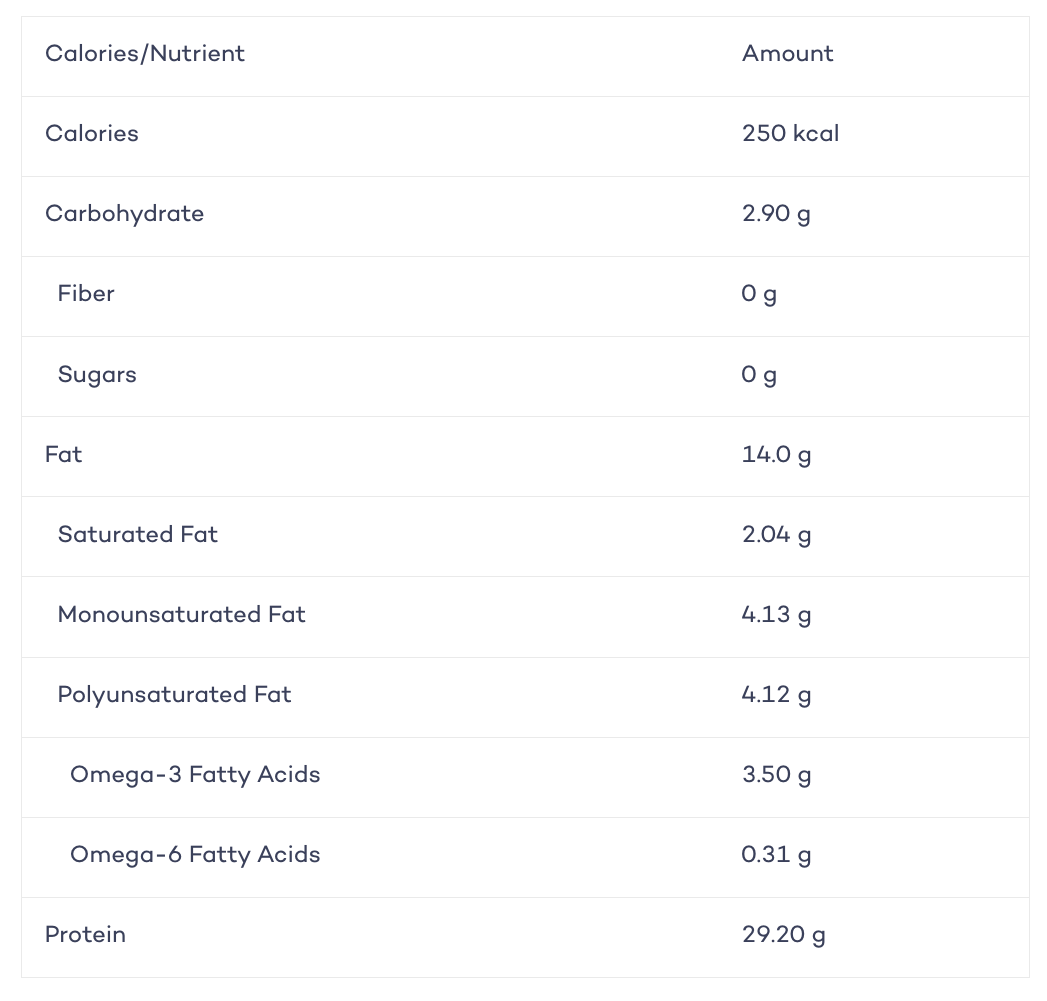
Salomon roe nutrition: macronutrients per 100g
Vitamins in salmon roe per 100g

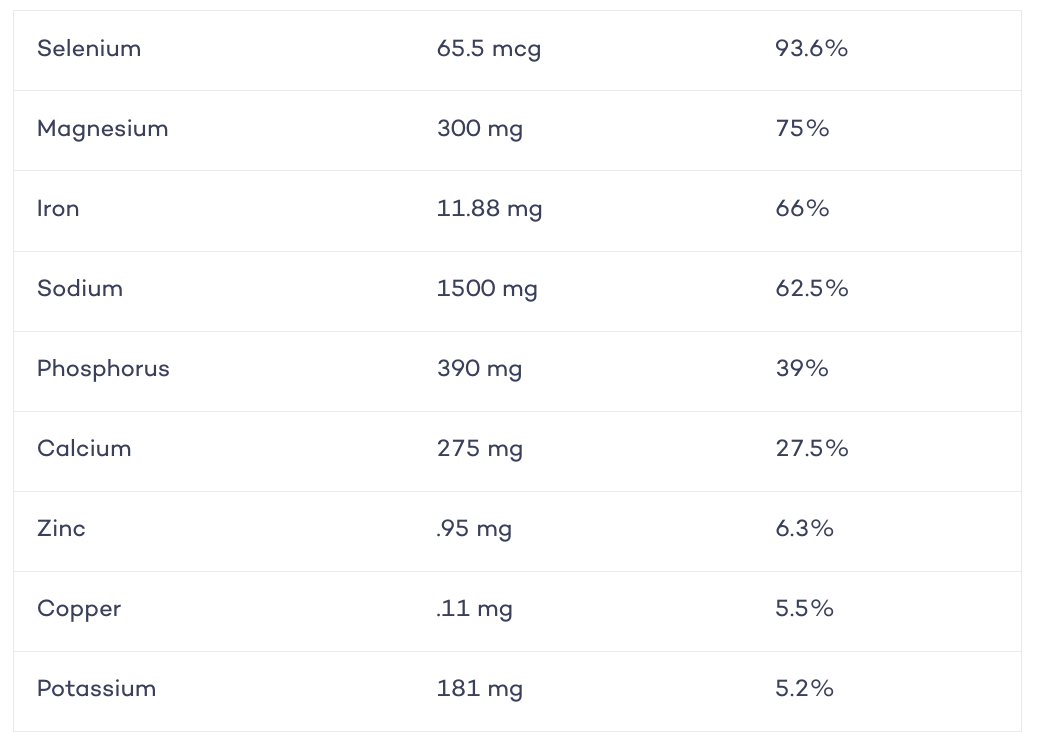
Minerals in salmon roe per 100g
Salmon Roe’s Top 10 Superfood Benefits
1.May Protect Against Dementia and Alzheimer’s Disease
Many of the most powerful benefits of salmon roe come from its copious amounts of omega 3 fatty acids, EPA and DHA.
For people with Alzheimer’s disease, the brain struggles with glucose uptake leading to an accumulation of amyloid-beta plaques, and tangles of a protein called tau inside neurons. These factors dramatically impair normal brain function.
The DHA in salmon roe promotes glucose uptake in the brain, reducing the risk of developing Alzheimer’s disease.2 And DHA has been shown to protect against cognitive decline for people who already have the disease.
Interestingly, these DHA’s effectiveness against Alzheimer’s is only apparent when DHA is consumed in the diet in the phospholipid form that is found in salmon roe. It is not effective when taken as a dietary supplement.
The neuroprotective benefits of omega-3s are also linked to their anti-inflammatory properties. It is theorized that reducing inflammation in the brain can inhibit neurodegenerative diseases like Alzheimer’s and Parkinson’s disease.
2. Supports Infant Brain Development
The nutrient profile of salmon roe may have special benefits for pregnant women. And it can improve fertility in both men and women.
The omega-3 DHA in salmon roe comes in a phospholipid form. When your body processes this type of DHA it gets broken down into a molecule called DHA-lysoPC. This molecule can more easily cross the blood-brain barrier, making it the brain’s preferred source of DHA. This easily-absorbed DHA is essential for the healthy brains of babies and mothers.
In fact the human brain is made up of 60% fat, and 25% of that is DHA.
3. Enhances Fertility for Men and Women
When it comes to getting pregnant in the first place, studies show that consuming DHA increases progesterone, a hormone responsible for regulating the uterus lining, making pregnancy viable.
DHA consumption has also shown a decrease in anovulation, increasing a woman’s reproductive lifespan.
For men, DHA plays an equally important role. Studies have shown that low omega 3 levels are associated with lower fertility rates in men.
A promising 2010 animal study found that DHA supplementation can completely restore fertility to infertile mice.
4. Defends Against Mental Disabilities and Enhances Cognition
With the importance of adequate DHA for brain development, it’s no surprise that early life deficiency in DHA is associated with numerous mental and behavioral disorders like hostility, ADHD, learning disabilities, autism, bi-polar disorder, and suicidal ideation among others.
In addition to the protective effects of DHA, salmon roe is also loaded with specific B vitamins, and minerals like choline and selenium that have positive impacts on cognitive performance.
A 2011 study found that choline can prevent anxiety and mood disorders while improving cognitive abilities.
And with nearly 100% of the RDA for hard-to-get selenium per 100g, salmon roe, salmon roe is a powerful food for supporting coordination, motor performance, memory, and cognition.
5. Protects Against Depression
When it comes to mood disorders, studies show that people suffering from depression often exhibit lower omega-3 levels. This suggests that not getting enough omega-3’s from food can be a risk factor for depression.
But it is critical for the brain and all phospholipid membranes. It appears that all mammalian brains require a substantial amount of DHA and AA, without which neuronal growth and function cannot occur. In fact, DHA is~25% of all the fat in your brain. Special type in salmon roe
Studies looking at the link between omega-3s and depression have found that daily supplementation of 1-2 grams of omega-3 can offer antidepressant effects without the side effects and interaction risks of common antidepressant meds.
These positive effects have been found in studies looking specifically at EPA, while other studies find that a combination of EPA and DHA–both found in salmon roe–are even more effective.
6. May Help Reduce Inflammation
Chronic inflammation is responsible for the deadliest diseases on the planet including heart disease, diabetes, and many cancers.
The DHA and selenium in salmon roe play a powerful anti-inflammatory role in the body by suppressing inflammatory cytokines and modulating inflammatory pathways.
One review of 20 clinical trials looking at the effectiveness of omega-3 from fish oil for rheumatoid diseases found that 16 of the 20 trials showed omega 3s offered “significant improvements”.
7. May Promote Heart Health
Heart disease is the leading cause of death in the U.S.
The good news is that omega-3 fatty acids have been proven effective in managing heart disease risk factors.
Omega-3’s have been found to reduce the risk of heart disease by:
- Lowering blood pressure.
- Improving cholesterol levels by increasing (good HDL), and lowering triglycerides.
- Preventing platelets in your blood from aggregating into clots.
Numerous studies show that marine sources of omega-3’s like salmon roe can bestow these powerful benefits without interfering with standard drug therapies.
8. Improve Antioxidant Profile
The oxidation process is essential to life, and when eating an animal-based whole food diet, the endogenous defenses against oxidation keep our systems in balance.
But when eating a standard American diet, high in carbs from processed grains and added sugars there is an overabundance of oxidizing molecules. These pro-oxidants can cause damage by stealing electrons from cells and DNA.
To balance out your oxidant profile it can be important to get more antioxidants in your diet. In addition to protecting against oxidation from an unhealthy diet, they also protect against oxidative stress from UV rays, pollution, smoking, and stress.
For animal food, Salmon roe is uncommonly high in antioxidants, especially vitamin A, C., and E.
Only 100g (½ cup) of salmon roe provides 66% of your RDA in E, 20% of vitamin C, and 13% of A. So when eating a carnivore diet salmon roe can be a critical source of hard to get nutrients.
Vitamins E and C have been shown to prevent the oxidation of LDL cholesterol particles–another heart-protective property.
In addition to its heavy-hitting antioxidant vitamins, salmon roe is also high in an antioxidant called astaxanthin–the compound that gives salmon its red/pink color. In studies, astaxanthin has been shown to reduce markers of oxidative stress, and may even prevent dimentia.
9. May Support the Immune System
The omega-3’s and selenium in salmon roe can support the immune system by reducing inflammation and restoring skin health, keeping harmful bacteria at bay.
These compounds can also help repair damaged white blood cells (immune cells) that protect us from disease.
Just 100g of salmon roe offers 94% of your RDA for selenium, a compound that is essential to triggering and regulating immune responses.
Selenium has been shown to increase antibody production along while also increasing the activity of macrophages–a type of white blood cell that fights and removes substances that are harmful to your body.
10. Support Muscle Growth
Salmon roe is an excellent source of protein, offering 25 grams of protein per 100 grams of roe.
Of the 25 gram, approx 2g is an essential anabolic (muscle building) amino acid called leucine. Leucine is necessary for the stimulation of mTOR, which regulates muscle growth.

Is salmon Roe keto-friendly?
Salmon roe is perfectly keto-friendly. It’s about 3% carbohydrates by weight, which doesn’t amount to much given that a serving is only around 100grams total.
Since it’s also relatively high in calcium and vitamin C, it can be a powerful supplement for people practicing an all meat carnivore diet
Are there any Drawbacks to Salmon Roe?
Though the health benefits of salmon roe far outweigh any potential drawbacks, there are a few issues to be aware of and to make choices accordingly.
These issues include the possible presence of:
- Polychlorinated biphenyls (PCBs),
- Mercury
Polychlorinated biphenyls (PCBs) in Salmon Roe
PCBs are toxic compounds that were once used in many industrial chemicals. Though banned in the 1970s, they are still present in the environment. Numerous freshwater, saltwater fish are contaminated with PCBs.
Fortunately, the amount of PCBs in wild-caught salmon is significantly lower when compared to farmed salmon. In roe, PCB amounts are even lower.
Farmed salmon from Europe, like popular Scottish and Norwegian salmon, have generally higher PCB levels than salmon farmed in the Americas.
The issue with PCBs is that they can accumulate in human tissue including muscle, brain, liver, and lungs. And they can take a very long time to break down with half-lives ranging from 10-15 years.
So to avoid PCB exposure, it’s best to eat wild-caught salmon and salmon roe.
limiting PCB exposure by consuming wild-caught salmon or their roe rather than farmed salmon may be advisable.
You can also eliminate some amount of PCBs through sweat. So exercise and saunas can be helpful. Though high heat can also disrupt fertility, especially in men.
Mercury in Salmon Roe
Nearly all fish and shellfish are contaminated with some amount of mercury. Thankfully, salmon is generally lower and listed as one of the “best choices” by the FDA.
A reassuring randomized controlled trial revealed that pregnant women who supplemented DHA from fish oil gave birth to sons with greater total gray matter, larger total brain volumes, and larger corpus callosum and cortical volumes compared to boys born to mothers given a placebo.
These findings support the view that omega-3 fatty acids from fish protect the brain of developing fetuses (when they’re most susceptible to the effects of mercury) from the toxic effects of mercury.
Salmon Roe: The Takeaway
Salmon Roe is one of the most nutrient-dense foods on earth. Eating only a relatively small amount can supply your body with numerous bioavailable macro and micronutrients.
The omega-3 fatty acids in salmon roe have been shown to offer powerful health benefits, specifically when it comes to brain development and mental function. And these benefits persist over the entire life span, from in utero, to old age.
There are at least 9 powerful reasons for, and zero reasons against, making salmon roe a part of your diet and health routine. Enjoy!
Article Sources
- 1. Sacred Foods for Exceptionally Healthy Babies … and parents, too!
- 2. Salmon Roe 101: Nutrition Facts and Health Benefits
- 3. Omega-3 DHA in Phospholipid Form May Bypass Faulty Brain Transport in Alzheimer's Disease
- 4. Role of phosphatidylcholine-DHA in preventing APOE4-associated Alzheimer's disease
- 5. Association of Seafood Consumption, Brain Mercury Level, and APOE ε4 Status With Brain Neuropathology in Older Adults
- 6. Docosahexaenoic Acid Supplementation and Cognitive Decline in Alzheimer Disease
- 7. Omega-3 Polyunsaturated Fatty Acids and Oxylipins in Neuroinflammation and Management of Alzheimer Disease
- 8. The role of omega-3 polyunsaturated fatty acids eicosapentaenoic and docosahexaenoic acids in the treatment of major depression and Alzheimer's disease: Acting separately or synergistically?
- 9. Mfsd2a is a transporter for the essential omega-3 fatty acid docosahexaenoic acid
- 10. Fatty acid composition and energy density of foods available to African hominids. Evolutionary implications for human brain development.
- 11. Omega-3 Fatty Acid Supplementation Lowers Serum FSH in Normal Weight But Not Obese Women
- 12. Prolonging the female reproductive lifespan and improving egg quality with dietary omega-3 fatty acids
- 13. The Effect of Omega-3 Fatty Acids, EPA, and/or DHA on Male Infertility: A Systematic Review and Meta-analysis
- 14. Docosahexaenoic acid supplementation fully restores fertility and spermatogenesis in male delta-6 desaturase-null mice
- 15. Omega-3 Fatty Acid and Nutrient Deficits in Adverse Neurodevelopment and Childhood Behaviors
- 16. The Importance of Marine Omega-3s for Brain Development and the Prevention and Treatment of Behavior, Mood, and Other Brain Disorders
- 17. The relation of dietary choline to cognitive performance and white-matter hyperintensity in the Framingham Offspring Cohort
- 18. Selenium and Cognition: Mechanism and Evidence
- 19. Meta-analysis: Effects of Eicosapentaenoic Acid in Clinical Trials in Depression
- 20. A meta-analytic review of polyunsaturated fatty acid compositions in patients with depression
- 21, 22. Role of Omega-3 Fatty Acids in the Treatment of Depressive Disorders: A Comprehensive Meta-Analysis of Randomized Clinical Trials
- 23, 24. Omega-3 fatty acids as treatments for mental illness: which disorder and which fatty acid?
- 25. EPA but not DHA appears to be responsible for the efficacy of omega-3 long chain polyunsaturated fatty acid supplementation in depression: evidence from a meta-analysis of randomized controlled trials
- 26. Omega-3 Fatty Acids in Rheumatic Diseases
- 27. Heart Disease Facts
- 28. Role of ω3 long-chain polyunsaturated fatty acids in reducing cardio-metabolic risk factors
- 29, 31. Reprint of: Marine OMEGA-3 fatty acids in the prevention of cardiovascular disease
- 30. Omega-3 fatty acids and cardiovascular disease: epidemiology and effects on cardiometabolic risk factors
- 32. Dietary n-3 PUFA and CVD: a review of the evidence
- 33. Issues of Fish Consumption for Cardiovascular Disease Risk Reduction
- 34. Free Radicals, Antioxidants in Disease and Health
- 35. Cancer prevention by antioxidants
- 36. Antioxidant Effects of Vitamins C and E on the Low-Density Lipoprotein Oxidation Mediated by Myeloperoxidase
- 37. Antioxidant effect of astaxanthin on phospholipid peroxidation in human erythrocytes
- 38, 39. The Influence of Dietary Fatty Acids on Immune Responses
- 40. Selenium
- 41. Selenium–Fascinating Microelement, Properties and Sources in Food
- 42. Leucine
- 43. An evaluation of the levels of organochlorine compounds (OCPs and PCBs) in cultured freshwater and wild sea fish eggs as an exposure biomarker for environmental contamination
- 44, 46. Global Assessment of Organic Contaminants in Farmed Salmon
- 45. Journal of environmental monitoring
- 47. Intrinsic Human Elimination Half-Lives of Polychlorinated Biphenyls Derived from the Temporal Evolution of Cross-Sectional Biomonitoring Data from the United Kingdom
- 48. Biomonitoring and Elimination of Perfluorinated Compounds and Polychlorinated Biphenyls through Perspiration: Blood, Urine, and Sweat Study
- 49. Plasma Concentrations of Long Chain N-3 Fatty Acids in Early and Mid-Pregnancy and Risk of Early Preterm Birth