

The “beef and butter fast” is a bit of a misnomer. It’s not actually a fast since you don’t abstain from eating. In practice, the beef and butter fast is a type of keto-carnivore elimination diet.
The benefits of the beef and butter fast come from eliminating plant foods that stress your system, and feasting on nutrient-dense and nourishing animal foods.
In this article, we’ll explore what the beef and butter fast is, why and how it can benefit your health, and guidelines to get started.
What is the Beef and Butter Fast?
The beef and butter fast calls for eliminating all foods except beef, butter, salt, and water. However, many people allow for black coffee, often with some butter added to it.
If you’re familiar with the all-meat carnivore diet, the beef and butter fast may sound a lot like the “Lion Diet” popularized by psychologist Jordan Peterson.
The only key difference is that butter is an explicit addition.
The nutritional philosophy behind the beef and butter diet is based on studies that show that our physiology developed on a hypercarnivorous diet of fatty meat for nearly 2 million years of evolution. 4 Returning to this ancestral way of eating optimizes our metabolic health.
Why is Butter Important?
When you cut all plant foods and eat only animal products, you’re essentially eliminating all carbs.
Without carbs, your body needs to get most of its calories from fat. This is because the human body has a built-in protein constraint. We can’t get more than around 35-45% of our calories from protein without getting protein poisoning.
This means that you’ll need to get the other 65% of your calories from fat.
Since standard cuts of beef are mostly muscle meat (i.e., protein), butter plays the role of ensuring you’re getting enough fat.
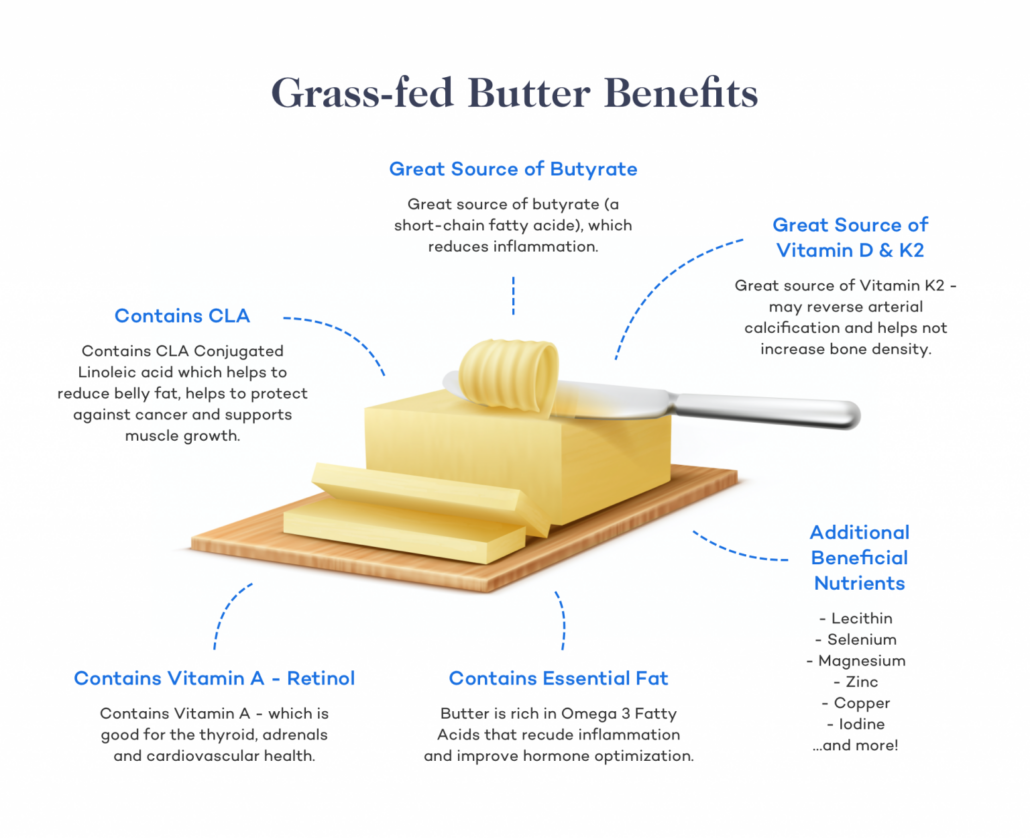
But butter is more than just a macro-boosting fat source. Butter provides an abundance of beneficial fatty acids like Conjugated Linoleic Acid (CLA), Butyrate, and vitamin K2.
How is the Beef and Butter Fast Different from Standard Keto?
A standard keto diet is generally high in animal meats and fats and low in plant foods. But the beef and butter fasts tighten the constraints by eliminating all plant foods while focusing animal foods to one animal–the mighty cow!
Why Restrict Foods to Beef and Butter?
Some of the reasons behind eliminating seafood, along with poultry and pork, including
- Ruminant meats have the most beneficial fatty acids. They are high in molecularly stable saturated fatty acids and anti-inflammatory monounsaturated fatty acids while being low in polyunsaturated fatty acids. Poultry is lean, while pork is higher in inflammatory Polyunsaturated Fatty Acids (PUFAs)
- Beef is handled less than poultry, and is less likely to be contaminated than both pork and poultry.
- Nearly all fish and seafood are contaminated with environmental toxins, are more likely to cause allergic reactions, and overfishing threatens to cause the collapse of aquatic ecosystems across the globe. People that value meat but eliminate seafood are called carnitarians.
- Plant foods contain toxins and antinutrients that, when consumed in abundance over time, can contribute to chronic inflammation and autoimmune diseases.

Health Benefits of a Beef and Butter Fast
There isn’t any research looking directly at the beef and butter fast. However, we can turn to the vast body of research on the ketogenic diet and the growing body of studies on carnivore to get a good idea of the possible health benefits.
Studied benefits of the keto diet include
- Improvements in cholesterol and triglyceride levels. [1]
- Better insulin sensitivity [2]
- Reduces and reverses symptoms of type 2 diabetes
- Can reverse symptoms of metabolic syndrome [3]
- Can eliminate symptoms of PCOS [4]
- Can help treat various types of cancer [5]
- Reduces the severity of symptoms and slows the progression of neurological disorders, including epilepsy, Alzheimer’s, and Parkinson’s disease [6] [7]
- Improves mental health issues and has been shown to help psychiatric patients reduce meds and fully recover [8]
- Supports weight loss [9]
- Reduces cravings for processed and high-carb foods [10]
- Supports healthy immune response by regulating inflammation [11] [12]
- Provides an abundance of fat-soluble vitamins (K, D, E) often lacking on the Standard American Diet [13]
- Protects the glycocalyx. This delicate membrane covers the surface of every cell, plays a key role in overall health, and is damaged by high-carb eating. [14]
4 Keys to Beef and Butter Fast Health Benefits

The benefits of the beef and butter fast are linked to both what you eliminate and what you add to your diet.
There are four key factors to the benefits of the beef and butter fast:
- Eliminates irritating and inflammatory foods, including excess carbohydrates, plant toxins, antinutrients, nightshade vegetables, FODMAPS foods, and excess fiber.
- Resets the gut microbiome. The absence of fermentable fibers and carbs starves harmful bacteria. Eliminating vegetables also stops exposing the delicate mucosal lining to damaging antinutrients like lectins, gluten, and oxalate. [15] [16] [17]
- Eliminates ultra-processed, hyper-palatable foods designed to overwhelm satiation signals and keep you eating even when you’re not physically hungry. Subjecting your body to this constant slurry of high-carb, vegetable oil-laden foods causes hormonal imbalances, leptin resistance, obesity, and autoimmune disorders. [18] [19] [20]
- Focuses your diet exclusively on nutrient-dense whole foods. Fatty beef and butter–especially from grass-fed cows–bathes every cell of your body in nourishing fats, complete proteins, and vital micronutrients, many of which you cannot get from plant foods.
Research on Beef and Butter Fast?
As we touched on above, there is no research specifically on the beef and butter fast.
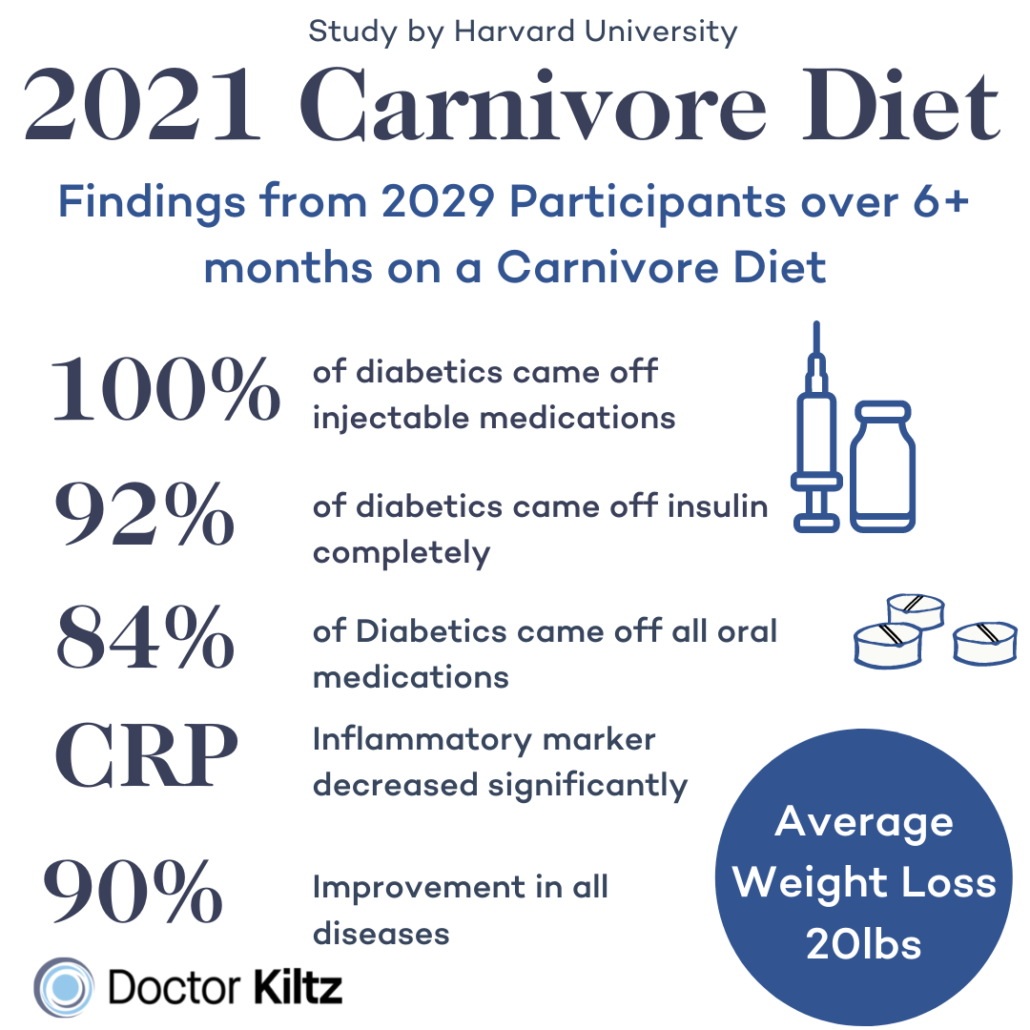
However, there is a fascinating study out of Harvard University on the reported benefits of the carnivore diet. Most carnivore dieters focus their meal plan around fatty beef and often load it with butter.
The findings of this study are reasonably in line with what you can expect on the beef and butter fast.
After analyzing the data from 2,029 people who ate a carnivore diet for at least six months, the researchers concluded that “Contrary to common expectations, adults consuming a carnivore diet experienced few adverse effects and instead reported health benefits and high satisfaction.” [21]
Statistically, the study revealed
- 93% improved or resolved obesity and excess weight
- 93% improved hypertension
- 98% improved conditions related to diabetes
- 97% improved gastrointestinal symptoms
- 96% improved psychiatric symptoms
What To Eat on the Beef and Butter Fast
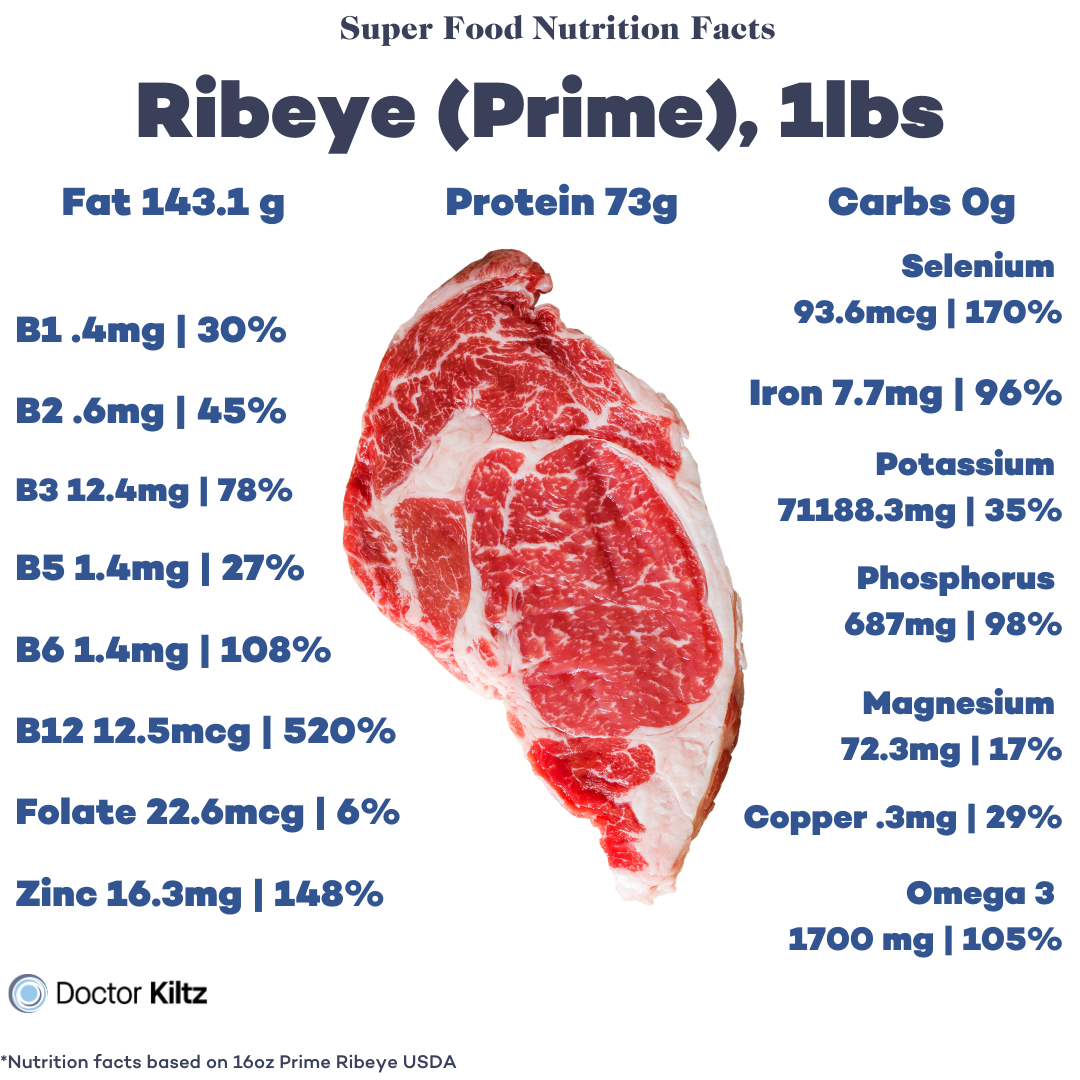
Ribeye steak is the king of most meat-centered diet. And that’s because it’s packed with healthy fats, proteins, and micronutrients like B vitamins, heme iron, and zinc.
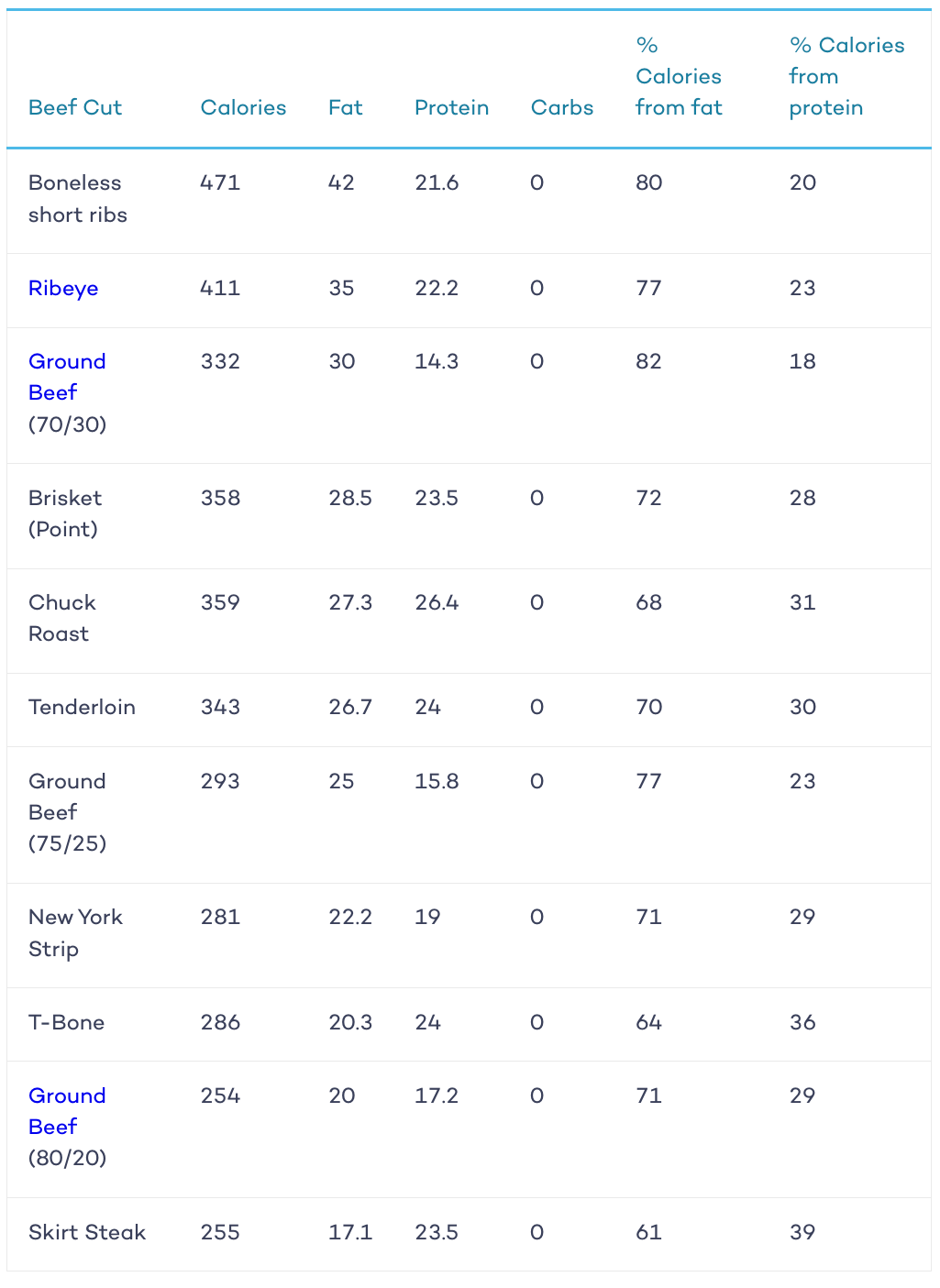
Meanwhile, ground beef is a great budget-friendly supplemental option with impressive nutrients.
Here’s a list of the fattiest cuts of steak to enjoy on your beef and butter fast
The Best Types of Butter on the Beef and Butter Fast
Though you can get away with conventional bulk butter, there are a few premium options to consider.
- Pasture-raised grass-fed butter has been shown to provide significantly more nutrients, including 26% more omega-3 fats, 500% more CLA, and more vitamin K2. [22] [23] [24] [25] [26] [27]
- Butter from raw milk provides powerful anti-stiffness effects known as the “Wulzen-factor.” It’s likely attributable to the synergistic effects of fat-soluble vitamins in raw dairy, including vitamins E, A, and vitamin K2.
- Ghee or clarified butter is pure butterfat, has a nutty flavor, and is more resistant to high-heat cooking. It’s also less likely to irritate people who are sensitive to lactose.
The Bottom Line on the Beef and Butter Fast
The beef and butter fast is more accurately understood as an eating plan. And specifically as a twist on the carnivore elimination diet.
Since it cuts out all carbs, it is also, by default, a ketogenic diet.
The butter ensures that you’ll get enough fat to go along with the abundance of protein and micronutrients provided by beef.
The goal of the beef and butter fast is to realign your physiology with ancestral eating patterns. Doing so reduces inflammation, protects the digestive system from plant toxins and excess fiber, helps rebalance satiety/hunger hormones, and supports stable mood and energy.
Article Sources
- 1. A randomized trial of a low-carbohydrate diet for obesity
- 2. Yancy WS Jr, Foy M, Chalecki AM, Vernon MC, Westman EC. A low-carbohydrate, ketogenic diet to treat type 2 diabetes. Nutr Metab (Lond). 2005 Dec 1;2:34. doi: 10.1186/1743-7075-2-34. PMID: 16318637; PMCID: PMC1325029.
- 3. Pérez-Guisado, J., Muñoz-Serrano, A. & Alonso-Moraga, Á. Spanish Ketogenic Mediterranean diet: a healthy cardiovascular diet for weight loss. Nutr J 7, 30 (2008). https://doi.org/10.1186/1475-2891-7-30
- 4, 5. Paoli A, Rubini A, Volek JS, Grimaldi KA. Beyond weight loss: a review of the therapeutic uses of very-low-carbohydrate (ketogenic) diets. Eur J Clin Nutr. 2013 Aug;67(8):789-96. doi: 10.1038/ejcn.2013.116. Epub 2013 Jun 26. Erratum in: Eur J Clin Nutr. 20
- 6. Rusek M, Pluta R, Ułamek-Kozioł M, Czuczwar SJ. Ketogenic Diet in Alzheimer's Disease. Int J Mol Sci. 2019 Aug 9;20(16):3892. doi: 10.3390/ijms20163892. PMID: 31405021; PMCID: PMC6720297.
- 7. Phillips MCL, Murtagh DKJ, Gilbertson LJ, Asztely FJS, Lynch CDP. Low-fat versus ketogenic diet in Parkinson's disease: A pilot randomized controlled trial. Mov Disord. 2018 Aug;33(8):1306-1314. doi: 10.1002/mds.27390. Epub 2018 Aug 11. Erratum in: Mov Dis
- 8. Campbell IH, Campbell H. Ketosis and bipolar disorder: controlled analytic study of online reports. BJPsych Open. 2019 Jul 4;5(4):e58. doi: 10.1192/bjo.2019.49. PMID: 31530294; PMCID: PMC6620566.
- 9. Bueno NB, de Melo IS, de Oliveira SL, da Rocha Ataide T. Very-low-carbohydrate ketogenic diet v. low-fat diet for long-term weight loss: a meta-analysis of randomised controlled trials. Br J Nutr. 2013 Oct;110(7):1178-87. doi: 10.1017/S0007114513000548. Ep
- 10. Sumithran P, Prendergast LA, Delbridge E, Purcell K, Shulkes A, Kriketos A, Proietto J. Ketosis and appetite-mediating nutrients and hormones after weight loss. Eur J Clin Nutr. 2013 Jul;67(7):759-64. doi: 10.1038/ejcn.2013.90. Epub 2013 May 1. PMID: 23632
- 11. Ketogenic diet activates protective γδ T cell responses against influenza virus infection
- 12. Yaqoob P, Calder PC. Fatty acids and immune function: new insights into mechanisms. Br J Nutr. 2007 Oct;98 Suppl 1:S41-5. doi: 10.1017/S0007114507832995. PMID: 17922958.
- 13. Intestinal Absorption of Fat-Soluble Vitamins
- 14. Gaudette S, Hughes D, Boller M. The endothelial glycocalyx: Structure and function in health and critical illness. J Vet Emerg Crit Care (San Antonio). 2020 Mar;30(2):117-134. doi: 10.1111/vec.12925. Epub 2020 Feb 18. PMID: 32067360.
- 15. Satokari R. High Intake of Sugar and the Balance between Pro- and Anti-Inflammatory Gut Bacteria. Nutrients. 2020 May 8;12(5):1348. doi: 10.3390/nu12051348. PMID: 32397233; PMCID: PMC7284805.
- 16. Magge S, Lembo A. Low-FODMAP Diet for Treatment of Irritable Bowel Syndrome. Gastroenterol Hepatol (N Y). 2012 Nov;8(11):739-45. PMID: 24672410; PMCID: PMC3966170.
- 17. Frazier TH, DiBaise JK, McClain CJ. Gut microbiota, intestinal permeability, obesity-induced inflammation, and liver injury. JPEN J Parenter Enteral Nutr. 2011 Sep;35(5 Suppl):14S-20S. doi: 10.1177/0148607111413772. Epub 2011 Aug 1. PMID: 21807932.
- 18. Gearhardt AN, Grilo CM, DiLeone RJ, Brownell KD, Potenza MN. Can food be addictive? Public health and policy implications. Addiction. 2011 Jul;106(7):1208-12. doi: 10.1111/j.1360-0443.2010.03301.x. Epub 2011 Feb 14. PMID: 21635588; PMCID: PMC3171738.
- 19. Gearhardt AN, Corbin WR, Brownell KD. Food addiction: an examination of the diagnostic criteria for dependence. J Addict Med. 2009 Mar;3(1):1-7. doi: 10.1097/ADM.0b013e318193c993. PMID: 21768996.
- 20. Gearhardt AN, Davis C, Kuschner R, Brownell KD. The addiction potential of hyperpalatable foods. Curr Drug Abuse Rev. 2011 Sep;4(3):140-5. doi: 10.2174/1874473711104030140. PMID: 21999688.
- 21. Couvreur S, Hurtaud C, Lopez C, Delaby L, Peyraud JL. The linear relationship between the proportion of fresh grass in the cow diet, milk fatty acid composition, and butter properties. J Dairy Sci. 2006 Jun;89(6):1956-69. doi: 10.3168/jds.S0022-0302(06)722
- 22, 23. Pustjens AM, Boerrigter-Eenling R, Koot AH, Rozijn M, van Ruth SM. Characterization of Retail Conventional, Organic, and Grass Full-Fat Butters by Their Fat Contents, Free Fatty Acid Contents, and Triglyceride and Fatty Acid Profiling. Foods. 2017 Mar 31;6
- 24. Dhiman TR, Anand GR, Satter LD, Pariza MW. Conjugated linoleic acid content of milk from cows fed different diets. J Dairy Sci. 1999 Oct;82(10):2146-56. doi: 10.3168/jds.S0022-0302(99)75458-5. PMID: 10531600.
- 25. Grazing increases the unsaturated fatty acid concentration of milk from grass-fed cows: A review of the contributing factors, challenges and future perspectives
- 26. O'Callaghan TF, Faulkner H, McAuliffe S, O'Sullivan MG, Hennessy D, Dillon P, Kilcawley KN, Stanton C, Ross RP. Quality characteristics, chemical composition, and sensory properties of butter from cows on pasture versus indoor feeding systems. J Dairy Sci.