
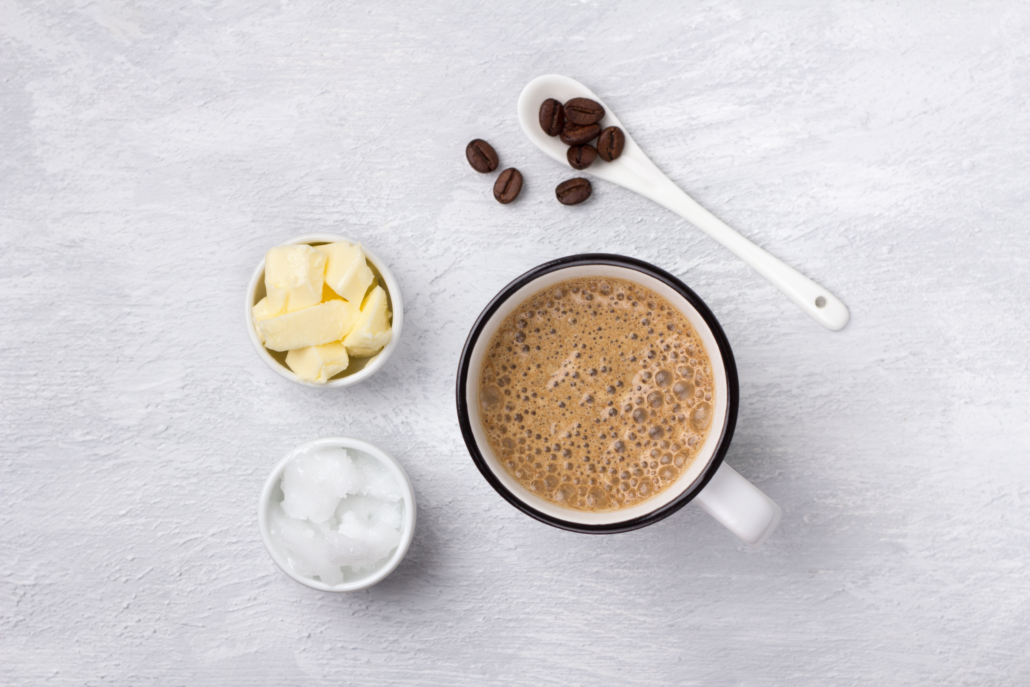
The Bulletproof Diet deems itself a comprehensive approach to a low-carb ketogenic lifestyle supported by coffee blended with collagen, butter, and MCTs, and supported by proprietary superfood supplements like MCT-rich “Brain Octane” coconut oil, collagen powders and bars, and vitamin supplements.
The Bulletproof approach to keto was developed by biohacker and entrepreneur Dave Asprey. It is based on the principles of
- viewing food as fuel
- getting the majority of your calories from high-quality fats
- eliminating specific plant foods and processed foods
- practicing intermittent fasting methods
In this article, we’ll explore the origins, rules, benefits, and drawbacks of the Bulletproof diet.
Dave Asprey and the Origins of the Bulletproof Diet
Dave Asprey considers himself “Chief Evangelist Officer” of the Bulletproof diet. Until 2019, Asprey was also the CEO of the company called Bulletproof 360, which produces Bulletproof products.
Dave started out as a financially successful Silicon Valley entrepreneur. But his success with health didn’t come as easily. In his twenties, Dave weighed 300 lbs even though he restricted calories, ate a plant-based diet, and exercised for over an hour six days a week. He was even a vegan for six months in the early 2000s.
As his health deteriorated, so did his ability to think clearly. Beset by debilitating brain fog, lethargy, and overwhelming food cravings, Dave decided to invest in himself. Over fifteen years, Dave spent $300,000 on a quest to biohack his way out of what seemed like an intractable physical and mental health crisis.
Combining traditional medicine and wisdom practices with cutting-edge Western technologies for testing the health of the brain and nervous system, and assessing inflammatory markers, Dave healed his body and brain. The protocol he discovered became the Bulletproof diet.
The Bulletproof diet is aimed at helping people
- lose excess body fat quickly
- reduce inflammation
- build lean muscle
- boost mental clarity and IQ
- achieve high levels of sustained physical energy

Bulletproof Diet Roadmap
The core of the Bulletproof diet is dramatically cutting carbs and increasing high quality fats. This makes it a ketogenic diet.
The Bulletproof diet gets more specific than standard keto by emphasizing fat from grass-fed butter and ghee, and from purified coconut oil that is high in MCTs (medium-chain triglycerides).
When you consume around 70% of your calories from fat, your body enters a metabolic state called ketosis, where your metabolism turns body fat and dietary fat into an abundance of powerful energy molecules called ketones.
Ketogenic diets have been studied extensively since the early 2000s and have been found to yield various health benefits, including
- Significant and sustained weight loss [1]
- Neurological and mental health disorders such as epilepsy, Alzheimer’s depression, and bipolar personality disorder [2] [3] [4]
- Supports the treatment of various cancers [5]
- Reverses metabolic syndrome
- Reduces severity of type 1 and type 2 diabetes
- Reduces insulin resistance
- Improves blood lipid levels
- Reduces risk of cardiovascular disease [6]
To achieve these results, the Bulletproof diet provides the following roadmap.
1. Eliminate Added Sugar and Most Dietary Carbohydrates
The Standard American Diet (SAD) is loaded with added sugar and high-carb foods, including grains, starchy vegetables, and cultivated fruits.
Chronic consumption of high-carb foods is linked to [7] [8] [9] :
- systemic inflammation
- autoimmune disorders [10]
- metabolic syndrome [11]
- heart disease [12]
- Type 2 diabetes
- PCOS [13]
- IBS, IBD, and various gastrointestinal disorders
- various cancers
On the Bulletproof diet, you reduce carbs to a maximum of around 10% of your daily caloric intake. This entails eliminating all added sugars, including honey and maple syrup. It also requires cutting grains, legumes, and most fruits.

“Excessive consumption of dietary sugars is closely related to the occurrence and development of inflammation.”
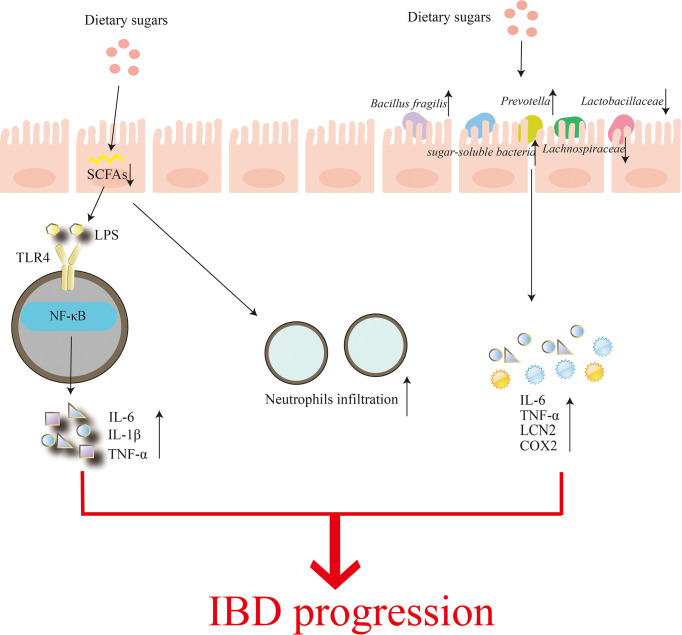
“Regulation of the gut microbiome by dietary sugars. Excessive consumption of dietary sugars reduces the production of short-chain fatty acids in the gut, which can lead to impaired gut barriers. This results in a rapid increase in infiltration of neutrophils while accelerating the transfer of Parabacteroides, ie, lipopolysaccharide (LPS). The binding of LPS to TOLL-like receptor 4 (TLR4) activates the nuclear factor-κB (NF-κB) signaling pathway, and finally induces the production of inflammatory factors IL-6, IL-1β and TNF-α. On the other hand, the excessive dietary sugar content makes Bacillus fragilis and Prevotella abundant, thereby destroying the intestinal mucosa. In the meanwhile, the relative abundance of sugar-soluble bacteria Sutterellaceae increased while the abundance of Lachnospiraceae and Lactobacillaceae, which belonged to Firmicutes, decreased, eventually increasing the levels of inflammatory cytokines IL-6, TNF-a, Lcn2 and Cox2. Increased neutrophil infiltration and inflammatory factor production aggravate the occurrence and development of IBD.”
Images source: Ma X, Nan F, Liang H, et al. Excessive intake of sugar: An accomplice of inflammation. Front Immunol. 2022;13:988481. Published 2022 Aug 31. doi:10.3389/fimmu.2022.988481
2. Increase Healthy Fats
Like all low-carb, high-fat diets, Bulletproof emphasizes healthy fats as the primary source of energy.
Bulletproof markets its own brand of grass-fed ghee and MCT oils. They also recommend grass fed butter, and getting fat from fatty cuts of grass-fed and pasture raised meats.
Since fat accounts for 70% of calories on keto, quality sources must be prioritized. MCTs have the added benefit of helping the body enter ketosis more quickly and may improve mood during the transition into ketosis. [14] [15]
Basing a diet around quality fats provides sustained, stable energy, supports mental clarity, helps repair the gut, and balances key hormones like insulin and leptin, contributing to overall metabolic health.
3. Choose Grass-Fed, Pasture Raised, and Wild Caught Meat
Meat from Grass-fed, pasture-raised, and wild-caught animals ensures that they will have the highest nutrient content, most optimal fatty-acid profiles, and be free from antibiotics.
4. Eliminate Grains, Beans, and Legumes
Most people know that grains, beans, and other legumes are high in carbs, which means they’re off-limits on low-carb diets.
But most people don’t realize that they’re also high in naturally occurring plant toxins and anti-nutrients that can damage the gut lining, cause systemic inflation, and reduce nutrient absorption.
Common antinutrients in grains and legumes include
Common grains to eliminate include
- Wheat
- Oats
- Barely
- Corn
5. Select Full-Fat Dairy Products
Milk and other reduced-fat dairy products are high in carbs. So it’s important to choose full-fat and “creamy” dairy options like ripened cheeses and whipping cream.
The Bulletproof diet also calls attention to the type of dairy protein people consume. Most cow milk products are A1 dairy, meaning they contain a dairy protein called beta-casomorphin-7 (casein).
Casein has been connected with various diseases and disorders, such as type 1 diabetes, cardiovascular diseases, autism (in people with immune deficiencies), schizophrenia (in people with immune deficiencies), sudden infant death syndrome (SIDS), apnea, and constipation. [16] [17] [18] [19]
Though the causal links between A1 dairy and these conditions are still being explored, you can avoid these potential drawbacks by choosing A2 dairy from specific breeds of cows and from all goat and sheep milk products.
The Bulletproof diet also recommends raw dairy based on its links to reducing allergies while improving digestion and immune function. [20] [21] [22] [23] [24]
6. Add Fat to Your Coffee
Most people come to the Bulletproof Diet after hearing about “Bulletproof Coffee.”
Bulletproof coffee is a combination of high-quality coffee certified to be free of mycotoxins, grass-fed butter, and MCT oil.
7. Avoid Industrial and Natural Toxins
Our modern environments and the foods produced within them are rife with toxic substances. Some of these come from pesticides and industrial waste. While many other toxins are naturally occurring in plant foods.
To avoid toxins, the Bulletproof diet emphasizes choosing organic produce and opting for grass-fed and organic animal products.
Additionally, the Bulletproof diet urges people to be selective about the types of plant foods they consume. In addition to eliminating grains and legumes, it is important to consider sensitivities to nightshades and even leafy greens high in oxalates.
8. Practice Intermittent Fasting
Intermittent Fasting means restricting when you eat to specific time windows on a daily basis.
Most people starting out with intermittent fasting begin with a simple 16:8 Time Restricted Eating plan. This entails consuming all daily calories within an 8-hour window, and during daylight hours.
After getting accustomed to intermittent fasting, people often decrease eating windows until they arrive at OMAD (one meal a day), where you consume all your calories in a single nutrient-dense meal.
Intermittent fasting has been linked to numerous health benefits, including
- Reduced body fat and weight loss
- regulation of blood sugar
- improved cholesterol and triglyceride levels
- reduced risk of coronary disease
- Activation autophagy–a critical process of cellular repair
- stimulation of human growth hormones
- Stimulation of brain-boosting hormone BDNF
- activation of stem cell production
- reduced risk of cancer
- mindful eating
9. High-Quality Supplements
The Bulletproof diet is based on high-quality, nutrient-dense whole foods, which should meet the nutrition needs of most people.
That said, Bulletproof is, first and foremost, a brand offering various Bulletproof brand supplements that can support the health and lifestyle goals of bulletproof dieters. Here’s a rundown
- Collagen protein: supports healthy bones, skin, joints, hair, and the newly discovered collagen-rich organ called the interstitium.
- Vitamin gummies: There are different varieties, including ones with A, D, and K.
- MCT oils to aid the body in entering and sustaining ketosis.
- Coconut oil and grass-fed butter-infused coffee creamer
- Collagen protein bars
Bulletproof founder Dave Asprey is known for his obsession with supplementation, evident in his admission that when travelling he takes 84 supplements!
Where the Bulletproof Diet Falls Short
Though there is a lot to like about the Bulletproof diet from a diet and lifestyle standpoint, there are a few areas that could be improved.
Unlike many of the early pioneers in low-carb, high-fat eating, Dave Asprey warned against the presence and detriments of plant toxins. But this issue could use more emphasis and adjustments.
Dr. Kiltz recommends an all-meat carnivore that essentially eliminates all plant foods. Dr. Kiltz’s own BEBBIIS diet may be more beneficial than high-fat, low-carb alternatives.
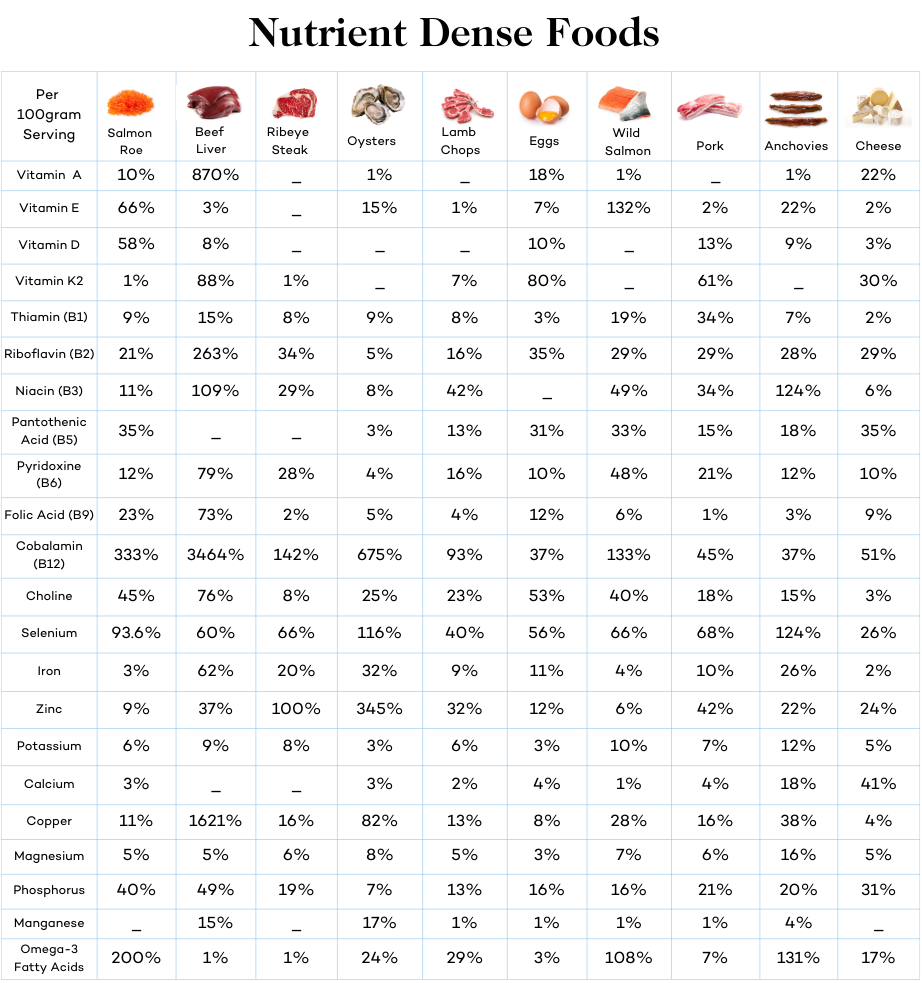
Another area where the Bulletproof diet falls a bit short is by not fully emphasizing the importance of animal-based foods. Yes, there is a focus on choosing quality meats, but a well-formulated, low-carb, high-fat diet is mostly meat, and this should be stated from the outset.
It’s likely that because Bulletproof is a global brand with products on the shelves of mainstream outlets like Target and Costco, the marketers are trying to appeal to a population that is saturated in plant-based dogma.
So, we’ll take it upon ourselves to affirm that animal-based products are far superior to plant foods when it comes to the variety, density, and quality of nearly every essential and vital nutrient our bodies need to thrive.
There is no nutritional need for plant foods, and likely a net benefit by eliminating them.

The Bulletproof Diet: The Bottom Line
The Bulletproof diet is an approach to high-fat, low-carb keto eating. It was developed by Silicon Valley entrepreneur turned biohacker and health guru Dave Asprey.
The Bulletproof way of eating entails cutting sugar, carbs, and plant toxins, fueling up on high-quality fats from grass-fed animal sources and refined coconut oil, and supplementing with various low-carb products like collagen powders, MCT oils, and toxin-free coffee spiked with butter and coconut oil.
Following this way of eating can help people lose weight, achieve sustained energy, boost mental clarity, reduce inflammation, and resensitize hormones critical to overall metabolic health.
Article Sources
- 1. Paoli A. Ketogenic diet for obesity: friend or foe? Int J Environ Res Public Health. 2014 Feb 19;11(2):2092-107. doi: 10.3390/ijerph110202092. PMID: 24557522; PMCID: PMC3945587.
- 2. Ułamek-Kozioł M, Czuczwar SJ, Januszewski S, Pluta R. Ketogenic Diet and Epilepsy. Nutrients. 2019 Oct 18;11(10):2510. doi: 10.3390/nu11102510. PMID: 31635247; PMCID: PMC6836058.
- 3. Rusek M, Pluta R, Ułamek-Kozioł M, Czuczwar SJ. Ketogenic Diet in Alzheimer's Disease. Int J Mol Sci. 2019 Aug 9;20(16):3892. doi: 10.3390/ijms20163892. PMID: 31405021; PMCID: PMC6720297.
- 4. The Ketogenic Diet for Refractory Mental Illness: A Retrospective Analysis of 31 Inpatients
- 5. Weber DD, Aminazdeh-Gohari S, Kofler B. Ketogenic diet in cancer therapy. Aging (Albany NY). 2018 Feb 11;10(2):164-165. doi: 10.18632/aging.101382. PMID: 29443693; PMCID: PMC5842847.
- 6. Paoli A, Rubini A, Volek JS, Grimaldi KA. Beyond weight loss: a review of the therapeutic uses of very-low-carbohydrate (ketogenic) diets. Eur J Clin Nutr. 2013 Aug;67(8):789-96. doi: 10.1038/ejcn.2013.116. Epub 2013 Jun 26. Erratum in: Eur J Clin Nutr. 20
- 7. Ma X, Nan F, Liang H, Shu P, Fan X, Song X, Hou Y, Zhang D. Excessive intake of sugar: An accomplice of inflammation. Front Immunol. 2022 Aug 31;13:988481. doi: 10.3389/fimmu.2022.988481. PMID: 36119103; PMCID: PMC9471313.
- 8. Takeuchi M, Kikuchi S, Sasaki N, Suzuki T, Watai T, Iwaki M, Bucala R, Yamagishi S. Involvement of advanced glycation end-products (AGEs) in Alzheimer's disease. Curr Alzheimer Res. 2004 Feb;1(1):39-46. doi: 10.2174/1567205043480582. PMID: 15975084.
- 9. Aragno M, Mastrocola R. Dietary Sugars and Endogenous Formation of Advanced Glycation Endproducts: Emerging Mechanisms of Disease. Nutrients. 2017 Apr 14;9(4):385. doi: 10.3390/nu9040385. PMID: 28420091; PMCID: PMC5409724.
- 10. Sophia M. Hochrein, Hao Wu, Miriam Eckstein, Laura Arrigoni, Josip S. Herman, Fabian Schumacher, Christian Gerecke, Mathias Rosenfeldt, Dominic Grün, Burkhard Kleuser, Georg Gasteiger, Wolfgang Kastenmüller, Bart Ghesquière, Jan Van den Bossche, E. Dale
- 11. Stanhope KL. Sugar consumption, metabolic disease and obesity: The state of the controversy. Crit Rev Clin Lab Sci. 2016;53(1):52-67. doi: 10.3109/10408363.2015.1084990. Epub 2015 Sep 17. PMID: 26376619; PMCID: PMC4822166.
- 12. DiNicolantonio JJ, OKeefe JH. Added sugars drive coronary heart disease via insulin resistance and hyperinsulinaemia: a new paradigm. Open Heart. 2017 Nov 29;4(2):e000729. doi: 10.1136/openhrt-2017-000729. PMID: 29225905; PMCID: PMC5708308.
- 13. de Melo GB, Soares JF, Costa TCL, Benevides ROA, Vale CC, Paes AMA, Gaspar RS. Early Exposure to High-Sucrose Diet Leads to Deteriorated Ovarian Health. Front Endocrinol (Lausanne). 2021 Apr 19;12:656831. doi: 10.3389/fendo.2021.656831. PMID: 33953699; PMC
- 14. Lin TY, Liu HW, Hung TM. The Ketogenic Effect of Medium-Chain Triacylglycerides. Front Nutr. 2021 Nov 18;8:747284. doi: 10.3389/fnut.2021.747284. PMID: 34888335; PMCID: PMC8650700.
- 15. D C Harvey CJ, Schofield GM, Williden M, McQuillan JA. The Effect of Medium Chain Triglycerides on Time to Nutritional Ketosis and Symptoms of Keto-Induction in Healthy Adults: A Randomised Controlled Clinical Trial. J Nutr Metab. 2018 May 22;2018:2630565.
- 16. A1 and A2 Bovine Milk, the Risk of Beta-casomorphin-7 and Its Possible Effects on Human Health: (II) Possible Effects of Beta-casomorphin-7 on Human Health
- 17. Birgisdottir BE, Hill JP, Thorsson AV, Thorsdottir I. Lower consumption of cow milk protein A1 beta-casein at 2 years of age, rather than consumption among 11- to 14-year-old adolescents, may explain the lower incidence of type 1 diabetes in Iceland than
- 18. Wasilewska J, Sienkiewicz-Szłapka E, Kuźbida E, Jarmołowska B, Kaczmarski M, Kostyra E. The exogenous opioid peptides and DPPIV serum activity in infants with apnoea expressed as apparent life threatening events (ALTE). Neuropeptides. 2011 Jun;45(3):189-95
- 19. Kost NV, Sokolov OY, Kurasova OB, Dmitriev AD, Tarakanova JN, Gabaeva MV, Zolotarev YA, Dadayan AK, Grachev SA, Korneeva EV, Mikheeva IG, Zozulya AA. Beta-casomorphins-7 in infants on different type of feeding and different levels of psychomotor developmen
- 20. Braun-Fahrländer C, von Mutius E. Can farm milk consumption prevent allergic diseases? Clin Exp Allergy. 2011 Jan;41(1):29-35. doi: 10.1111/j.1365-2222.2010.03665.x. PMID: 21155907.
- 21. Loss G, Apprich S, Waser M, Kneifel W, Genuneit J, Büchele G, Weber J, Sozanska B, Danielewicz H, Horak E, van Neerven RJ, Heederik D, Lorenzen PC, von Mutius E, Braun-Fahrländer C; GABRIELA study group. The protective effect of farm milk consumption on ch
- 22. Sozańska B, Pearce N, Dudek K, Cullinan P. Consumption of unpasteurized milk and its effects on atopy and asthma in children and adult inhabitants in rural Poland. Allergy. 2013;68(5):644-50. doi: 10.1111/all.12147. Epub 2013 Mar 27. PMID: 23534445.
- 23. Waser M, Michels KB, Bieli C, Flöistrup H, Pershagen G, von Mutius E, Ege M, Riedler J, Schram-Bijkerk D, Brunekreef B, van Hage M, Lauener R, Braun-Fahrländer C; PARSIFAL Study team. Inverse association of farm milk consumption with asthma and allergy in
- 24. Sozańska B. Raw Cow's Milk and Its Protective Effect on Allergies and Asthma. Nutrients. 2019 Feb 22;11(2):469. doi: 10.3390/nu11020469. PMID: 30813365; PMCID: PMC6413174.
Follow Dr. Kiltz on Social Media for Daily Information and Inspiration
Subscribe to follow our Blog
Type your email*
Submit
Follow us on Social Media


