

The meat and greens diet is one of the trending variations on the meat based-eating phenomenon known as the carnivore diet.
The meat and greens diet was first popularized by psychologist Jordan Peterson when he spoke about his #meatheals journey on the Joe Rogan podcast in 2018.
Since then, this eating plan has been praised for its simplicity, effectiveness, and potential health benefits, like improved mental clarity, reduced inflammation, better digestion, and weight loss.
Let’s explore the meat and greens diet, including the principles behind it, its benefits, and potential drawbacks.
Origins of the Meat and Greens Diet
A large body of research suggests that all-meat and meat-based eating is the way early humans ate for nearly 2 million years until the agricultural revolution only 10,000 years ago. [1] [2]

During the vast majority of human existence, our ancestors thrived on a diet of mostly fatty meat from huge animals known as “megafauna.” We’re talking about 2,000-pound chinchillas and twenty-foot-tall sloths.
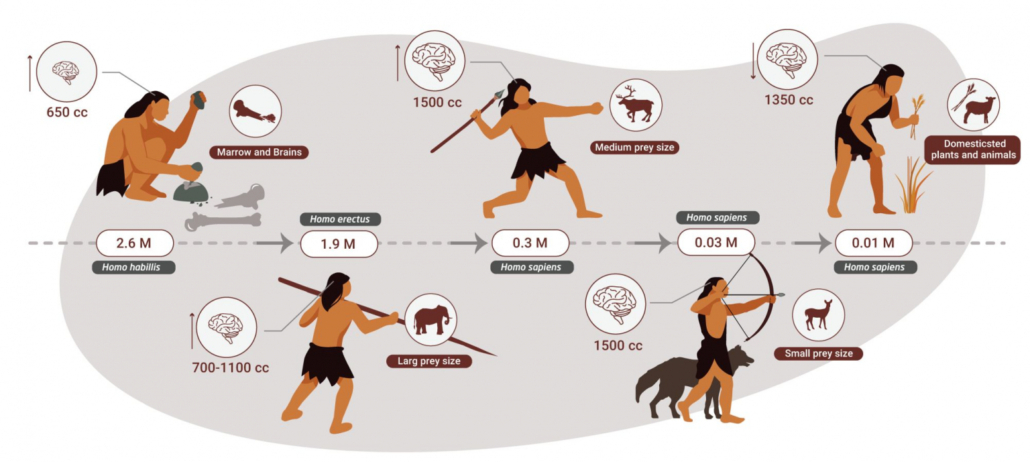
Source: Dr Miki Ben Dor
Not coincidentally, humans turned to agriculture during the period when the mega-fauna populations collapsed. Studies show that human hunting is responsible. [3]
Our evolved ability to thrive on an all-meat diet still persists to this day. Our bodies are nearly identical to our paleolithic ancestors.
And we can still see examples of carnivores with the traditional Inuit diet of only seal, walrus, whale, and fish. [4] African pastoral tribes like the Maasai consume only meat, milk, and cows’ blood. [5]
These traditional carnivore dieters demonstrate markers of health and an absence of disease that are the envy of modern Western societies consuming a “plant-based” omnivorous diet.
Early polar explorers like Viljelmer Steffanson and pioneering nutrition researchers like Thomas V. Mann and Weston A. Price promoted the benefits of meat-based traditional diets since the early 1900s.
Meat and Greens Goes Mainstream
But it wasn’t until around 2015 that this way of eating struck a major chord within our modern world.
It started the personal observations and experimentations of low-carb enthusiastic doctors like Dr. Kiltz, Dr. Shawn Baker, Dr. Paul Saladino, and Dr. Ken Berry.
As a guest on the Joe Rogan podcast, Shawn Baker inspired Rogan to go carnivore, along with thousands of his listeners. The flame was lit.
One of these listeners was Mikhaila Peterson, daughter of the popular psychologist Jordan Peterson.
Mikhaila was desperate to find relief from a bevy of autoimmune and mood disorders that had afflicted her since her early youth.
To her surprise, eliminating all plant foods and consuming only beef, water, and salt resolved juvenile rheumatoid arthritis (that had resulted in hip and ankle replacements as a teenager!), depression, brain fog, and hypersomnia. [6] By 2017, Mikhaila was able to get off all of her medications.
Her famous father took note and began experimenting with the “lion diet” himself.
Then, when Jordan was a guest on Rogan’s podcast, he explained how he eliminated everything but meat and greens from his diet, then even got rid of the greens for two months.
Peterson listed the maladies that this elimination diet relieved, including lifelong depression, anxiety, psoriasis, gingivitis, floaters in his eyes, and gastric reflux. He also lost 50 pounds and dramatically reduced his food cravings.
Jordan Peterson has since practiced adding back in some cooked leafy greens and reportedly maintains this meat and greens approach in the long term.

How to Do the Meat and Greens Diet
One of the highlights of the meat and greens diet is its simplicity: You eat only meat, greens, water, and salt.
Many people allow for grass-fed butter, but others keep it all meat by cooking their meat in tallow.
By meat, we’re not just talking about lean muscle meat. On any low-carb diet, you will have to get most of your calories from fat.
This means selecting the fattiest “marbled” cuts like ribeye steak and adding tallow or butter.
You’ll need to get at least 65% of your calories from fat. And the rest will come from protein. This is because your body has a natural protein limit at around 35% of your calories. More than that, and you can get “protein poisoning.” A potentially serious condition. The good news is that it’s easy to avoid. Just eat more fat!
Interestingly, this protein constraint is a vestige of how we evolved eating giant, fatty animals, as we mentioned above. This has led researchers like Amber O’Hearn to suggest that we aren’t just natural carnivores; we’re actually “lipivores” designed to thrive on a fat-first diet.
Once adapted to this meat and greens diet for 30-90 days, many people experiment with adding in full-fat dairy, eggs, pork, poultry, and seafood.
Benefits of Meat and Greens Diet
Though studies haven’t been done directly on the benefits of the meat and greens diet, this way of eating is essentially a restricted version of a ketogenic diet.
Ketogenic diets have been the subject of hundreds of studies over the last century. Clinical benefits of the high-fat low-carb keto diet include
- Improved cholesterol and triglyceride levels [7]
- Increased insulin sensitivity [8]
- Improves symptoms of type 2 diabetes [9]
- Reverses symptoms of metabolic syndrome [10]
- Can eliminate PCOS [11]
- Supports the treatment of various cancers [12]
- Protects against neurodegenerative diseases, including epilepsy, Alzheimer’s, and Parkinson’s disease [13] [14]
- Dramatically improves mental health and reduces psychotic symptoms [15]
- Weight loss [16]
- Reduces food cravings [17]
- Regulates inflammation and supports immune function [18] [19]
- Provides an abundance of important fat-soluble vitamins (K, D, E) [20]
- Protects the glycocalyx–a delicate membrane covering the surface of every cell, implicated in heart health and numerous vital bodily functions [21]
Do You Need Greens on Carnivore?
The main reason why people choose to add greens to the carnivore diet–making it a meat and greens diet– is to add some fiber and boost potassium.
For example, when cooked, spinach contains 1,180 mg per cup. Swiss chard provides nearly 1,000 mg, and bok choy contains 445 mg per cup.
However, fresh meat contains sufficient amounts of potassium on its own.
It’s also worth noting that other nutrients found in greens are poorly absorbed by the body. [22] [23]
While more bioavailable forms of nutrients like vitamin A, vitamin K, and Zinc are readily found in animal products.

Possible Drawbacks of The Meat and Greens Diet
Though the meat and greens diet may be an effective elimination diet for many people, there are some possible drawbacks to watch out for.
Oxalates
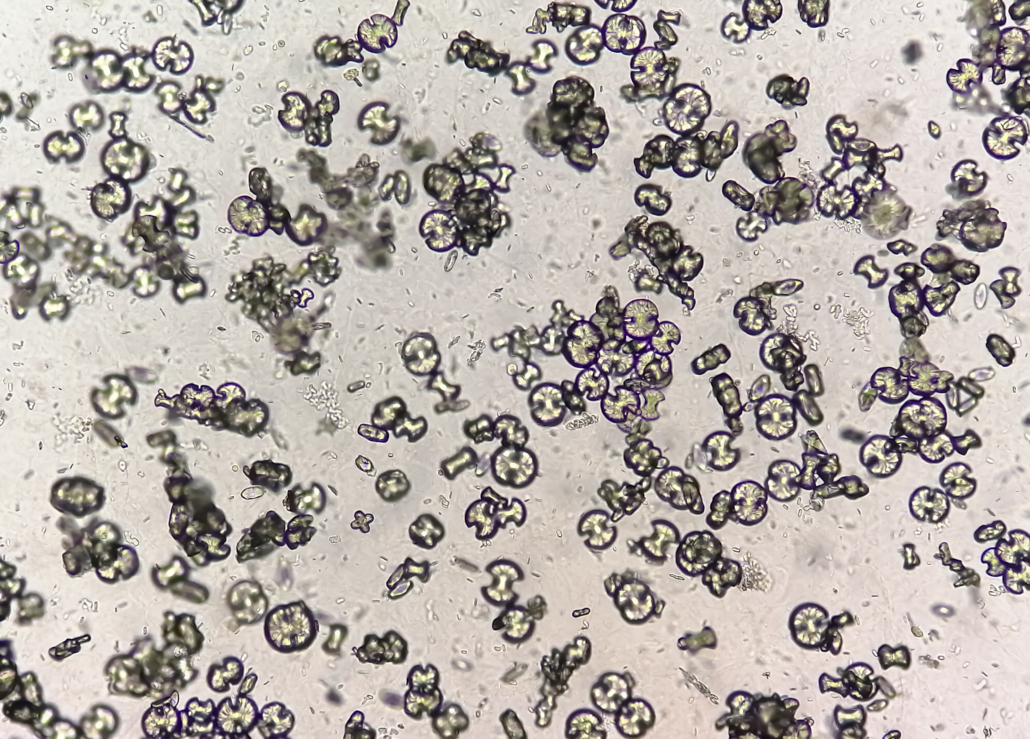
Oxalates are compounds found in abundance in leafy greens. They help plants regulate their internal mineral content and defend plants against pests and predators. [24] [25]
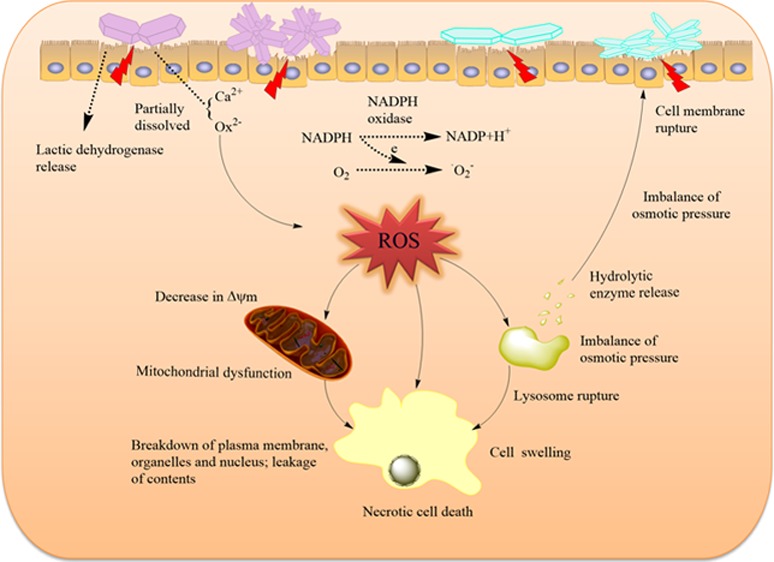
However, for humans, oxalate consumption corresponds with inflammation and autoimmune disorders.
Studies link oxalates with lupus, leaky gut, and rheumatoid arthritis. [26] [27]
In fact, many people on a typical (non-greens) carnivore diet experience “oxalate dumping” symptoms when they cut plant foods, including leafy greens.
Continuing to consume oxalate-rich greens may reduce one of the most beneficial features so the typical carnivore diet–the elimination of all plant toxins and antinutrients.
Fiber
One of the keys to the carnivore diet may be the elimination of fiber. Including fibrous greens in your meat-based protocol can limit these benefits.
Some modern research suggests that recommendations to increase fiber intake are misguided. [28] [29]
A 2012 study published in the World Journal of Gastroenterology exploring the purported benefits of fiber for constipation concluded “the previous strongly-held belief that the application of dietary fiber to help constipation is but a myth. Our study shows a very strong correlation between improving constipation and its associated symptoms after stopping dietary fiber intake.” [30]
Sure, fiber can slow down digestion, thereby reducing glycemic spikes when consuming high-carb foods. But in the context of a zero-carb carnivore diet, these benefits are moot.
Bacterial Exposure
Leafy greens are routinely contaminated with bacteria like Listeria, E. coli, and Klebsiella. [31] [32] [33] [34]
One 2016 study examining 105 samples of imported fresh fruits and vegetables, found that 60% of fruits and 91% of vegetables were contaminated by harmful bacteria. [35] [36]
The Meat and Greens Diet: The Bottom Line
The meat and greens diet is a variation of the meat-based carnivore lifestyle.
Centering your diet around fatty meats aligns eating habits with the ancestral patterns that our physiology has evolved to thrive on.
The meat and greens diet eliminates all modern industrial foods, including toxic seed “vegetable” oils, grains, and sugars.
However, by consuming greens you may be limiting the health benefits that come from eliminating plant toxins and antinutrients. It’s worth noting that many leafy greens are high in a particularly harmful plant toxin called oxalic acid.
If your goal is to completely reset your metabolic health with a meat-based elimination diet, eliminating all plant foods, at least for 30 days, may be a better option.
Article Sources
- 1. The evolution of the human trophic level during the Pleistocene
- 2. Origins of the Human Predatory Pattern: The Transition to Large-Animal Exploitation by Early Hominins
- 3. Sandom Christopher, Faurby Søren, Sandel Brody and Svenning Jens-Christian 2014Global late Quaternary megafauna extinctions linked to humans, not climate changeProc. R. Soc. B.2812013325420133254 http://doi.org/10.1098/rspb.2013.3254
- 4. The Arctic Explorer Who Pushed an All-Meat Diet Vilhjalmur Stefansson wanted to prove a point. BY ANNE EWBANK AUGUST 28, 2018
- 5. Beasley DE, Koltz AM, Lambert JE, Fierer N, Dunn RR. The Evolution of Stomach Acidity and Its Relevance to the Human Microbiome. PLoS One. 2015 Jul 29;10(7):e0134116. doi: 10.1371/journal.pone.0134116. PMID: 26222383; PMCID: PMC4519257.
- 6. THE JORDAN PETERSON ALL-MEAT DIET
- 7. Foster GD, Wyatt HR, Hill JO, McGuckin BG, Brill C, Mohammed BS, Szapary PO, Rader DJ, Edman JS, Klein S. A randomized trial of a low-carbohydrate diet for obesity. N Engl J Med. 2003 May 22;348(21):2082-90. doi: 10.1056/NEJMoa022207. PMID: 12761365.
- 8. Yancy WS Jr, Foy M, Chalecki AM, Vernon MC, Westman EC. A low-carbohydrate, ketogenic diet to treat type 2 diabetes. Nutr Metab (Lond). 2005 Dec 1;2:34. doi: 10.1186/1743-7075-2-34. PMID: 16318637; PMCID: PMC1325029.
- 9. Fang Li, Yang Shen, Qun Chen, Xingyu Li, Hongnan Yang, Canyang Zhang, Jinjun Lin, Zhicheng Du, Chenyao Jiang, Chengming Yang, Dongmei Yu, Peiwu Qin, Therapeutic effect of ketogenic diet treatment on type 2 diabetes, Journal of Future Foods, Volume 2, Issue
- 10. Pérez-Guisado, J., Muñoz-Serrano, A. & Alonso-Moraga, Á. Spanish Ketogenic Mediterranean diet: a healthy cardiovascular diet for weight loss. Nutr J 7, 30 (2008). https://doi.org/10.1186/1475-2891-7-30
- 11, 12. Paoli A, Rubini A, Volek JS, Grimaldi KA. Beyond weight loss: a review of the therapeutic uses of very-low-carbohydrate (ketogenic) diets. Eur J Clin Nutr. 2013 Aug;67(8):789-96. doi: 10.1038/ejcn.2013.116. Epub 2013 Jun 26. Erratum in: Eur J Clin Nutr. 20
- 13. Rusek M, Pluta R, Ułamek-Kozioł M, Czuczwar SJ. Ketogenic Diet in Alzheimer's Disease. Int J Mol Sci. 2019 Aug 9;20(16):3892. doi: 10.3390/ijms20163892. PMID: 31405021; PMCID: PMC6720297.
- 14. Phillips MCL, Murtagh DKJ, Gilbertson LJ, Asztely FJS, Lynch CDP. Low-fat versus ketogenic diet in Parkinson's disease: A pilot randomized controlled trial. Mov Disord. 2018 Aug;33(8):1306-1314. doi: 10.1002/mds.27390. Epub 2018 Aug 11. Erratum in: Mov Dis
- 15, 16. Campbell IH, Campbell H. Ketosis and bipolar disorder: controlled analytic study of online reports. BJPsych Open. 2019 Jul 4;5(4):e58. doi: 10.1192/bjo.2019.49. PMID: 31530294; PMCID: PMC6620566.
- 17. Sumithran P, Prendergast LA, Delbridge E, Purcell K, Shulkes A, Kriketos A, Proietto J. Ketosis and appetite-mediating nutrients and hormones after weight loss. Eur J Clin Nutr. 2013 Jul;67(7):759-64. doi: 10.1038/ejcn.2013.90. Epub 2013 May 1. PMID: 23632
- 18. Emily L. Goldberg et al. ,Ketogenic diet activates protective γδ T cell responses against influenza virus infection.Sci. Immunol.4,eaav2026(2019).DOI:10.1126/sciimmunol.aav2026
- 19. Yaqoob P, Calder PC. Fatty acids and immune function: new insights into mechanisms. Br J Nutr. 2007 Oct;98 Suppl 1:S41-5. doi: 10.1017/S0007114507832995. PMID: 17922958.
- 20. Intestinal Absorption of Fat-Soluble Vitamins
- 21. Gaudette S, Hughes D, Boller M. The endothelial glycocalyx: Structure and function in health and critical illness. J Vet Emerg Crit Care (San Antonio). 2020 Mar;30(2):117-134. doi: 10.1111/vec.12925. Epub 2020 Feb 18. PMID: 32067360.
- 22. Bioavailability of iron, zinc, and other trace minerals from vegetarian diets
- 23. Borel P, Lietz G, Goncalves A, Szabo de Edelenyi F, Lecompte S, Curtis P, Goumidi L, Caslake MJ, Miles EA, Packard C, Calder PC, Mathers JC, Minihane AM, Tourniaire F, Kesse-Guyot E, Galan P, Hercberg S, Breidenassel C, González Gross M, Moussa M, Meirhaeg
- 24. Georgia Tooulakou, Andreas Giannopoulos, Dimosthenis Nikolopoulos, Panagiota Bresta, Elissavet Dotsika, Malvina G. Orkoula, Christos G. Kontoyannis, Costas Fasseas, Georgios Liakopoulos, Maria I. Klapa, George Karabourniotis, Alarm Photosynthesis: Calcium
- 25. Doege, S. J. (2003). The Role of Natural Calcium Oxalate Crystals in Plant Defense Against Chewing Insects. Inquiry: The University of Arkansas Undergraduate Research Journal, 4(1). Retrieved from https://scholarworks.uark.edu/inquiry/vol4/iss1/15
- 26. Ticinesi A, Nouvenne A, Chiussi G, Castaldo G, Guerra A, Meschi T. Calcium Oxalate Nephrolithiasis and Gut Microbiota: Not just a Gut-Kidney Axis. A Nutritional Perspective. Nutrients. 2020 Feb 20;12(2):548. doi: 10.3390/nu12020548. PMID: 32093202; PMCID:
- 27. Inczefi O, Bacsur P, Resál T, Keresztes C, Molnár T. The Influence of Nutrition on Intestinal Permeability and the Microbiome in Health and Disease. Front Nutr. 2022 Apr 25;9:718710. doi: 10.3389/fnut.2022.718710. PMID: 35548572; PMCID: PMC9082752.
- 28. Coffin CS, Shaffer EA. The hot air and cold facts of dietary fibre. Can J Gastroenterol. 2006 Apr;20(4):255-6. doi: 10.1155/2006/390953. PMID: 16609752; PMCID: PMC2659900.
- 29. Lanza E, Yu B, Murphy G, Albert PS, Caan B, Marshall JR, Lance P, Paskett ED, Weissfeld J, Slattery M, Burt R, Iber F, Shike M, Kikendall JW, Brewer BK, Schatzkin A; Polyp Prevention Trial Study Group. The polyp prevention trial continued follow-up study:
- 30. Ho KS, Tan CY, Mohd Daud MA, Seow-Choen F. Stopping or reducing dietary fiber intake reduces constipation and its associated symptoms. World J Gastroenterol. 2012 Sep 7;18(33):4593-6. doi: 10.3748/wjg.v18.i33.4593. PMID: 22969234; PMCID: PMC3435786.
- 31. Vegetable-Derived Carbapenemase-Producing High-Risk Klebsiella pneumoniae ST15 and Acinetobacter baumannii ST2 Clones in Japan: Coexistence of blaNDM-1, blaOXA-66, blaOXA-72, and an AbaR4-Like Resistance Island in the Same Sample
- 32. Rahman M, Alam MU, Luies SK, Kamal A, Ferdous S, Lin A, Sharior F, Khan R, Rahman Z, Parvez SM, Amin N, Hasan R, Tadesse BT, Taneja N, Islam MA, Ercumen A. Contamination of Fresh Produce with Antibiotic-Resistant Bacteria and Associated Risks to Human Heal
- 33. Falomir MP, Rico H, Gozalbo D. Enterobacter and Klebsiella species isolated from fresh vegetables marketed in Valencia (Spain) and their clinically relevant resistances to chemotherapeutic agents. Foodborne Pathog Dis. 2013 Dec;10(12):1002-7. doi: 10.1089/
- 34, 35, 36. Al-Kharousi ZS, Guizani N, Al-Sadi AM, Al-Bulushi IM, Shaharoona B. Hiding in Fresh Fruits and Vegetables: Opportunistic Pathogens May Cross Geographical Barriers. Int J Microbiol. 2016;2016:4292417. doi: 10.1155/2016/4292417. Epub 2016 Feb 16. PMID: 26989